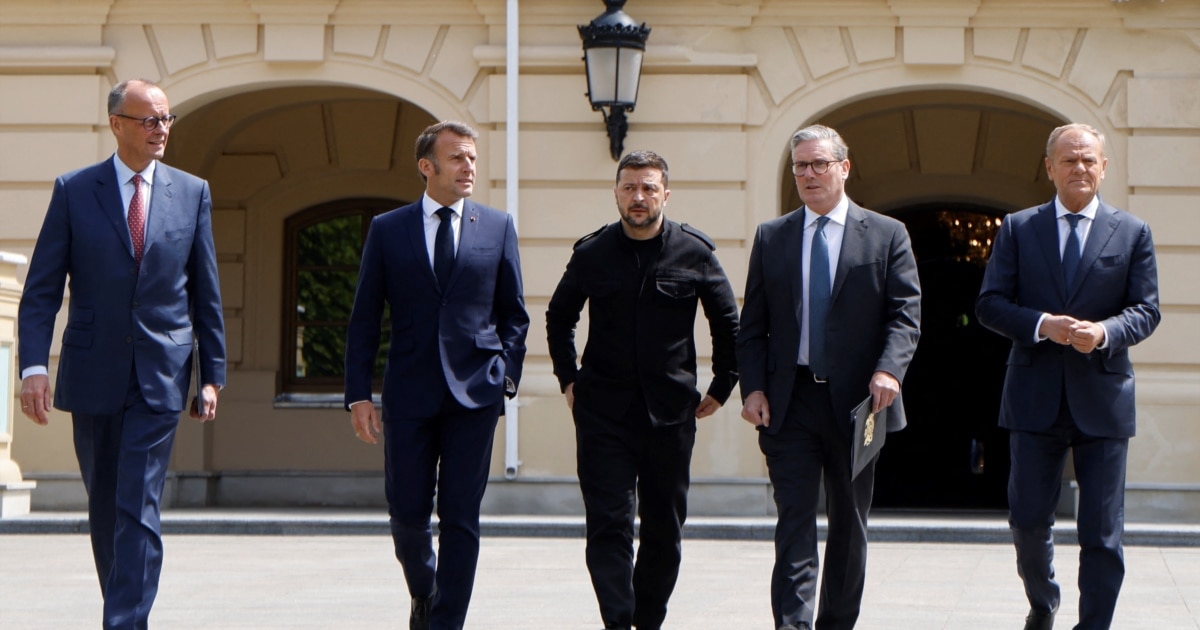
The EU is considering its 18th sanctions package against Russia, but analysts suggest its options are limited without US cooperation, particularly concerning energy exports. While European leaders threaten "massive" sanctions, internal divisions and the potential for economic blowback hinder decisive action, as countries like Spain and the Netherlands increase LNG imports. Focus may shift to targeting Russia's shadow fleet and reducing the oil price cap, but the effectiveness of these measures remains uncertain, risking the perception that the EU's threats are hollow without measures that significantly impact Russia's revenue streams.
The European Union is contemplating an 18th sanctions package against Russia, described by leaders as potentially "massive," following the recent 17th package. However, analysts, including Benjamin Hilgenstock from the KSE Institute, express skepticism regarding the EU's capacity to enact truly impactful measures without U.S. participation, particularly concerning the substantial removal of Russian oil and gas from global markets. The effectiveness of such energy sanctions hinges on U.S. secondary sanctions to deter countries like India, China, and Turkey from purchasing Russian fossil fuels. A recent transatlantic discord became apparent when U.S. President Trump, despite an EU-coordinated threat of "massive" sanctions if a cease-fire wasn't agreed, praised a call with President Putin and seemed disinclined to impose new U.S. sanctions that could jeopardize peace talks. This leaves the EU in a position where it must either deliver significant unilateral sanctions or risk its threats appearing hollow. Internally, EU member states exhibit divergent views; while Lithuania's Foreign Minister Kestutis Budrys advocates for halting Russian energy exports, citing alternatives, countries like Spain, the Netherlands, and Belgium have increased Russian LNG imports, underscoring concerns about economic self-harm, a factor Tom Keatinge of RUSI notes has previously constrained EU actions. Political opposition from countries like Hungary and Slovakia further complicates efforts against Russian energy. Proposed measures, such as targeting Russia's "shadow fleet" or reducing the oil price cap (the latter also requiring U.S. agreement), are viewed by some as incremental rather than game-changing. The overall sentiment is negative and the tone pessimistic, reflecting doubts about the EU's ability to follow through with impactful measures, potentially undermining its credibility and emboldening Russia, as highlighted by the non-response from Moscow to previous ultimatums. The situation implies continued volatility in energy markets, although specific impacts on companies like BP or Shell are not detailed beyond the general context of sanctions on Russian energy exports.
AI-powered research, real-time alerts, and portfolio analytics for institutional investors.
Request DemoOverall Sentiment
Negative
Sentiment Score
-0.30
Ticker Sentiment
