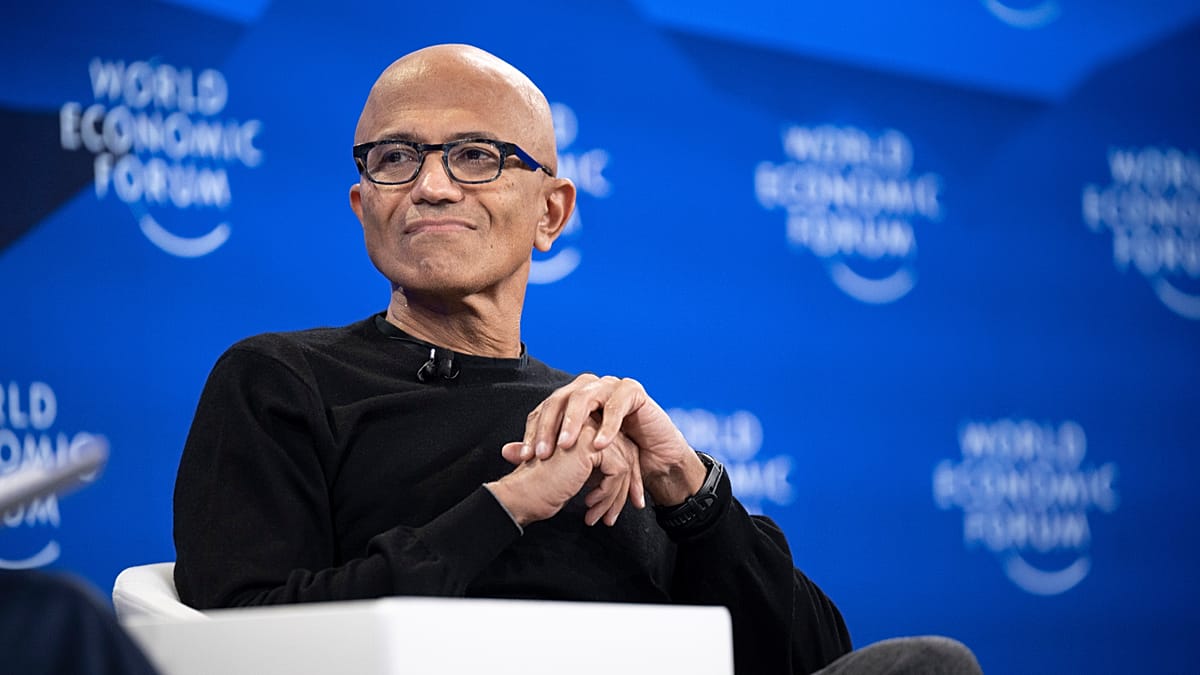
At Davos 2026 tech leaders stressed both the economic promise and systemic risks of AI: Satya Nadella emphasized the need for investment and infrastructure to realize AI’s benefits globally, while Yoshua Bengio and Yuval Harari warned AI systems are not human and pose deep societal risks. Anthropic’s Dario Amodei urged export controls on advanced AI chips to China and warned of potential large-scale disruption to entry-level white‑collar jobs, citing concerns around Nvidia’s H200 sales; DeepMind’s Demis Hassabis struck a more optimistic tone on new job creation but called for international minimum safety standards and flagged AGI timelines of roughly five to ten years. Material implications include heightened regulatory and geopolitical risk for chip vendors and cloud/infrastructure investors, uneven adoption across emerging markets, and potential shifts in tech hiring and competitive dynamics among AI firms.
Market structure: Big cloud/software incumbents (MSFT, GOOGL/GOOG) are the primary near-term beneficiaries as enterprises shift an estimated 5–10% of IT budgets to managed AI services over 12–24 months, reinforcing recurring revenue and pricing power. NVDA remains central to GPU supply but faces concentrated geopolitical/exposure risk that can compress its forward multiple even if gross margins stay high; smaller AI chip peers lack durable moats and are vulnerable to pricing pressure. Supply/demand for high-end accelerators will stay tight near-term (next 6–12 months) supporting NVDA ASPs, but policy shocks can flip that balance quickly.
Risk assessment: Tail risks include a US/ally export ban on advanced HBM/GPU shipments to China (estimated 5–15% probability in 6–12 months) or a high-profile safety incident prompting global restrictive regulation (3–7% probability) that could trigger a 10–25% tech sector re-rating. Hidden dependencies: data‑centre buildouts hinge on power/copper availability and local regulatory approvals, and fabs remain concentrated in a few suppliers (Taiwan/Netherlands), creating single‑point risks. Key catalysts: upcoming NVDA earnings (next 30–60 days), US export policy decisions (30–90 days), and any EU/US AI regulation milestones.
Trade implications: Tactical overweight MSFT and GOOGL for 6–12 months to capture enterprise AI conversion; avoid enlarging NVDA exposure until policy cloud clears or buy defined‑risk options to participate. Use pair trades (long MSFT, short smaller AI silicon/ODM names) to capture consolidation, and add thematic exposure to power/copper suppliers (12–24 month horizon) supporting datacenters. Option plays: buy 3–6 month NVDA puts for downside insurance if holding longs, or construct 6–9 month call spreads to cap cost while retaining upside.
Contrarian angles: Consensus underestimates the time and capital needed to scale AI in emerging markets—this delays revenue for cloud providers in EM by 2–4 years and creates a multi‑year runway for infrastructure plays. Negative sentiment about NVDA may be overdone short-term vs fundamentals; a policy-triggered derating opens a high-conviction re-entry if shares fall >15% or guidance weakens materially. Historical parallel: telecom/hosting capex cycles post-2000 show incumbents with balance-sheet scale (MSFT/GOOGL) outperformed smaller hardware vendors as regulation and infrastructure spending normalized.
AI-powered research, real-time alerts, and portfolio analytics for institutional investors.
Request DemoOverall Sentiment
mixed
Sentiment Score
0.05
Ticker Sentiment
