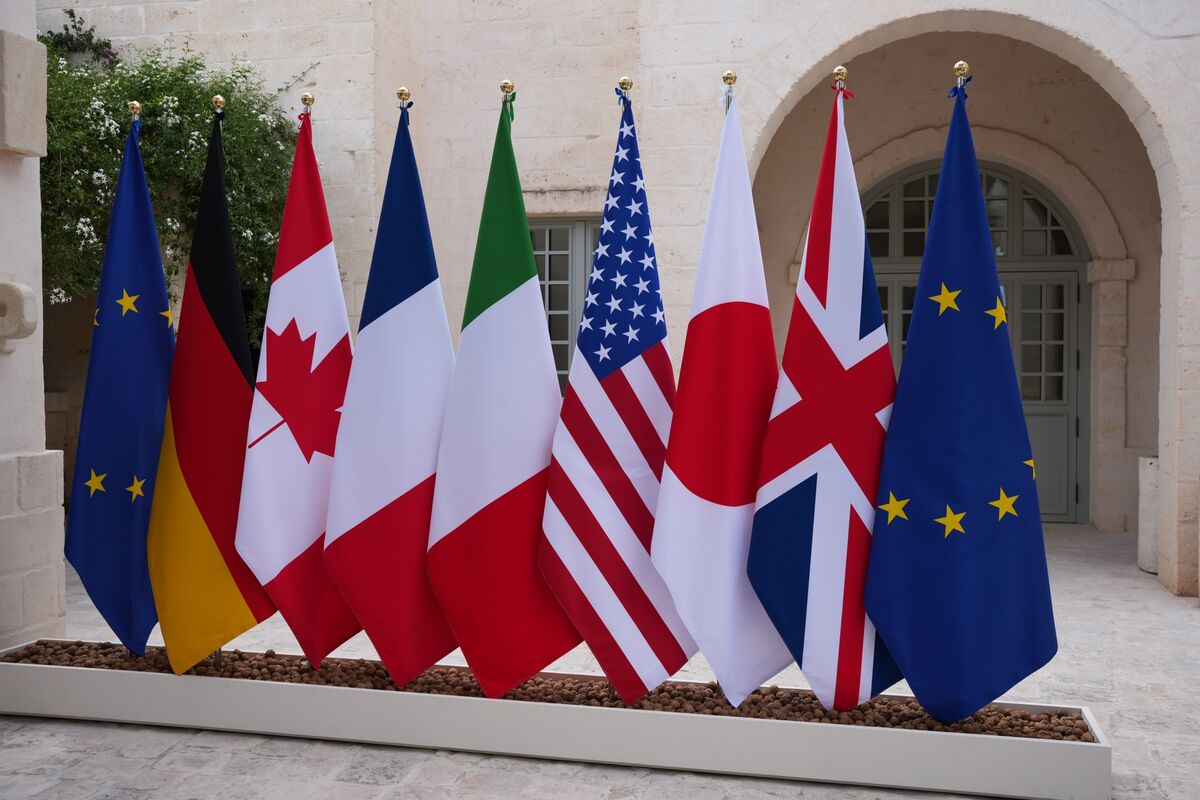
G-7 finance ministers are seeking to de-escalate potential public disagreements with the U.S. concerning trade policies, despite ongoing trade tensions. The ministers are prioritizing collaborative discussions on global economic challenges, including inflation and supply chain resilience, signaling a strategic effort to maintain a united front despite differing trade perspectives.
G-7 finance ministers are actively working to prevent public disputes with the U.S. over trade policies, a strategic move occurring amidst ongoing trade tensions. This approach signals an intent to maintain a united G-7 front, prioritizing collaborative dialogue on significant global economic issues, including inflation and supply chain resilience. The reported neutral sentiment (score -0.1) and cautious tone reflect the delicate nature of these discussions, suggesting that while overt disagreements may be suppressed, underlying differences likely persist. The anticipated market impact is modest (score 0.3), indicating that investors may perceive this as a short-term diplomatic maneuver rather than a fundamental resolution of trade frictions, though the core themes of trade policy, tariffs, and geopolitics remain critical long-term considerations.
AI-powered research, real-time alerts, and portfolio analytics for institutional investors.
Request DemoOverall Sentiment
Neutral
Sentiment Score
-0.10
