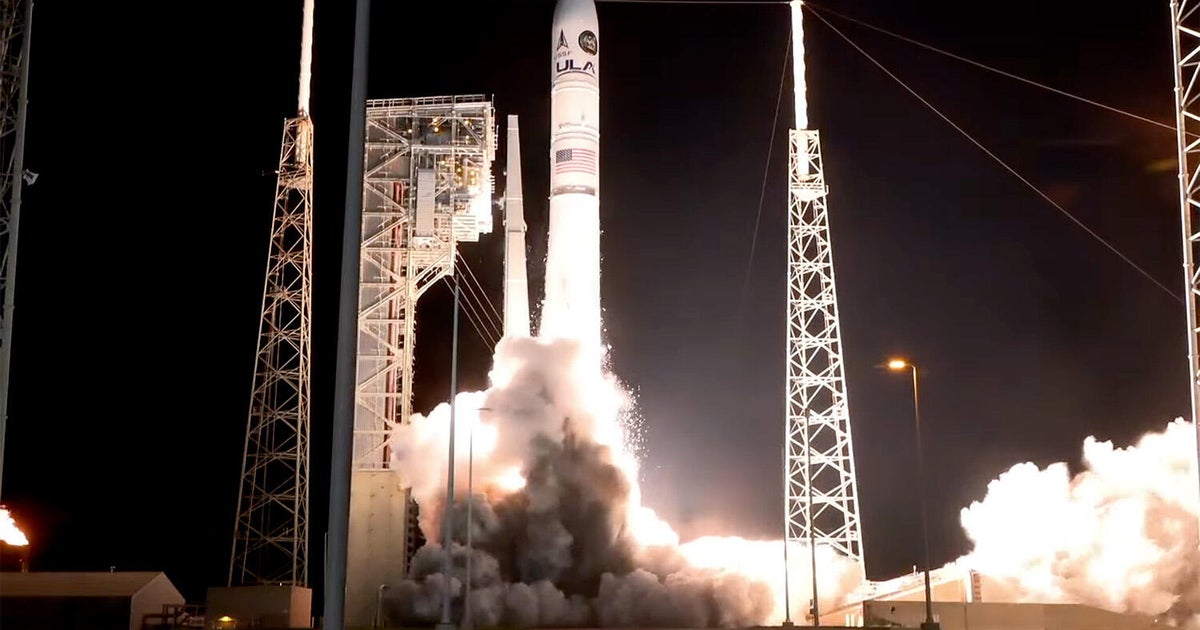
United Launch Alliance (ULA) successfully launched its first operational Vulcan rocket, carrying two U.S. Space Force satellites, including the experimental NTS-3 for advanced GPS technology, to geosynchronous orbit. This launch is a critical milestone, certifying the Vulcan for national security payloads and initiating the replacement of ULA's Atlas V (which used Russian engines) and retired Delta rockets. The Vulcan, powered by Blue Origin's BE-4 engines, positions ULA with a highly capable vehicle for direct injection of heavy military payloads into high-energy orbits, differentiating it in the competitive launch market and supporting ULA's projected increase to 20-25 flights by 2026.
The first operational, Space Force-certified launch of United Launch Alliance's Vulcan rocket represents a pivotal milestone, successfully de-risking the transition from its legacy Atlas V and Delta vehicles. This achievement secures ULA's position to compete for high-value national security payloads, addressing previous political and supply chain risks associated with the Atlas V's Russian-made RD-180 engines. The Vulcan is strategically positioned not to compete with SpaceX on overall launch volume, but to specialize in the direct injection of heavy military and government satellites into high-energy orbits. ULA CEO Tory Bruno's comments explicitly frame the Vulcan's single-core architecture as a more efficient and cost-effective solution for these demanding missions compared to multi-core heavy-lift alternatives. The stated plan to ramp up to 20-25 launches by 2026 provides a tangible growth trajectory for ULA's parent companies, Boeing (BA) and Lockheed Martin (LMT), and serves as a key validation for Blue Origin's BE-4 engine technology and L3Harris's (LHX) advanced satellite manufacturing capabilities.
AI-powered research, real-time alerts, and portfolio analytics for institutional investors.
Overall Sentiment
strongly positive
Sentiment Score
0.75
Ticker Sentiment
