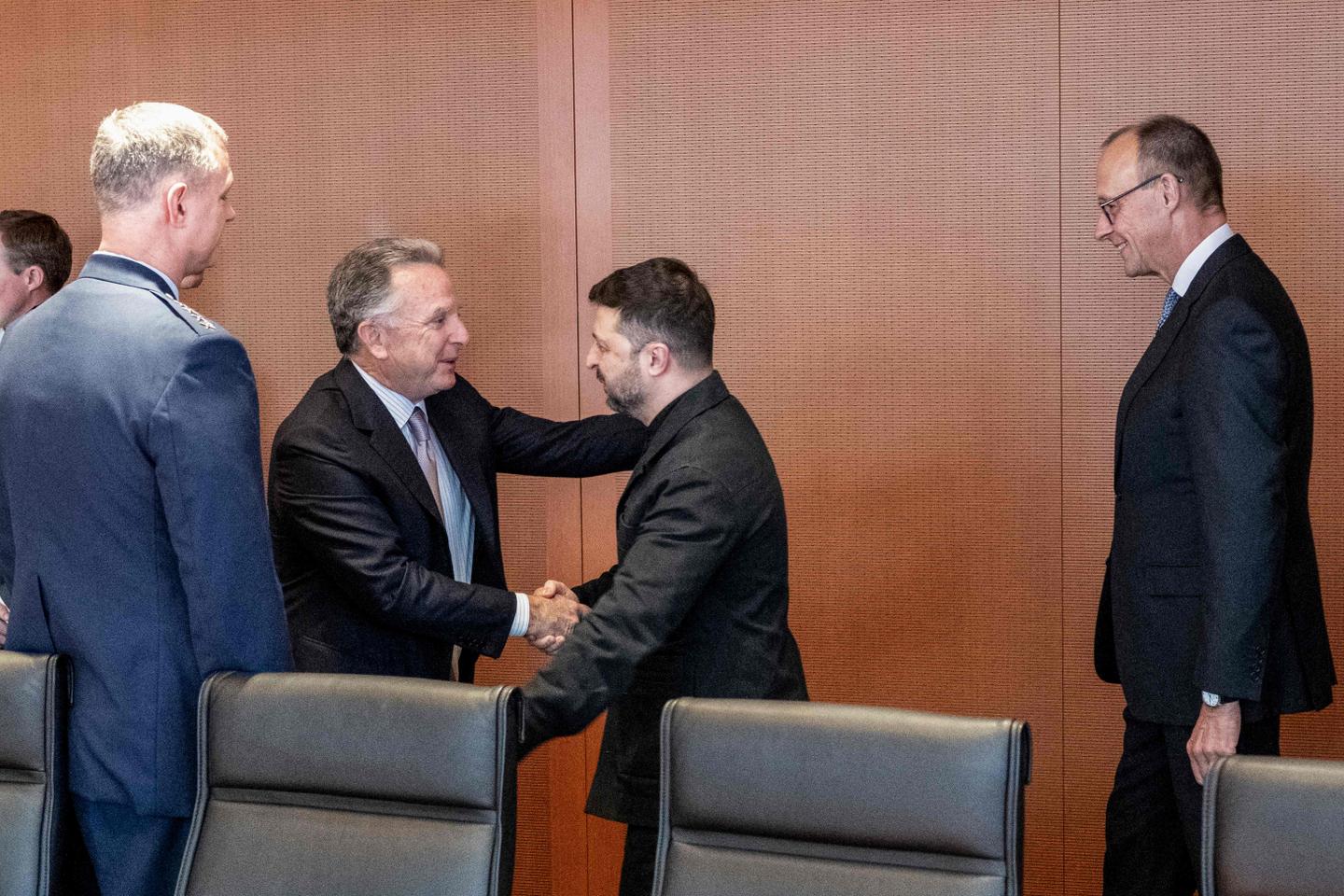
German-led crisis talks in Berlin began as President Zelensky met US envoys Jared Kushner and Steve Witkoff, German leader Friedrich Merz and NATO’s European commander to discuss ending the nearly four-year war, with core issues centering on territorial concessions, security guarantees and whether the front line could be frozen. The diplomacy follows a US proposal pushed by former President Trump — reported to include Ukrainian withdrawals from parts of Donetsk in exchange for a demilitarized buffer and conditional EU accession by 2027 — which Kyiv has revised and asked for security guarantees before any territorial concessions, while the Kremlin has already signaled strong objections. The negotiations take place against ongoing attacks (Ukraine reported 138 drones and a ballistic missile overnight, with strikes wounding civilians and hitting a Kherson hospital), leaving the outcome uncertain and the region’s security and political trajectory in flux.
German-hosted crisis diplomacy began in Berlin on December 14 when Ukrainian President Volodymyr Zelensky met US envoys Jared Kushner and Steve Witkoff, German leader Friedrich Merz and NATO’s European commander Alexus Grynkewich to seek a negotiated end to the nearly four-year war. The talks span two days and focus explicitly on territorial concessions, security guarantees for Kyiv and whether the frontline can be frozen as a basis for a ceasefire.
The diplomatic substrate is shaped by a US plan promoted by former President Trump that Kyiv and Europeans say would require Ukrainian withdrawals from parts of Donetsk in exchange for a demilitarized “free economic zone,” and a conditional offer of EU accession as early as January 2027; Kyiv has submitted revisions and is pressing for security guarantees before any concessions while Washington’s formal response is pending. Kremlin aide Yuri Ushakov has signaled strong likely objections, leaving the acceptability and feasibility of any text uncertain.
The operational environment remains violent: Ukraine reported 138 drones and a ballistic missile overnight, a Kherson hospital strike that wounded two people and at least 11 wounded in Zaporizhzhia, underscoring that active hostilities could derail negotiations. The provided sentiment metrics (sentiment_score -0.35, market_impact_score 0.45) reflect moderately negative investor sentiment and a material sensitivity of markets to further diplomatic or military developments, implying elevated near-term risk and volatility for region-exposed assets.
AI-powered research, real-time alerts, and portfolio analytics for institutional investors.
Request DemoOverall Sentiment
moderately negative
Sentiment Score
-0.35
