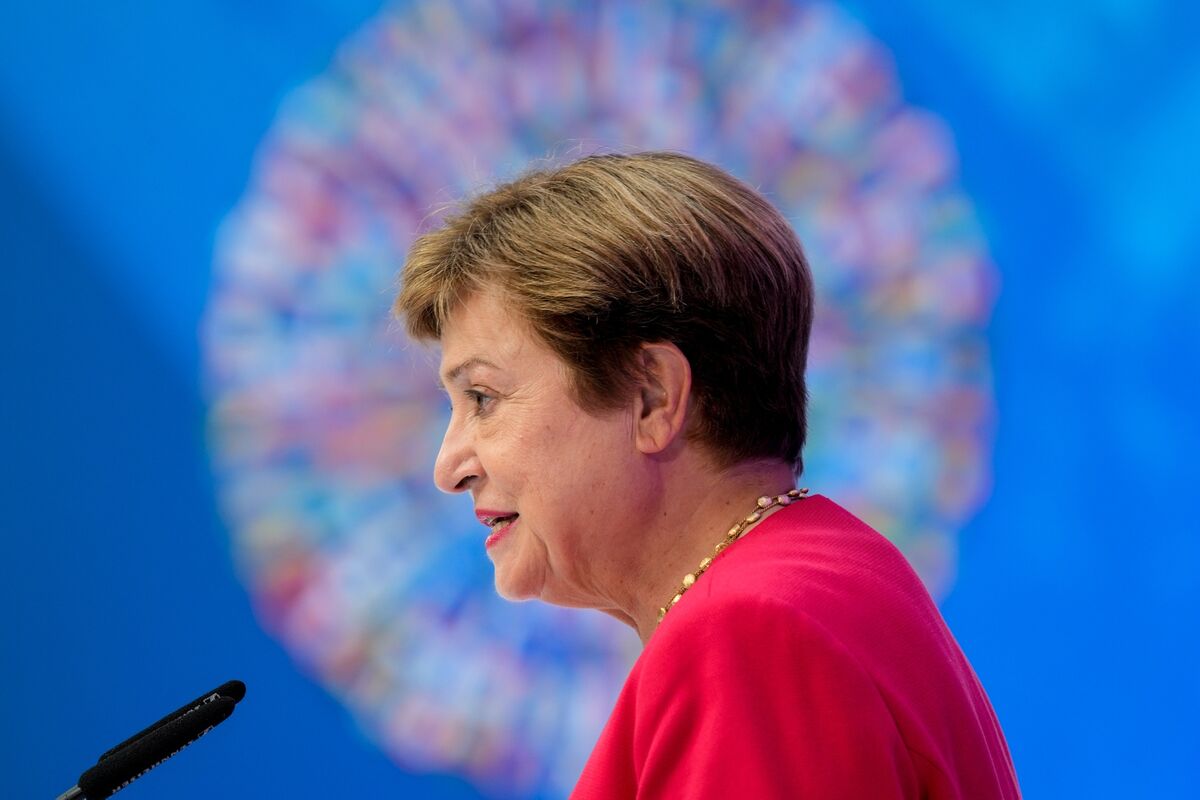
IMF Managing Director Kristalina Georgieva warned that recent US strikes on Iran introduce significant global uncertainty, extending beyond immediate energy market volatility. She emphasized the potential for 'secondary and tertiary impacts' to hinder growth prospects in major economies, which could trigger downward revisions in global growth forecasts.
International Monetary Fund (IMF) Managing Director Kristalina Georgieva has formally flagged the recent US strikes on Iran as a significant source of global economic uncertainty, a development markets should view with a high impact score (0.8) and strongly negative sentiment (-0.7). The immediate transmission channel identified is through energy price volatility, which the IMF is monitoring closely. However, Georgieva's core warning centers on the potential for "secondary and tertiary impacts," suggesting a contagion risk beyond the energy sector. These subsequent effects could manifest as turbulence that directly hinders growth prospects in large economies, creating a trigger for downward revisions to global growth forecasts. This elevates the geopolitical event from a regional conflict to a potential catalyst for a material slowdown in the global economy, moving beyond initial energy market shocks to threaten broader macroeconomic stability.
AI-powered research, real-time alerts, and portfolio analytics for institutional investors.
Request DemoOverall Sentiment
strongly negative
Sentiment Score
-0.70
