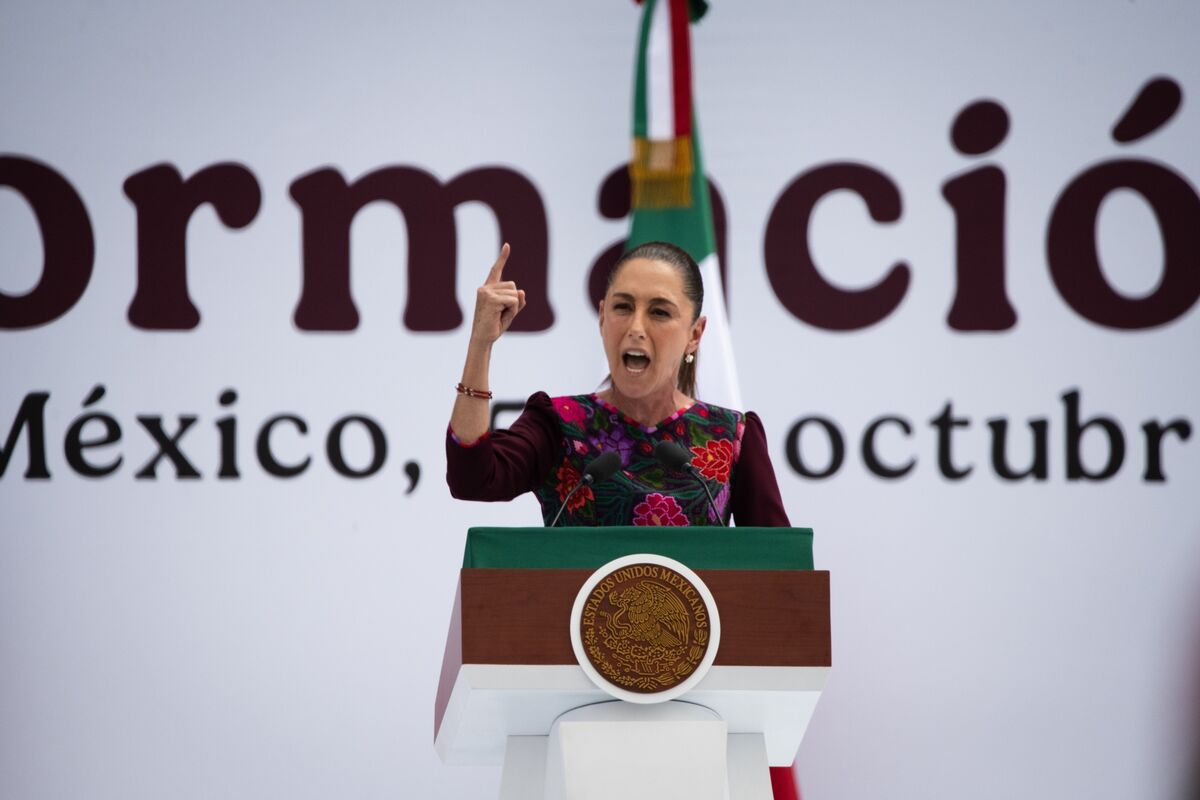
Mexico's Lower House has approved President Claudia Sheinbaum's second-year budget, totaling 10.1 trillion pesos ($543 billion) in spending. The budget, funded by a series of tax hikes, aims to finance social programs and infrastructure projects while simultaneously working to narrow the nation's fiscal deficit.
Mexico's Lower House has approved President Claudia Sheinbaum's second-year budget, outlining a substantial 10.1 trillion pesos ($543 billion) in spending. This significant fiscal plan aims to fund critical social programs and infrastructure projects across the nation. The budget's approval signals a clear direction for the country's economic policy under the new administration.
Funding for this ambitious spending package will primarily come from a series of new tax hikes. Concurrently, a stated objective of the budget is to narrow the nation's fiscal deficit, balancing increased expenditure with fiscal responsibility. This dual approach suggests an effort to stimulate growth while addressing long-term financial stability.
The 'mixed' sentiment and 'neutral' tone associated with this development indicate that while the budget addresses key social and infrastructure needs, the reliance on tax hikes could introduce economic headwinds or uncertainty. As an emerging market, Mexico's fiscal policy decisions have broad implications for investor confidence and capital flows. The moderate market impact score suggests this is a significant, but not immediately disruptive, policy shift.
AI-powered research, real-time alerts, and portfolio analytics for institutional investors.
Request DemoOverall Sentiment
mixed
Sentiment Score
0.05
