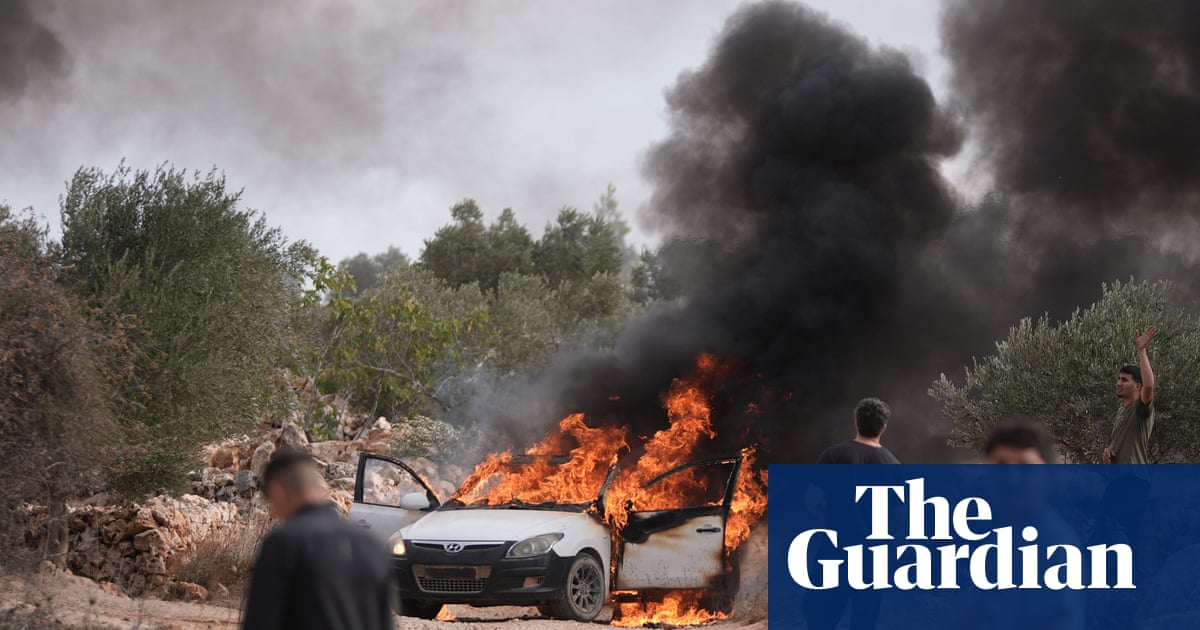
Violence has surged across the occupied West Bank as Israeli settlers have stepped up coordinated harassment and attacks against Palestinian olive farmers during the harvest — the UN logged more than 260 attacks in October (its highest monthly count since 2006) and the Palestinian Farmers’ Union says incidents against its members have risen fourfold. Reported actions include assaults, arson, ransacking of industrial sites and destruction of olive trees, while Israeli authorities rarely secure prosecutions (only one in 20 investigations leads to charges) and several senior ministers in the rightwing coalition have close ties to settler activists, complicating law‑enforcement. The humanitarian and economic impact is acute — well over 1,000 Palestinians have been killed in the West Bank since 7 October 2023 (one in five are children) and revenue from olives has collapsed from roughly $130m annually, threatening the livelihoods of about 110,000 farmers and 50,000 workers and creating sustained security, supply‑chain and reputational risks with potential political and diplomatic fallout.
Violence by Israeli settlers across the occupied West Bank has escalated sharply during the olive harvest, with the UN logging more than 260 attacks in October — its highest monthly count since monitoring began in 2006 — and the Palestinian Farmers’ Union reporting incidents against its members have risen fourfold. Recent episodes include vandalised cars and ransacked industrial sites in Beit Lid, arson of olive trees near Qalqilya, assaults on agricultural workers in Beit Furik and Beit Duqqu, and widespread intimidation that farmers and volunteers say is aimed at disrupting harvests.
Enforcement and political dynamics amplify instability: Israeli authorities close few cases (only one in 20 investigations into settler violence leads to charges), three of four suspects in the Beit Lid attack were released, and several cabinet ministers have close ties to settler groups, even as rare public condemnations by the president and prime minister signal limited political pushback. International volunteers assisting harvests have been detained and deported, illustrating constraints on outside mitigation efforts.
The economic and investor consequences are tangible for regional agriculture and supply chains: olive revenue has collapsed from roughly $130m annually pre-war, imperilling livelihoods of about 110,000 farmers and 50,000 related workers and creating sustained reputational, operational and geopolitical risk. Market-impact metrics in the signals show a relatively low immediate market impact score (0.35), but the combination of weak rule-of-law indicators, humanitarian toll (well over 1,000 killed since 7 October 2023) and political alignment with settler actors creates a material medium-term risk vector for assets with exposure to the West Bank or to firms tied to settlements.
AI-powered research, real-time alerts, and portfolio analytics for institutional investors.
Request DemoOverall Sentiment
strongly negative
Sentiment Score
-0.80
