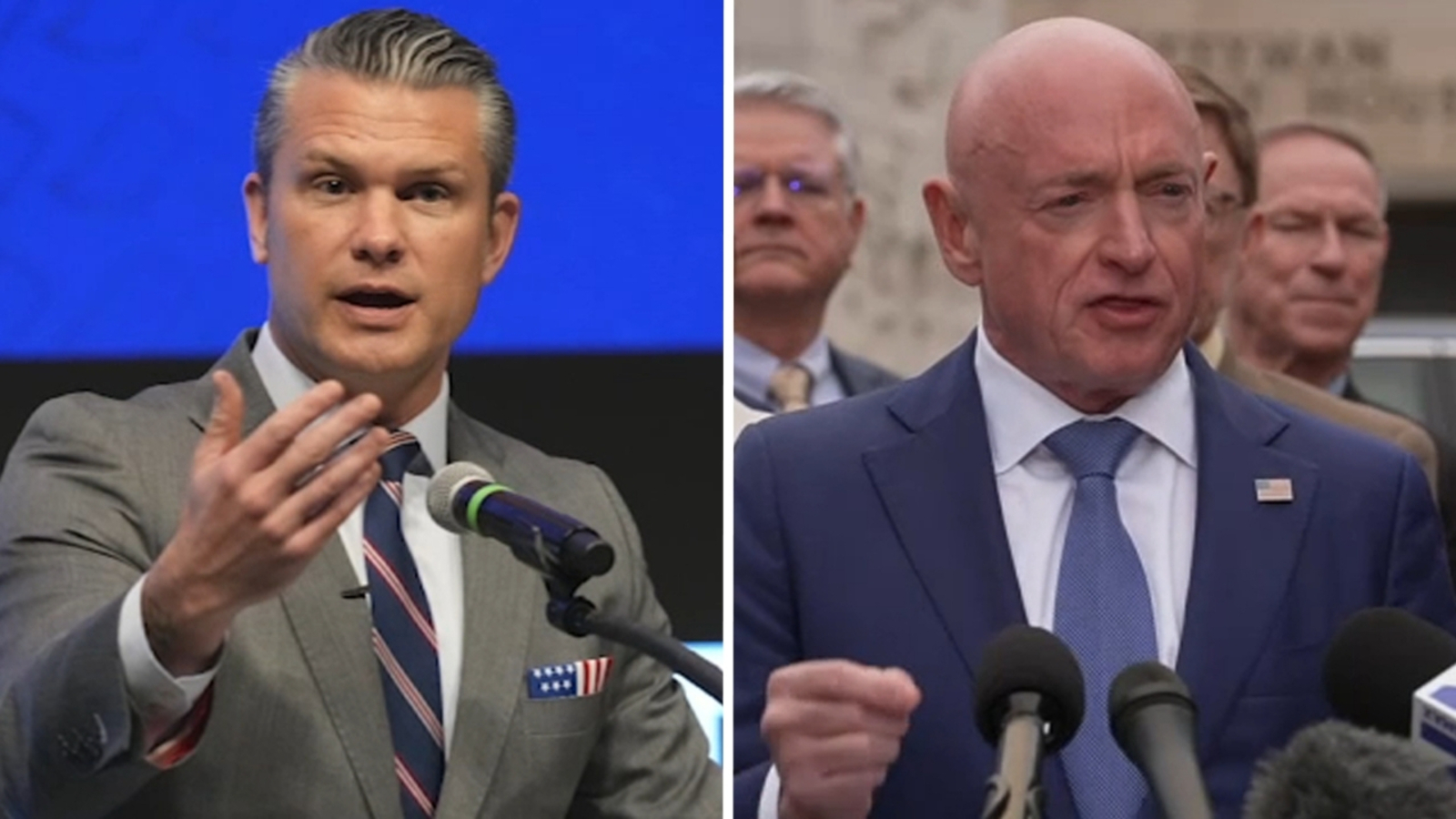
A federal appeals court appeared inclined to block Defense Secretary Pete Hegseth's effort to punish Sen. Mark Kelly over a video urging service members to refuse illegal orders. The case centers on First Amendment protections for retired military members and whether the Pentagon can reduce Kelly's retired rank and pay or issue a censure letter. The dispute is politically charged but is unlikely to have broad market impact beyond defense-policy and legal-watch sentiment.
The market implication is not the headline legal outcome itself, but the signaling effect: any judicial check on executive retaliation lowers the perceived probability that administrative power will be used indiscriminately against prominent critics. That matters most for institutions with large political-advertising, lobbying, or defense-exposure footprints, because a more constrained retaliation regime reduces the tail risk of sudden government-driven scrutiny shifts. In practice, the equity impact is likely muted for the direct names here, but the decision would support a modest de-escalation premium in media and defense contractors that have been trading on Washington policy noise rather than fundamentals.
The more interesting second-order effect is on speech-policing behavior inside the military and broader federal workforce. If the administration loses, it becomes harder to convert one-off political disputes into durable deterrence, which should reduce the odds of repeated, headline-driven legal skirmishes over the next 3-6 months. That lowers legal expense volatility and reputational risk for publicly visible retirees, veterans groups, and adjacent advocacy organizations, while increasing the probability that future disputes are litigated in slow-motion rather than resolved through punitive administrative action.
For WBD, the direct read-through is mostly sentiment: the company is the wire-service distributor, not the economic beneficiary. But a prolonged conflict between the administration and high-profile critics tends to increase news cycle intensity and engagement, which can modestly support cable/news consumption even when ad sentiment is mixed. The contrarian angle is that the consensus may be overestimating the market impact of the case while underestimating how often political-legal conflict creates recurring content inventory for legacy news assets over the next quarter.
AI-powered research, real-time alerts, and portfolio analytics for institutional investors.
Request DemoOverall Sentiment
neutral
Sentiment Score
-0.10
Ticker Sentiment
