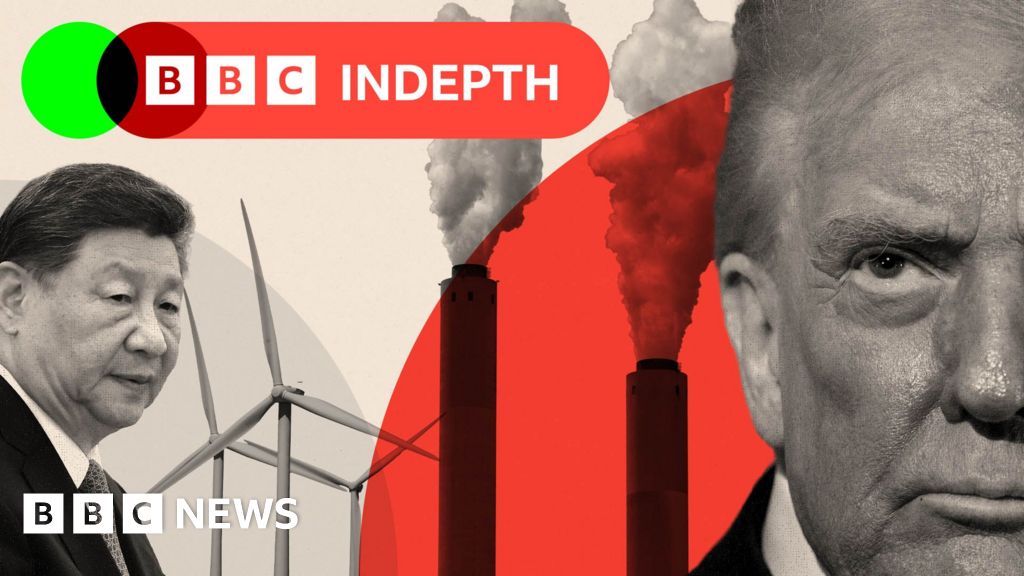
The COP30 summit's significantly reduced attendance, including key leaders like Trump and Xi, signals a decline in multilateral climate diplomacy, with the Trump administration actively dismantling clean energy policies and promoting fossil fuels in the US. Concurrently, China has solidified its "unassailable" dominance as the global clean-tech superpower, driving its economy through renewables and EVs, setting up a geopolitical and economic collision with the US. This divergence forces other major economies to navigate complex trade-offs between climate goals, economic security, and industrial competitiveness. Consequently, future decarbonization efforts are expected to be driven more by national interests and bilateral deals than broad international consensus, profoundly impacting global energy investment strategies and supply chains.
The COP30 summit's significantly reduced attendance, notably by leaders from the US, China, and India, underscores a marked decline in multilateral climate diplomacy. The Trump administration's explicit withdrawal from the Paris Agreement and its characterization of climate change as a "con job" signal a fundamental shift towards a fossil fuels-first agenda. This policy includes rolling back environmental regulations, providing tax breaks for fossil fuel firms, and actively promoting US oil and gas exports globally.
In stark contrast, China has solidified an "unassailable" global leadership in clean technology, with renewables and EVs driving a substantial portion of its economic growth and comprising over 10% of its economy. China's dominance in solar panels (80%+), advanced batteries, EVs (70%), and wind turbines (60%+) at low prices presents a direct challenge to Western industrial ambitions. This divergence creates a geopolitical collision between the US's fossil fuel strategy and China's clean energy leadership.
European nations, including the UK, are caught between these two superpowers, balancing climate goals with economic security and industrial competitiveness. The EU's ambition to capture 15% of the projected €2 trillion clean energy market by 2030 is challenged by China's existing dominance, leading to protective measures like tariffs on Chinese EVs. Consequently, future decarbonization efforts are expected to shift from broad multilateral commitments to more nationalistic strategies and bilateral deals.
AI-powered research, real-time alerts, and portfolio analytics for institutional investors.
Request DemoOverall Sentiment
moderately negative
Sentiment Score
-0.50
Ticker Sentiment
