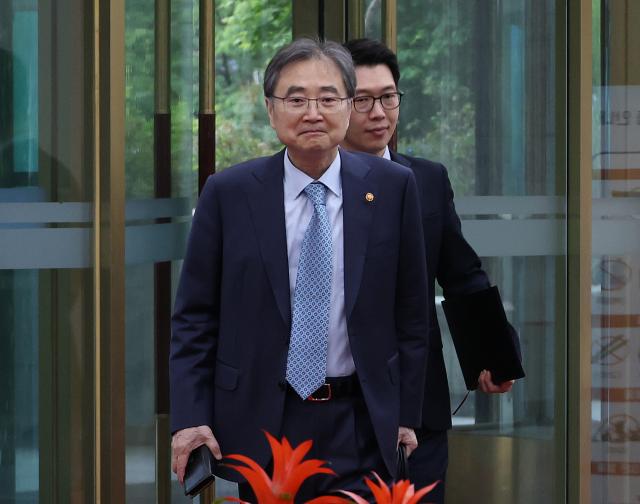
South Korea said the attack on HMM cargo ship Namoo cannot be justified and will trigger further investigation, consultation with relevant countries, and possible response measures. Officials are working to recover wreckage from the UAE and review CCTV evidence, while also stressing protection of South Korean sailors and maritime freedom amid Middle East conflict risks. The article adds broader foreign-policy context on U.S., China, and Japan relations, but the immediate market relevance is the shipping and geopolitical risk backdrop.
The immediate market read is not on South Korea-specific equities, but on the insurance and logistics stack that absorbs route-risk repricing. Even a single civilian shipping attack increases the odds of higher war-risk premia, tighter marine insurance capacity, and more conservative routing across the Red Sea–Gulf–Indian Ocean complex; that tends to show up first in spot freight, then in forward charter rates, and only later in end-demand. The second-order effect is a hidden tax on Asian exporters: lead times stretch, working capital rises, and just-in-time manufacturers with low inventory buffers become the marginal losers. The bigger underappreciated issue is that the market usually underprices duration mismatch. Headlines like this fade quickly, but underwriting committees do not; if investigations remain unresolved for weeks, insurers can raise premiums again on a rolling basis even without additional incidents. That creates a slow-burn margin headwind for carriers and freight forwarders, while beneficiaries are the larger, balance-sheet-heavy logistics firms with pricing power and captive capacity. On the policy side, South Korea’s emphasis on maritime-law enforcement and freedom of navigation is a signal that escalation management will be diplomatic rather than kinetic. That reduces the probability of immediate broad sanctions, but increases the chance of fragmented, country-specific compliance burdens and escort/security costs. The contrarian view is that the move may be over-credited as a geopolitical shock: unless there is a second incident or credible attribution to a state actor, the macro impact is likely to stay localized to insurance and routing rather than broad trade disruption. For investors, the cleanest expression is relative value: short the most levered carriers and long the beneficiaries of higher freight volatility. The opportunity is best expressed over the next 1-3 months, not days, because pricing friction compounds through contract renewals. If the wreckage/CCTV investigation produces attribution that widens the incident narrative, the trade can extend materially; if not, expect mean reversion in about 4-6 weeks as spot market fear decays.
AI-powered research, real-time alerts, and portfolio analytics for institutional investors.
Request DemoOverall Sentiment
mildly negative
Sentiment Score
-0.15
