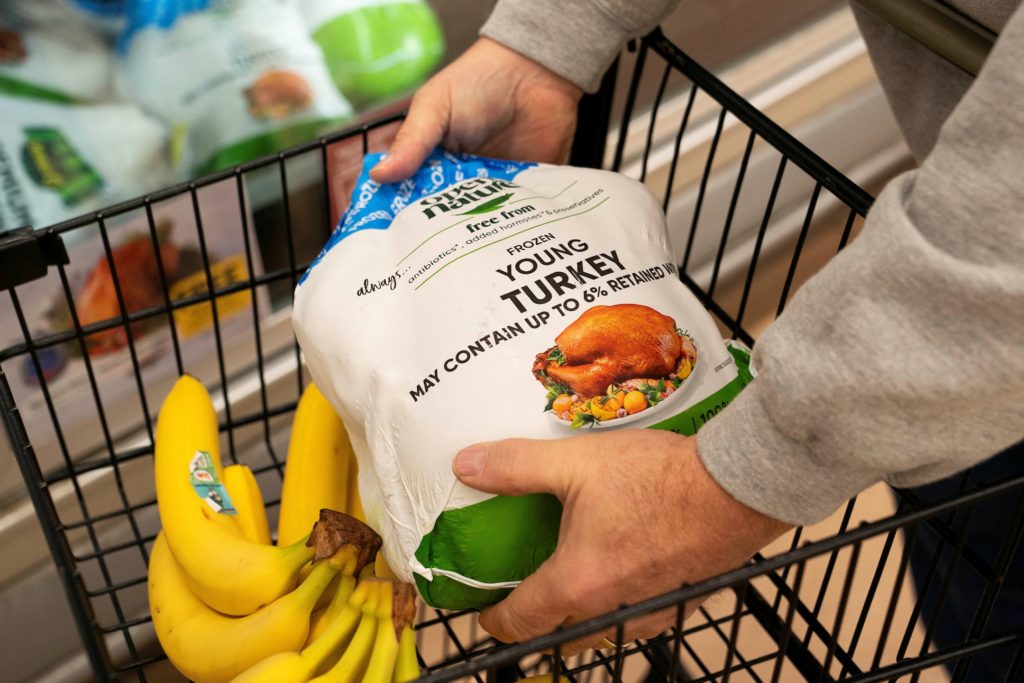
Wholesale turkey prices are roughly 40% higher year‑over‑year amid avian influenza culls (over two million turkeys lost) and a separate respiratory virus hampering flock rebuilding, while retail frozen turkeys remain largely flat due to loss‑leader pricing and bundled meal deals. Broader grocery prices are about 25% higher versus five years ago and 2.7% year‑over‑year, with beef at retail record highs, fresh vegetables +3% YoY, canned vegetables +5%, coffee +18% YoY and cocoa near record highs; tariffs on steel/aluminum have raised input costs for packaging and increased imported wine prices, implying margin pressure on producers and potential pricing/headline risk for food retailers and commodity suppliers.
Market structure: Wholesale turkey prices +40% YoY and ~2M birds culled tighten supply for processors (Jennie‑O/Hormel, Tyson, Pilgrim’s Pride) while retailers (WMT, COST, KR) use whole turkeys as loss leaders, decoupling wholesale-to-retail pass‑through. Net winners near term are large-format retailers who capture basket sales and commodity traders in coffee/cocoa; independent grocers and small producers face margin stress and possible market share loss within 3–12 months.
Risk assessment: Tail risks include a renewed avian‑flu wave (>500k incremental flock losses in 30 days) or new tariffs (steel/tin raising canned‑goods input costs >10%), which would spike protein and canned-veg prices and force further CPI upside. Immediate (days) effects are promotional pricing volatility; short term (weeks–months) sees holiday demand substitution (beef↔turkey); long term (quarters) depends on flock rebuild rates and AMPV recovery — monitor USDA flock loss cadence weekly.
Trade implications: Tactical plays: long scale-friendly retailers (WMT) to capture traffic, buy call spreads on processors with turkey exposure (HRL, TSN) for supply-driven pricing upside, and long physical/ETN cocoa (NIB) and coffee (JO) where spot is +18% YoY. Use pair trades (long WMT vs short KR) to play scale advantage; prefer 1–3 month option structures to avoid long tail biological uncertainty.
Contrarian angles: Consensus underestimates timing mismatch — retail price suppression is temporary and processors may re-price into 2026 as frozen inventories deplete; cocoa/coffee are priced for bad harvests but can mean‑revert on a single good season (risk of 20–30% pullback). Also political pressure over “cheap Thanksgiving baskets” could trigger margin policy shifts at retailers, reversing share gains quickly.
AI-powered research, real-time alerts, and portfolio analytics for institutional investors.
Request DemoOverall Sentiment
mildly negative
Sentiment Score
-0.25
Ticker Sentiment
