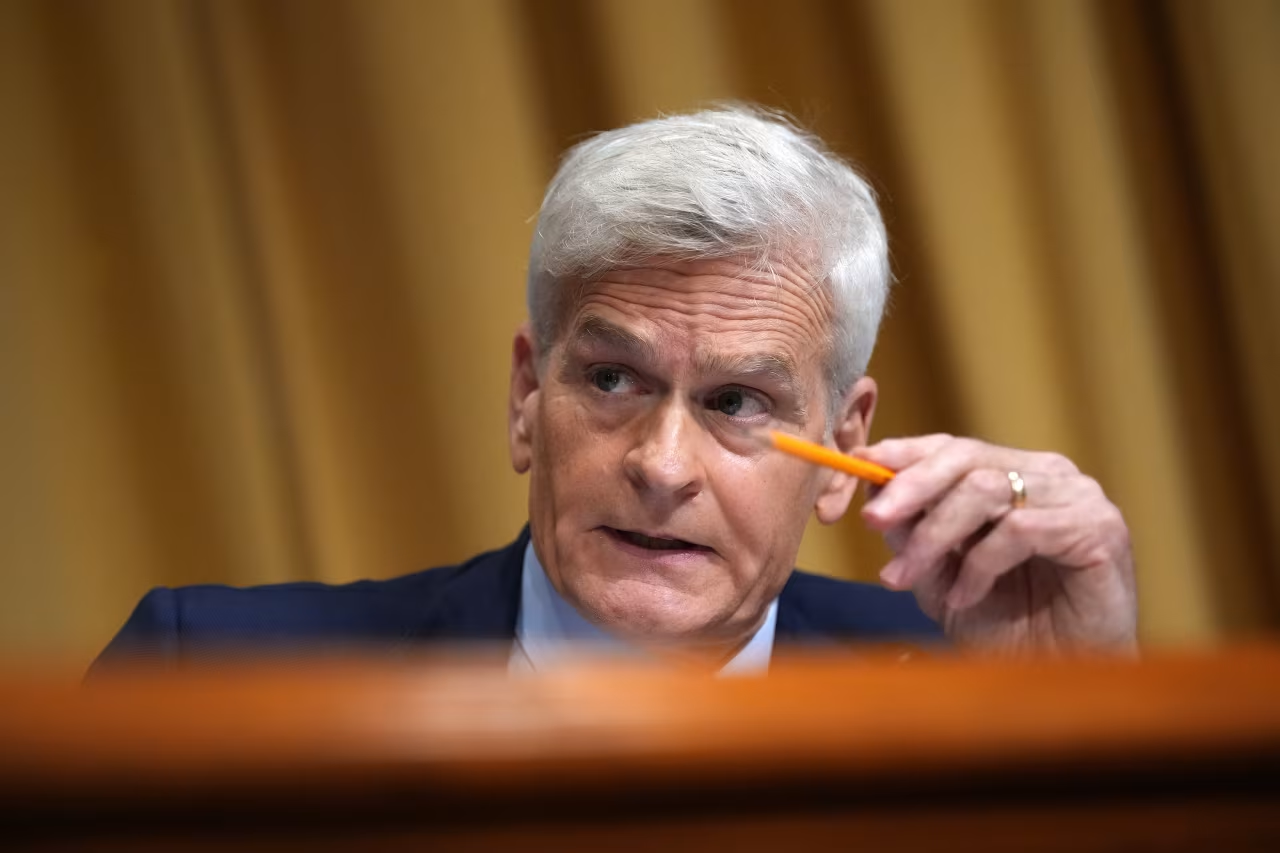
The CDC’s Advisory Committee on Immunization Practices, reconstituted by HHS Secretary Robert F. Kennedy Jr., is meeting to vote on abandoning the long-standing universal newborn hepatitis B vaccine recommendation in favor of individual-based decision-making and recommending that initial doses omitted at birth not be given earlier than two months. The process has featured contested presentations from non‑traditional and disputed experts and drawn sharp criticism from clinicians and lawmakers, creating regulatory and reputational uncertainty for public-health policy though with limited direct market implications.
Market structure: The ACIP vote is a political/regulatory shock concentrated on pediatric vaccine policy rather than broad demand destruction. Directly exposed names: Merck (MRK) and GlaxoSmithKline (GSK) (infant HBV products) face headline risk and potential short-term order uncertainty; hospital birth volumes (HCA, CYH) and vaccine contract manufacturers (EBS) could see minor timing shifts. Pricing power for incumbent vaccine franchises is intact long-term because neonatal HBV is low-margin, high-volume and embedded in public programs; any volume decline is likely <10% nationally given screening coverage gaps cited (12–16% unscreened pregnancies).
Risk assessment: Tail risks include federal policy reversal that cascades into state-level exemptions, class-action litigation (plausible within 6–24 months), or supply chain re-configuration forcing manufacturers to write down inventory — low probability but high impact (>5% EPS shock for small-cap vaccine suppliers). Near term (days/weeks) risk is event-driven headline volatility around the vote; short-term (1–3 months) risk is regulatory guidance and insurance coding changes; long-term (6–24 months) risk is litigation and potential catch-up vaccination campaigns. Hidden dependencies: Medicaid/CDC procurement contracts and state immunization program reimbursements determine real revenue impact, not ACIP language alone. Catalysts: the ACIP vote (0–7 days), CDC director acceptance (0–30 days), state health department guidance (30–90 days), and any high-profile litigation filings (60–365 days).
Trade implications: For nimble traders, use small, sized trades: buy 90–120 day put spreads on MRK and GSK sized 0.5–1% portfolio risk to hedge headline shock; consider 2–3% long position in UnitedHealth (UNH) and HCA for higher utilization and testing/care coordination revenue if screening increases. Pair trade: long UNH (payer capture of testing) vs short MRK (vaccine headline beta) through June 2025; target asymmetric payoff where MRK downside >5% if guidance cascades. Options: sell covered calls on acquired MRK/GSK positions to finance protective puts; prefer 3-month expiries, strikes 5–8% OTM.
Contrarian angles: The market may overstate structural demand loss — ACIP is advisory and CDC/HHS executive actions + state immunization law make full de-listing unlikely; historical precedent (measles policy back-and-forth) shows quick policy reversals within 6–12 months. If MRK/GSK drop >7–10% on headlines, initiate staged buys (50% at 7% drop, rest at 12%) as idiosyncratic fundamentals remain solid and vaccine cashflows are durable. Unintended consequence: temporary policy loosening could spark targeted catch-up programs that increase lifetime vaccine revenues by channeling missed birth doses into later pediatric visits (positive for vaccine makers over 12–36 months).
AI-powered research, real-time alerts, and portfolio analytics for institutional investors.
Request DemoOverall Sentiment
moderately negative
Sentiment Score
-0.35
