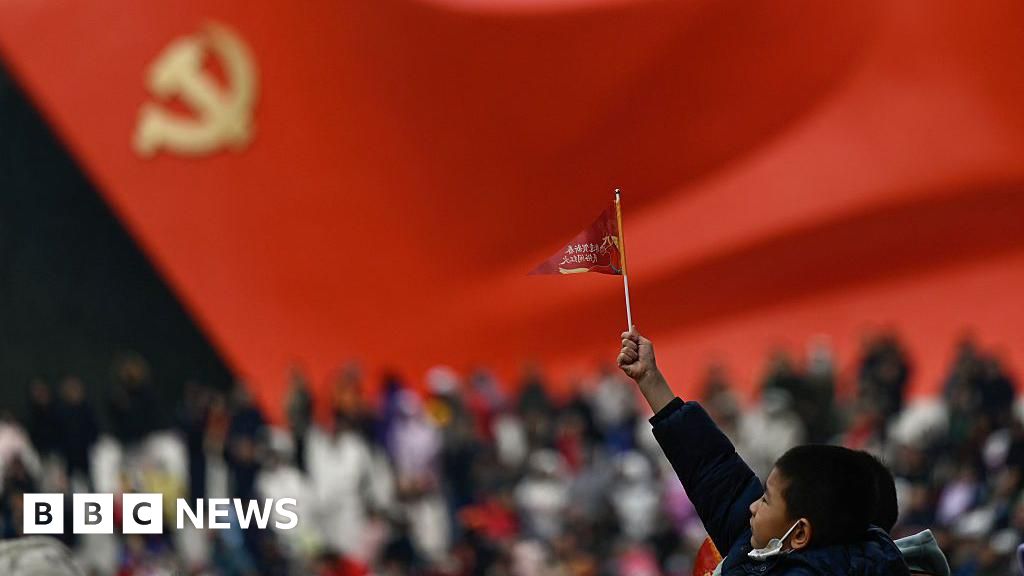
China's annual 'two sessions' convene to deliver the Government Work Report (including this year's GDP growth target — recently described as 'around 5%') and to approve the 2026–2030 Five Year Plan, which will signal Beijing's industrial and budgetary priorities. Policymakers are expected to outline support for high‑tech and renewable energy sectors and approve an Ecological and Environmental Code, while proposed 'ethnic unity' legislation and recent purges of senior military delegates increase political and social risks. Hedge funds should focus on the explicit growth target, budget and sectoral support language that could redirect capital toward strategic tech and clean‑energy names, while monitoring downside risk from tighter state controls and geopolitical uncertainty.
Market structure: The Two Sessions telegraph a tilt toward state-led strategic industries (semiconductors, batteries, solar, AI infrastructure) and continued support for SOEs; expect 12–36 month incremental demand for capex, R&D and procurement that can boost pricing power for domestic champions by +5–15% in target segments. Consumer discretionary and import-heavy luxury/consumption names face downside if the GDP target is set below 5% and consumption-stimulation is limited; that would compress sales growth by an estimated -3–7% YoY in H1. FX and rates: a muted stimulus path implies weaker CNY (-1–3% vs USD over 3 months), but targeted fiscal support should keep 10y CGB yields rangebound or modestly lower by 10–30bp on QE-like measures.
Risk assessment: Tail risks include an escalation of anti-corruption purges to private-sector executives or a Five Year Plan signaling stricter controls—both could trigger >25% drawdowns in ADRs within days. Timeline: immediate volatility (days) around the work report; policy specifics (weeks) in the Five Year Plan; structural reallocation to self-reliance is a multi-year (3–5y) regime change. Hidden dependencies: export demand and US-China relations could negate domestic support; watch FX reserve moves and state bank lending windows. Key catalysts: Premier’s GDP target, explicit capex/fab subsidies, and language on “self-reliance” in chips/energy within 7–21 days.
Trade implications: Constructive trades: overweight Chinese clean-energy supply chain and select industrial SOEs; underweight/hedge internet and luxury consumption. Direct: use country ETFs (FXI/MCHI) for beta tilt and JKS/BYD for targeted alpha; implement protective options around the NPC window. Pair trades: long state-capex beneficiaries vs short discretionary/import-exposed names to capture policy-driven rotation. Timing: establish small pre-event allocations (1–3%) and scale within 2–4 weeks after Plan confirmation; set stop-losses at 12–20% depending on volatility.
Contrarian angles: The market may underprice multi-year domestic capex (semis, fabs, polysilicon, battery materials); this implies a 12–24 month replay opportunity similar to post-2016 industrial repricing. Consensus may be overstating near-term consumer collapse—if the Five Year Plan promises targeted demand stimuli, cyclical beneficiaries could rebound +20–35% over 12 months. Unintended consequence: stronger ethnic-unity and security laws could spook foreign investors, creating transient windows to buy quality industrials at 10–25% discounts.
AI-powered research, real-time alerts, and portfolio analytics for institutional investors.
Request TrialOverall Sentiment
neutral
Sentiment Score
-0.10
