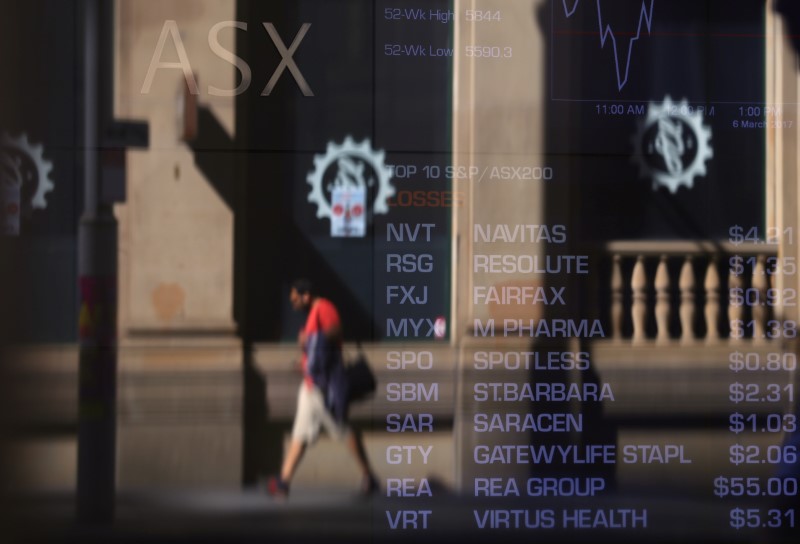
Trump said the Israel-Lebanon ceasefire has been extended by three weeks and that there is no rush for an Iran deal, underscoring a cautious geopolitical backdrop. The article also noted a 0.08% decline in the S&P/ASX 200, with gold futures down 0.78% to $4,687.01, Brent up 0.40% to $105.49, and the ASX VIX down 3.10% to 12.93. Broader market moves were mixed, with Australian stocks lower and FX mostly steady.
The market setup is less about the headline ceasefire extension itself and more about what it removes from the near-term risk stack: an immediate escalation premium in oil, freight, and regional risk assets. With implied vol easing, the faster money is likely de-risking crude-linked hedges and rotating back into cyclical names that were forced to carry a geopolitical discount; that creates a short-lived bid for quality industrials and defensives, but the bigger second-order effect is in commodity beta where positioning was already crowded.
Energy looks vulnerable to mean reversion unless the extension fails or rhetoric hardens again. The key nuance is timing: a three-week window is too short for fundamental supply changes, but long enough for speculative length to unwind if Brent cannot hold the recent breakout. That means upstream producers with leverage to spot prices are more exposed than integrateds or refiners, while transport-heavy end markets could see immediate relief in input-cost expectations.
The single-stock overreaction risk is in high-beta commodity and defense proxies: any rally tied to a geopolitical shock that is not followed by physical disruption tends to fade quickly once vol compresses. The structure here also argues for watching FX and rates rather than just oil; a calmer Middle East backdrop can reinforce the dollar bid and cap AUD-sensitive commodity names, particularly where earnings already depend on China-linked demand. In that sense, the move is probably underpriced in terms of cross-asset de-risking, but overpriced in terms of any lasting cash-flow impact.
For SMCI and APP, the direct read-through is weak, but both remain momentum-sensitive names that can benefit mechanically from lower macro vol and a softer risk-premium backdrop. If the market interprets this as one less inflation shock, longer-duration growth trades should see better sponsorship, though that is a flow effect rather than a fundamental one.
AI-powered research, real-time alerts, and portfolio analytics for institutional investors.
Request TrialOverall Sentiment
neutral
Sentiment Score
-0.05
Ticker Sentiment
