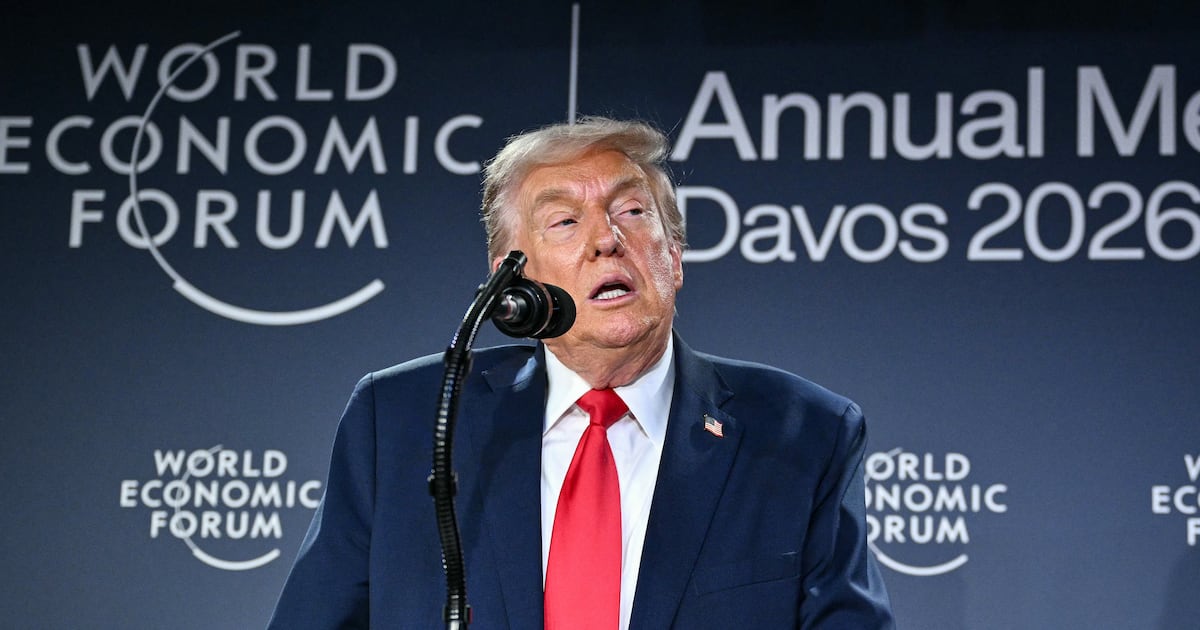
President Donald Trump's first return to the World Economic Forum since 2020 highlighted attendee complaints that Davos has shifted from a policy-focused summit to a corporatized spectacle, with brand activations from Meta, TikTok, Coinbase and Stripe and a prominent Palantir Pavilion opposite a privately funded "USA House" hosting Trump administration officials. Visible jeering at a speech by Commerce Secretary Howard Lutnick and commentary that Larry Fink is steering the Forum toward a pure business conference underscore a pullback from ESG and global-cooperation themes, creating reputational risks and signalling a potential reorientation of dealmaking, tech and crypto engagement at the Forum.
Market structure: The Davos shift toward branded activations and political pageantry benefits ad-tech and payments firms that monetize attention (META, Stripe/COIN exposure indirectly) through short-term demand for marketing and platform usage, but it creates reputational and flow risk for asset managers (BLK) and surveillance vendors (PLTR). Expect marginal pricing power gains for large ad platforms (2–5% incremental CPM leverage near events) but potential AUM reallocation away from firms perceived as politically compromised, which could translate to 0.5–1.5% quarterly outflow risk for exposed managers.
Risk assessment: Near-term (days–weeks) tail risks are PR-driven volatility spikes (20–40% intraday IV lift for mentions), mid-term (1–6 months) risks include regulatory inquiries into surveillance/AI (PLTR) and client redemptions for BLK, long-term (1–3 years) risks are structural mandates shifting away from firms seen as politicized. Hidden dependencies include government procurement pipelines for PLTR and passive flow sensitivity for BLK; catalysts that flip sentiment include hearings, ECB/comments on political risk, and quarterly flow reports.
Trade implications: Tactical trades should express relative views — defensive exposure to large-cap ad platforms and hedged short exposure to surveillance and politically-exposed managers. Use limited-duration options to capture event-driven volatility (3–6 month expiries) and prefer pair trades to remove market beta; size trades to 1–3% of portfolio and set clear stop-loss thresholds (6–10%).
Contrarian angles: Consensus underestimates that brand activations can drive measurable ad revenue in Qs around global forums, so outright long-term shorts on META are likely overdone; conversely, PLTR’s Davos presence could convert to higher-probability government engagements, making naked shorting risky. Historical parallels (Davos 2008/2016) show reputational episodes often reverse within 6–12 months absent regulatory action, so watch objective flow and bookings triggers before scaling positions.
AI-powered research, real-time alerts, and portfolio analytics for institutional investors.
Request DemoOverall Sentiment
mildly negative
Sentiment Score
-0.25
Ticker Sentiment
