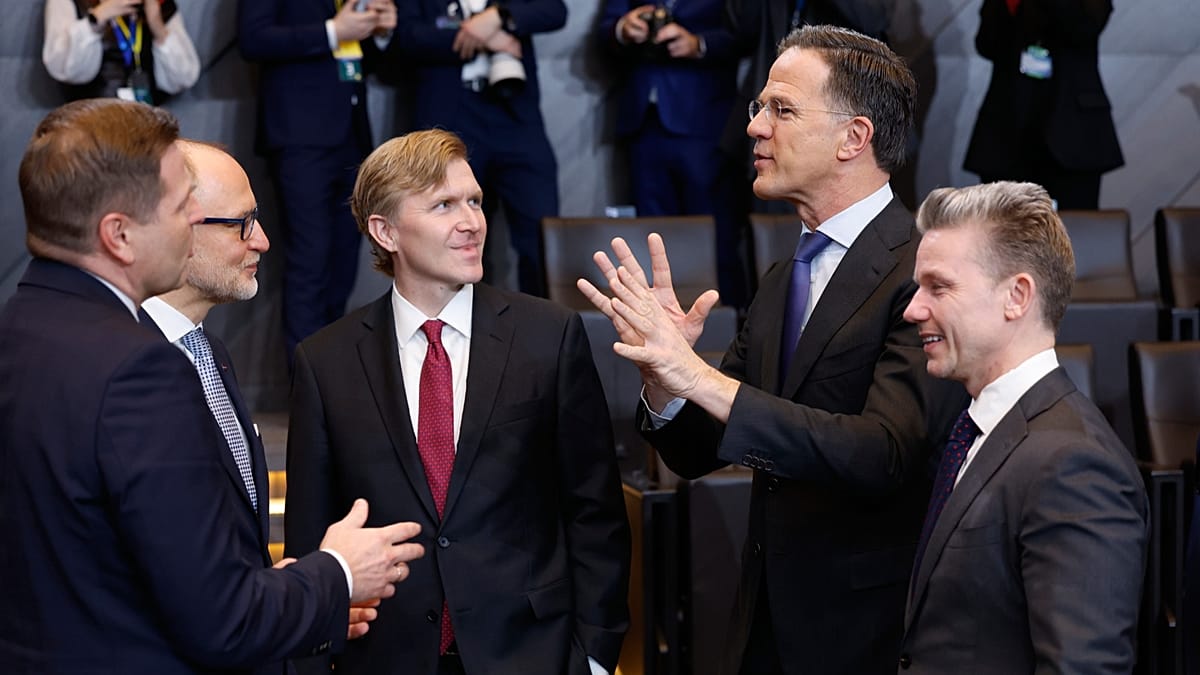
NATO defence ministers endorsed the launch of 'Arctic Sentry', a new multi-domain enhanced vigilance activity uniting 32 allies' operations in the High North, while reiterating that support for Ukraine remains the alliance's top priority. Several European states signalled fresh materiel commitments: the UK pledged an additional £500m to Ukraine (£150m via PURL for US air-defence interceptors, the balance for 1,000 UK-made lightweight multirole missiles), Sweden is assembling a third PURL package after contributing over $325m in its first two, and Germany signalled likely further use of PURL for air defence procurement. Ministers stressed parallel focus on Arctic security and pressuring Russia economically and militarily, underscoring continued defence procurement and geopolitical risk in Europe.
Market structure: The NATO Arctic Sentry announcement and renewed PURL activity creates a clear winners’ ladder — prime US and European defence contractors (Lockheed Martin LMT, Raytheon/RTX, Northrop NOC, General Dynamics GD, BAE Systems BAES.L and Saab SAAB-B.ST) and ETFs (ITA, XAR) should see durable orderflow. Pricing power will accrue to missile/air-defence and cold-weather systems suppliers as production capacity is binding; expect OEM lead times to extend 6–24 months and subcontractor margins to rise. Commodities for manufacturing (specialty steel, electronics-grade copper) will see tightening, while Russia-exposed exporters and discretionary travel demand (airlines, JETS ETF) are net losers.
Risk assessment: Tail risks include a major NATO–Russia kinetic escalation (low probability, high impact) or US domestic political interference that halts PURL purchases; either could cause sudden deratings or sanction cascades. Immediate (days) volatility will be headline-driven; short-term (weeks–months) outcomes depend on confirmed PURL packages and US production slotting; long-term (years) supports a secular defense capex upswing. Hidden dependency: US industrial capacity and chip shortages are constraints—production ramp requires 12–24 months and congressional appropriations are bottlenecks. Key catalysts: UDCG/PURL releases (next 30–90 days), US supplemental funding votes, and winter battlefield escalation in Ukraine.
Trade implications: Tactical overweight defence: establish modest exposure to ITA (2–3%) and concentrated longs in LMT and RTX (each 1–1.5%) for expected 12–24 month order fulfilment; pair with a 1% short in JETS to hedge travel/demand shock. Use 6–9 month call spreads on RTX or LMT (buy calls and sell higher strikes) sized 0.5–1% to capture upside while capping premium; add incrementally on confirmed PURL awards. Rotate out 2% of cyclical consumer travel into defence over 4–12 weeks.
Contrarian angles: The market underestimates secondary beneficiaries — Arctic infrastructure providers, cold-weather logistics and niche avionics suppliers (small caps) where orderbooks are opaque; look for mispricings where European defence names trade at single-digit forward multiples due to funding lag. Historical parallel: post-2014 Eastern Europe rearmament produced multi-year outperformance of defence suppliers—this could replay but with supply-chain choke points that make select small/mid-cap suppliers asymmetric opportunities. Unintended consequence: accelerated defence spend may crowd out green/infrastructure projects, creating political/regulatory friction that could re-rate certain industrials.
AI-powered research, real-time alerts, and portfolio analytics for institutional investors.
Request DemoOverall Sentiment
moderately negative
Sentiment Score
-0.25
