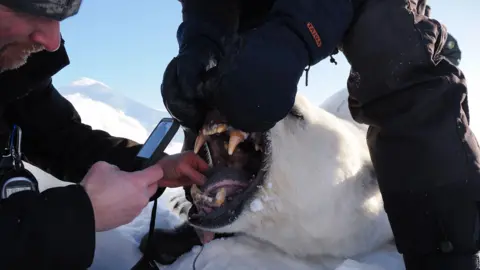
Researchers weighed and measured 770 adult polar bears in Svalbard between 1992 and 2019 and found body condition has improved despite nearly 100 more ice-free days annually (about four additional days per year), likely because bears are supplementing their diet with increasing numbers of land-based prey such as walruses and reindeer. The findings—published in Scientific Reports—suggest short-term regional resilience possibly aided by post-hunting population recoveries and walrus protections, but investigators warn continued sea-ice loss will eventually force greater travel costs and reduce survival, underscoring a region-specific, longer-term existential risk with implications for ESG-focused investors and Arctic policy exposure.
Market structure: The Svalbard study implies short-to-medium term winners are niche Arctic tourism operators and local service/infrastructure providers that monetize increased wildlife visibility (expedition cruise demand, aircraft charters, ground guides). Expect 12–36 month revenue tailwinds for expedition operators (booking lift of +10–30% possible seasonally) and vendors of Arctic equipment; conversely, Arctic upstream oil & gas juniors and any insurers with concentrated coastal exposure face higher regulatory and reputational risk as polar-bear narratives intensify.
Risk assessment: Tail risks include a regulatory clampdown on Arctic drilling (Norwegian parliamentary action or EU/UN measures) or high-profile litigation/NGO campaigns; low-probability but high-impact (10–30% market cap hits) within 6–24 months. Immediate (days): negligible market moves; short-term (3–12 months): booking cycles and parliamentary calendars matter; long-term (3–10 years): persistent ice loss reverses the current ecological rebound and gapingly increases write-offs for Arctic resource projects. Hidden dependencies: tourism capacity constraints, insurance coverage limits, and NGO-driven campaign timing.
Trade implications: Tactical trades favor small, sized exposure to experiential travel (long LIND) via 3–6 month call spreads ahead of the summer 2026 season and a concurrent 12-month put spread hedge on Equinor (EQNR.OL) to cover regulatory tail risk. Reduce Arctic-focused E&P exposure by ~25% over 90 days (examples: AKERBP.OL, LUNE.OL) and add 1–2% position in Arctic-capable industrials (KONGSBERG KOG.OL) for service demand. Use size limits: tourism longs 1–2% portfolio, hedges 0.5–1%.
Contrarian angles: Consensus treats climate damage as uniform; this study shows temporary, region-specific rebounds that can produce 1–3 year mispricings—expedition operators may be undervalued if markets ignore short-term demand elasticity. But flows into tourism can trigger stricter conservation policy (historical parallel: whale recovery → tour booms → regulation), flipping winners into losers; set explicit booking/legislative triggers to flip positions.
AI-powered research, real-time alerts, and portfolio analytics for institutional investors.
Request DemoOverall Sentiment
mixed
Sentiment Score
0.00
