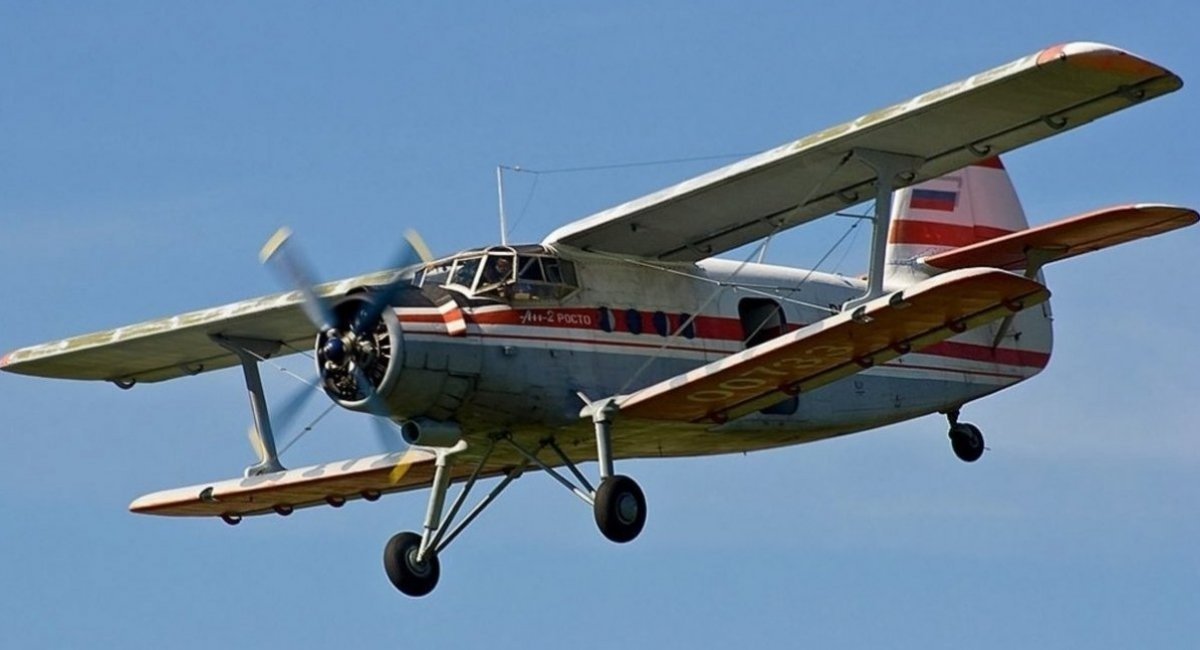
Ukraine is reported as the first country to use the An-28 light transport aircraft as a combat carrier for anti-aircraft drones, prompting Russian discussion of copying the concept. The article highlights potential Russian adaptation options including the An-2, Yak-40, L-410, and Il-114, against the backdrop of Russia’s struggles to counter Ukrainian drone attacks and the proposed $300 million program to restore up to 700 An-2 aircraft. The piece is strategically relevant for defense and military aviation, but it is not likely to have a direct market-moving impact.
This is less about a single aircraft platform and more about a fast-moving doctrine shift: fixed-wing launch platforms are becoming a low-cost force multiplier for drone warfare. The second-order implication is that the bottleneck is no longer just airframe availability, but airborne C2, sensor fusion, and interceptor economics; whoever standardizes the cheapest “truck” for drone launch/kill chains can scale coverage much faster than point-defense systems alone. For Russia, the near-term benefit is asymmetric because legacy aircraft inventories can be monetized into utility without waiting for new production lines. That said, the real constraint is not the platform itself but payload integration, survivability, and training cadence; a converted An-2/Yak-40 may be operationally useful but still vulnerable to EW, MANPADS, and runway denial. Expect incremental adoption over months, not days, with the first meaningful effects showing up in reduced success rates for low-and-slow drone raids rather than in any step-change in strategic air defense. The contrarian angle is that this is a validation of disposable, modular counter-drone systems rather than traditional aviation industrial policy. If fixed-wing “motherships” prove workable, demand should accrue to avionics, datalinks, electro-optical payloads, and EW hardening more than to new aircraft programs; older airframes gain a temporary lease on life, but that is not the same as a durable win for legacy manufacturing. The biggest risk to the thesis is rapid counter-adaptation: once the interceptor-drone concept is widespread, opponents can shift to higher-altitude profiles, decoys, saturation tactics, or autonomous route optimization, compressing the advantage within one to two campaign cycles. That makes the trade more about the ecosystem of counter-UAS and airborne networking than about any specific transport platform.
AI-powered research, real-time alerts, and portfolio analytics for institutional investors.
Overall Sentiment
neutral
Sentiment Score
0.05
