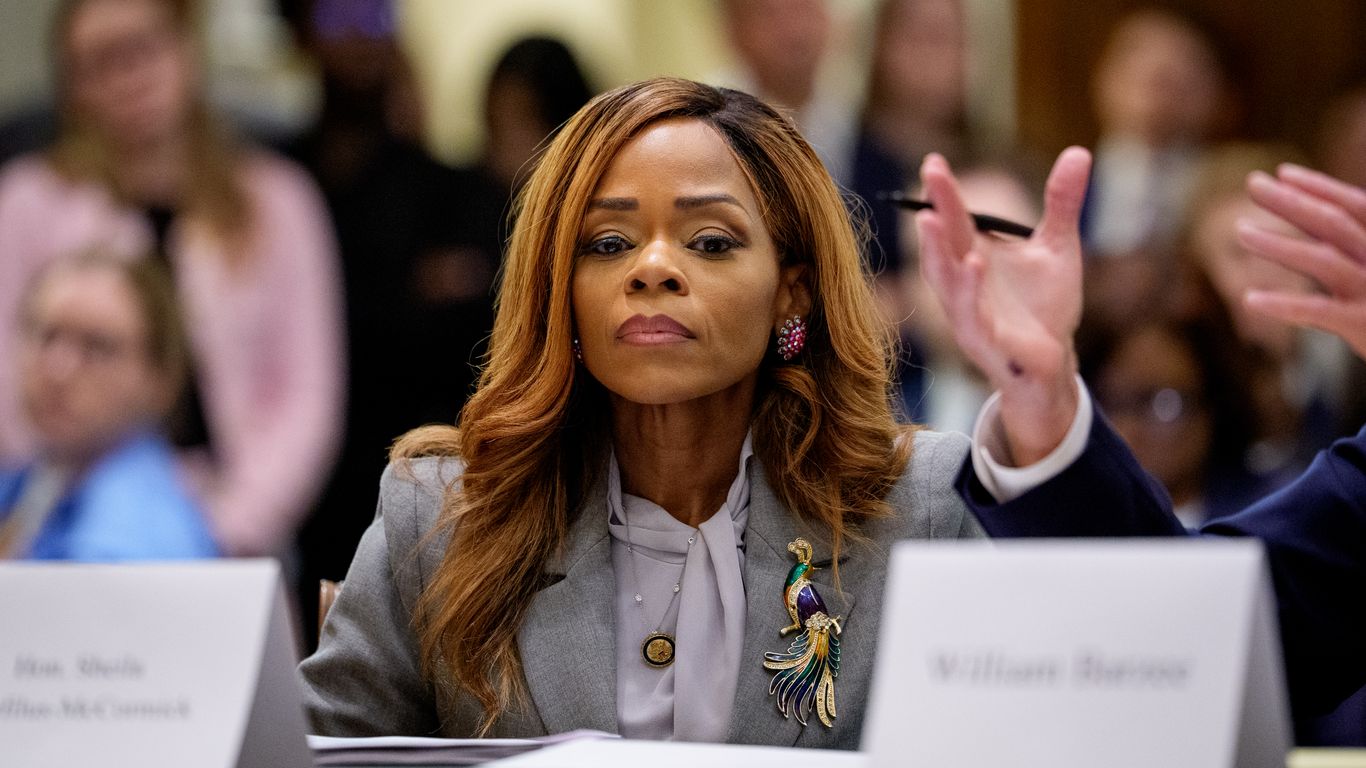
25 of 27 counts against Rep. Sheila Cherfilus‑McCormick were found "proven by clear and convincing evidence" by a House Ethics panel, including 18 campaign finance violations, five false financial disclosures, three counts of misusing official funds and one count of lack of candor. The allegations center on an alleged funneling of a $5 million government overpayment from her family's health‑care company into her 2022 campaign; the Ethics Committee will vote in mid‑April on penalties up to fines, censure or expulsion. Cherfilus‑McCormick has pleaded not guilty in a parallel criminal campaign finance case and House Democrats have urged delaying disciplinary action until that trial concludes, leaving procedural and political uncertainty.
This episode creates an immediate, date-certain governance catalyst (mid‑April Ethics Committee vote) and a longer legal tail (criminal trial timeline) that will materially raise the perceived political risk discount for stakeholders tied to federally funded health contracts in Florida. Expect an accelerated pullback of non‑institutional donors and PACs over the next 2–8 weeks as political actors avoid headline association; materially lower fundraising inflows will raise the probability of a special election within months if punitive action escalates, creating localized volatility in donor-dependent ad markets and consultants.
Second‑order operational impacts for small, federally funded healthcare vendors will show up through tighter audits and slower reimbursements: compliance teams and outside counsel will see demand spike within 1–3 quarters, while smaller operators face margin compression from incremental compliance spend (estimated mid single‑digit percentage points for at‑risk providers). Large diversified payors and vendors can absorb these costs, and may opportunistically consolidate regional providers once enforcement noise peaks.
Politically, House Democrats’ hesitation to act publicly while criminal proceedings continue is a short‑term shielding tactic that increases reputational contagion risk for the caucus; if the committee moves to censure or expulsion in April, markets that price Congressional legislative productivity and spending assumptions for healthcare could repriced within days. Tail risk remains a flip to the House arithmetic if a seat vacancy leads to an upset special election — that binary could compress risk premia for sectors sensitive to legislative outcomes (healthcare, defense) on a 1–6 month horizon.
AI-powered research, real-time alerts, and portfolio analytics for institutional investors.
Request DemoOverall Sentiment
strongly negative
Sentiment Score
-0.65
