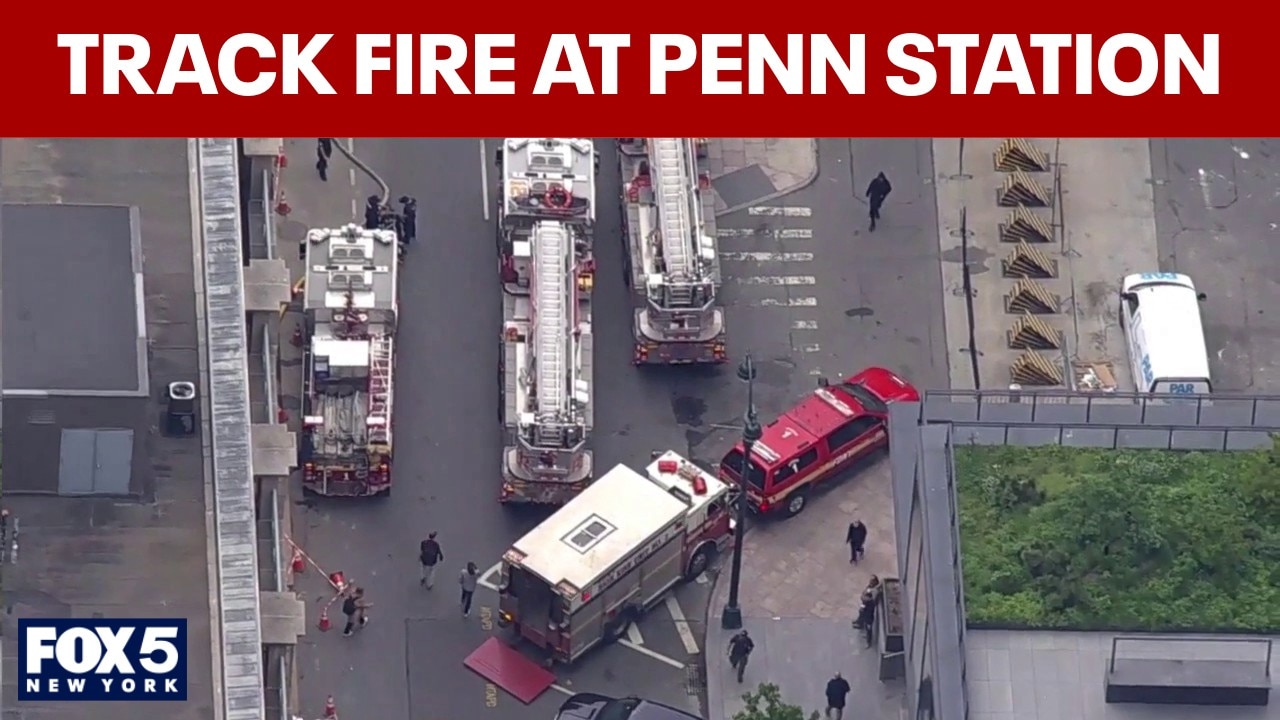
A fire on the tracks near Penn Station at 11:22 a.m. disrupted rail service, with most trains diverted to and from Grand Central and Penn Station service remaining suspended during repair work. The MTA said subway service is cross-honoring Long Island Rail Road tickets, while delays, reroutes and cancellations remain possible through the Friday morning peak. FDNY deployed 26 units and 84 personnel; no injuries were reported.
This is a short-duration operational disruption, but the second-order read is less about transit optics and more about how fragile the Manhattan rail funnel is when one node goes down. The immediate beneficiaries are alternative mobility channels: rideshare, taxis, buses, and any retail/commercial activity around Grand Central that captures displaced commuter flow. For listed exposure, the cleanest expression is not a pure MTA trade but a relative demand shift toward urban mobility and away from rail-dependent foot traffic in the near term. The larger market implication is that same-day commuting friction can ripple into labor productivity and last-mile logistics in Midtown for 1-2 sessions, especially if the disruption bleeds into the Friday peak. That matters most for names levered to discretionary transit usage, station-adjacent retail, and event-driven footfall. The key risk is duration: if repairs extend beyond a single morning, the impact becomes a weekend-through-Monday problem rather than a headline event, and that is when operational confidence starts to matter more than the direct service loss. Consensus will likely treat this as noise, but the underappreciated angle is resilience premium. Repeated disruptions at a critical node can incrementally support infrastructure-hardening spend and accelerate procurement around fire suppression, monitoring, and redundancy systems. In the defense/infrastructure theme, that argues for monitoring contractors with exposure to transit safety retrofits; even modest increases in inspection and remediation budgets can support order visibility over the next several quarters. For now, the setup is tactically bearish on commuter-rail-dependent revenue streams and mildly bullish on urban mobility alternatives. The move is probably overdone if service normalizes before the next morning commute, but underdone if there are cascading cancellations into the Monday reopen. The cleanest edge is trading the duration of disruption, not the event itself.
AI-powered research, real-time alerts, and portfolio analytics for institutional investors.
Request DemoOverall Sentiment
mildly negative
Sentiment Score
-0.15
Ticker Sentiment
