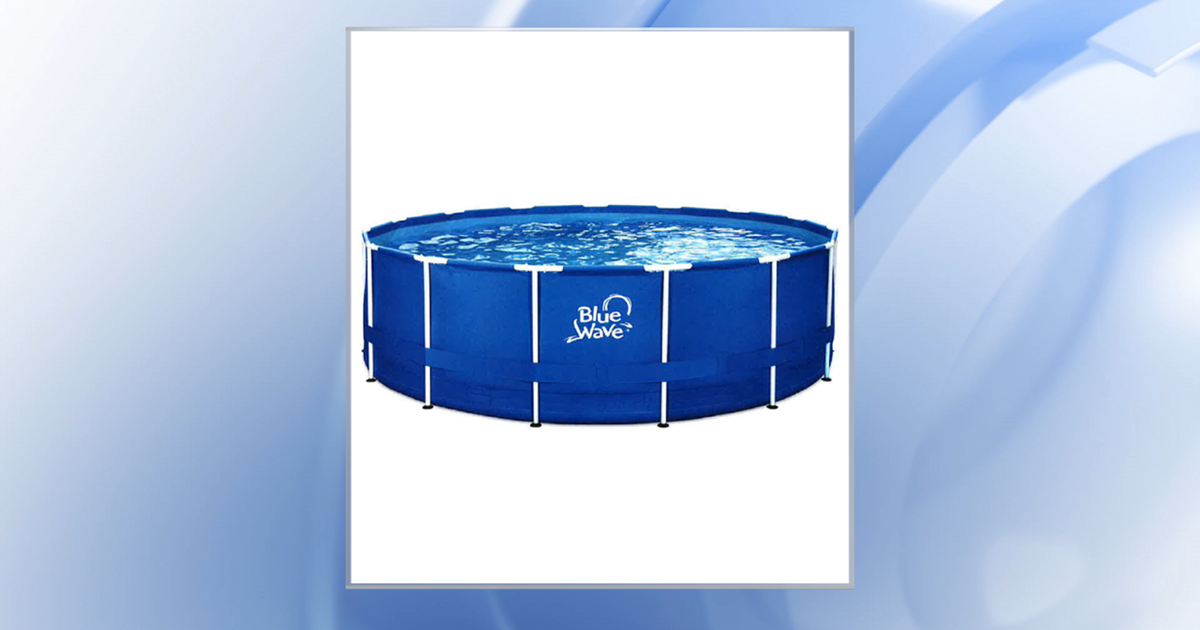
The U.S. Consumer Product Safety Commission has recalled above-ground Blue Wave pools 48 inches and taller — about 13,400 units sold from January 2021 through July 2025 at major retailers including Home Depot, Lowe’s, Dunham’s Sports, Amazon, Walmart and Wayfair — after a compression strap can create a foothold that may allow children to access the pool and pose a drowning risk. No injuries have been reported; Blue Wave is offering free repair kits and recommends preventing unsupervised access or draining pools until fixes are installed. The recall represents a reputational and potential remediation cost for the manufacturer and could drive limited warranty/recall-related expenses or liability exposure for third‑party sellers, but is unlikely to be materially market-moving for larger retailers.
Market structure: The recall (≈13.4k units across 2021–Jul 2025) is a concentrated product issue that disproportionately hits the pool OEM/distributor and creates modest headwinds for omnichannel retailers that carried inventory (HD, AMZN, WMT, LOW, W). Expect localized returns, repair kit logistics costs and a short-term sales substitution toward competing pool brands; revenue hit to large retailers is immaterial (<0.05–0.2% revenue shock) unless the recall expands. Competitive dynamics favor competitors without safety flags and local installers/aftermarket repair suppliers who can capture replacement/repair spend in the coming 30–90 days.
Risk assessment: Tail risks include class-action litigation, CPSC escalation or evidence of injuries that force expansion of the recall — a materiality threshold is ~100k units or any confirmed fatality, which would push related retailer stock moves into the high-single-digit percent range. Immediate (days): inventory holds, customer advisories and minor share-price volatility; short-term (weeks/months): promotion/markdown risk and warranty/repair costs; long-term (quarters/years): reputational drag is likely negligible absent escalation. Hidden dependencies: summer selling season concentration and state-level liability laws could amplify claims; catalyst set to watch: injury reports, number of repurchases/expanded recall within 30–60 days.
Trade implications: Tactical trades should be size-constrained and event-driven. If a retailer (HD or AMZN) gaps down >2% intraday on recall headlines, consider accumulating a temporary long (1–2% portfolio) on expectation of transitory noise and normalizing within 4–8 weeks; conversely, if legal filings or expanded recall appear within 30–60 days, rotate to small protective shorts or buy-to-open put spreads sized 0.5–1% notional. Options: for HD, a 30–45d put spread (sell −2% OTM / buy −6% OTM) to hedge downside or collect premium if IV rises; avoid directional plays on AMZN unless IV misprices by >25% relative to historical 30d.
AI-powered research, real-time alerts, and portfolio analytics for institutional investors.
Request DemoOverall Sentiment
mildly negative
Sentiment Score
-0.30
Ticker Sentiment
Contrarian angles: The consensus impact is overstated — 13.4k units over ~4.5 years is small versus large-box retailer volumes; the market often over-penalizes distribution partners for supplier recalls. Historical parallels (small appliance/pool recalls) show retailer share recovery in 2–8 weeks absent fatalities or major regulatory fines. Unintended consequences: aggressive retailer markdowns to clear association risk could create short-term margin pressure and a buying opportunity if broader retail comps remain intact.
