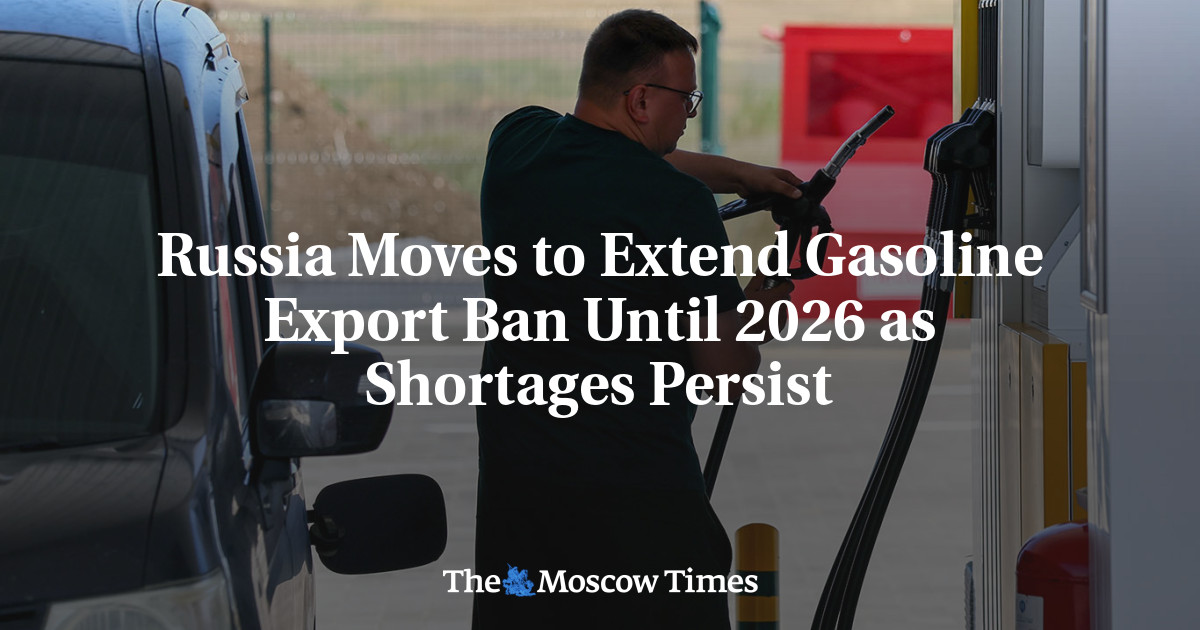
Russia plans to extend its gasoline export ban through year-end and implement a new ban on diesel exports by non-producers, as announced by Deputy Prime Minister Alexander Novak. This measure addresses persistent domestic shortages, exacerbated by Ukrainian drone attacks on refineries, which have driven wholesale gasoline prices, such as AI-92, to a record 79,788 rubles ($952) per ton and created a "difficult balance" for fuel supplies. The prolonged export restrictions signal ongoing supply chain vulnerabilities and domestic market pressures within Russia, potentially influencing global energy market stability.
Russia's decision to extend its gasoline export ban until the end of the year, while also introducing a ban on diesel exports by non-producers, signals a severe and persistent disruption within its domestic energy market. The measures are a direct response to ongoing fuel shortages and record-high wholesale prices, with AI-92 gasoline reaching 79,788 rubles ($952) per ton. This supply crisis is explicitly linked to Ukrainian drone attacks that have damaged and forced shutdowns at major oil refineries, creating what Deputy Prime Minister Alexander Novak described as a "difficult balance" for supplies. The acute shortages reported in annexed Crimea, where authorities state some refineries are "physically not functioning" and roughly half of filling stations ran out of fuel, highlight the depth of the infrastructure damage. The government's need to prolong and expand these protectionist trade policies indicates that initial interventions were insufficient and that Russia's refining capacity will likely remain constrained, forcing the Kremlin to sacrifice export revenue to maintain domestic stability.
AI-powered research, real-time alerts, and portfolio analytics for institutional investors.
Overall Sentiment
extremely negative
Sentiment Score
-0.85
