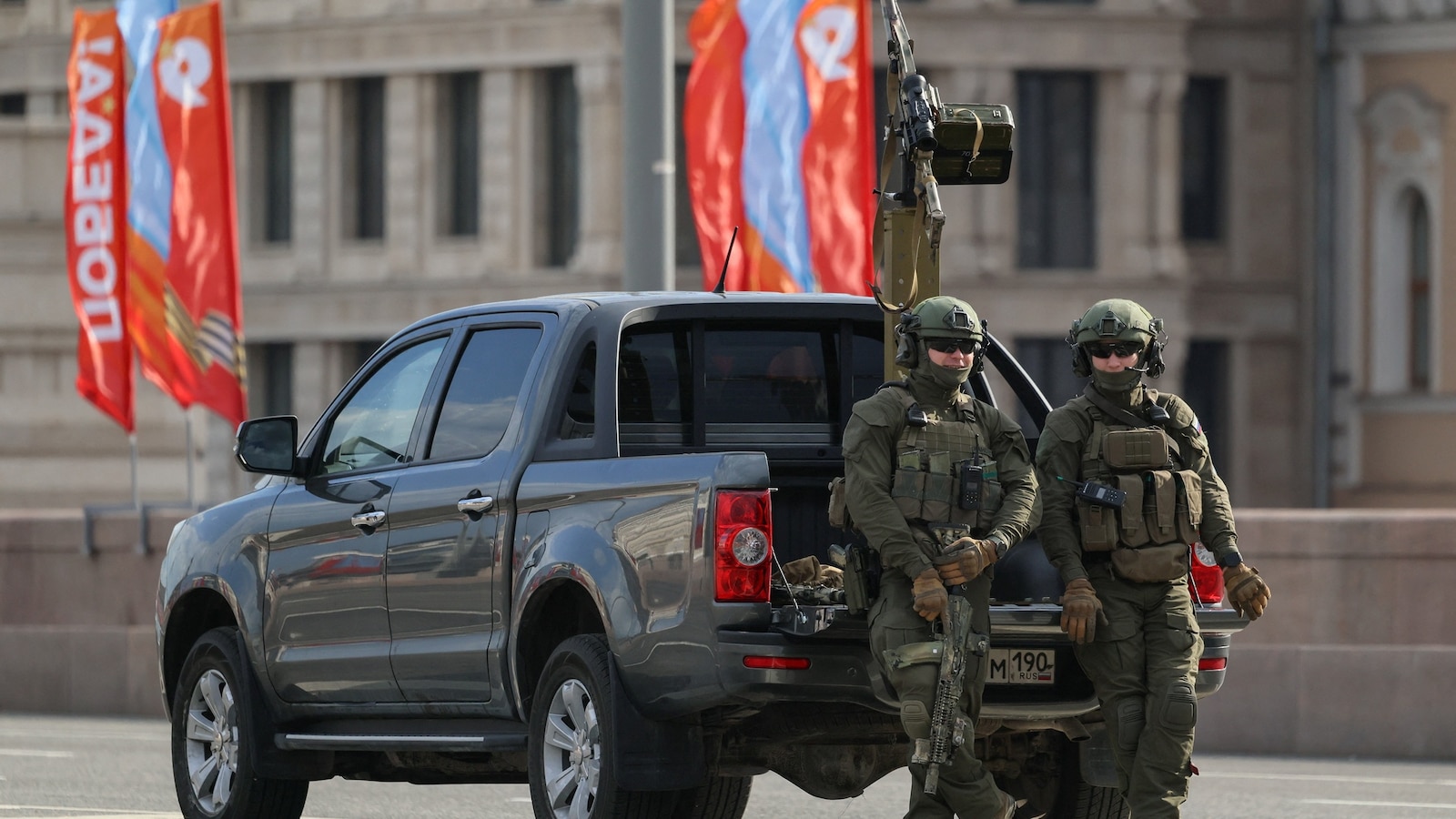
Russia said it intercepted at least 427 Ukrainian drones overnight, including at least 33 headed toward Moscow, while Ukraine reported 102 Russian drones launched and 8 impacts across 6 locations. Ukraine said at least 12 civilians were injured in strikes across Dnipropetrovsk, Sumy and Kharkiv, underscoring ongoing cross-border escalation despite temporary ceasefire announcements. The continued attacks raise geopolitical risk and keep pressure on regional defense and energy/security-sensitive markets.
The market-readthrough is not about the headline count of drones; it is about persistence of an attritional strike regime that keeps both militaries on a war-footing and raises the probability of retaliatory escalation around symbolic dates. That favors defense procurement, counter-UAS, electronic warfare, and air-defense supply chains more than “headline” weapons primes alone, because the bottleneck shifts toward sensors, interceptors, command software, and replenishment of expended munitions.
Second-order effects are most acute in Europe: the longer-range drone campaign keeps energy infrastructure, logistics corridors, and aviation routes under a recurring risk premium. That can support European gas/LNG optionality, while also pressuring industrial names with exposure to Eastern Europe transport, insured cargo, and just-in-time manufacturing. The key timing risk is days to weeks around the holiday window, but the investment implication extends months because repeated attacks accelerate inventory stocking and budget reallocations toward air defense.
The contrarian view is that markets may be overestimating the immediate macro spillover and underestimating the medium-term industrial response. If escalation does not broaden beyond the current theater, the bigger winner is not a generic “geopolitical hedge” trade but a narrower basket of companies tied to missile defense, radar, and battlefield communications. Conversely, any credible diplomatic off-ramp would hit the most crowded defense longs first, so position sizing should assume event-risk compression rather than a straight-line trend.
AI-powered research, real-time alerts, and portfolio analytics for institutional investors.
Overall Sentiment
moderately negative
Sentiment Score
-0.40
