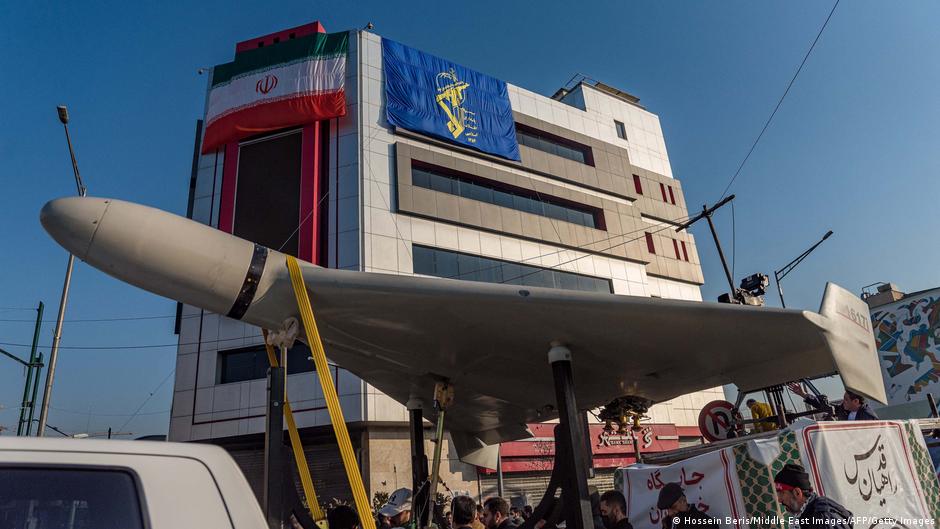
Iran is leveraging the Strait of Hormuz to threaten roughly 20% of global oil supply while US/Israeli strikes have reportedly hit ~13,000 targets and destroyed ~80% of Iranian air defenses. Tehran still fields thousands of cheap Shahed drones ($20k–$50k each, ~2,000 km range) and other asymmetric tools, enabling sustained disruption (one strike killed six US service members). The combination makes a quick military resolution unlikely and raises the probability of prolonged energy-market dislocation and shipping/supply-chain stress, supporting a sustained risk-off stance.
The regime’s durable asymmetric play materially shifts economic winners from commodity producers and hard-asset carriers toward asset owners who capture geopolitical risk premia rather than those exposed to short-term physical damage. Expect regional shipping patterns to lengthen (typical Persian Gulf→Europe voyages can add ~5–10 days when routed around southern Africa), which mechanically tightens tanker and dry-bulk availability and can lift spot shipping revenues by multiples in months, not years, as tonnage rebalances.
A second-order and underappreciated pressure is munitions and interceptor exhaustion: asymmetric attacks force repeated use of high-cost interceptors and air-defense munitions, creating a multi-month drawdown on inventories and procurement pipelines that benefits defense primes and specialist suppliers of missiles, seekers, and EW pods. Replacement cycles and FMS authorizations imply predictable multi-quarter revenue uplifts for incumbents, while the smaller, distributed drone-supply chain amplifies asymmetric attrition economics (low unit cost for attackers vs high replacement cost for defenders).
Energy-market mechanics will remain volatile and convex: periodic Iranian signaling (localized strikes, mine-laying, or selective harassment) will produce episodic price jumps and elevated volatility for refined-product cracks and freight-included fuel costs, advantaging large integrated producers and commodity trading desks with storage/flex optionality. A rapid negotiated de-escalation within 30–90 days would collapse much of this premia; conversely, sustained low‑level disruption over quarters keeps elevated margins and charter rates intact.
Time horizons matter: tactical profit opportunities cluster in the 1–9 month window (shipping charters, munitions replenishment contracts, short-cycle defense kit), whereas structural repositioning (larger prime reorder cycles, capex in domestic munitions capacity) plays out over 12–36 months and can be monetized via staged option rolls and disciplined pair trades.
AI-powered research, real-time alerts, and portfolio analytics for institutional investors.
Request DemoOverall Sentiment
strongly negative
Sentiment Score
-0.65
