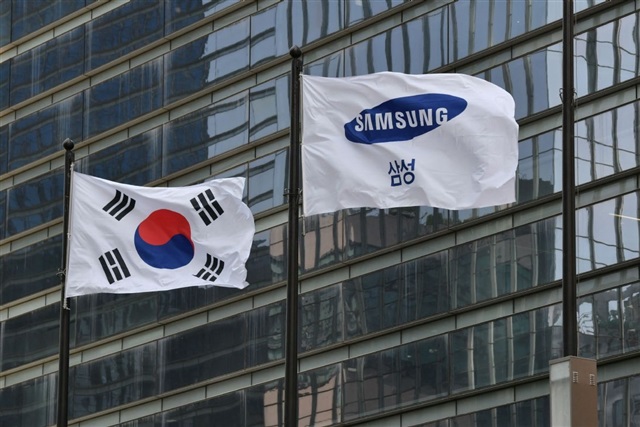
The US has adjusted export control procedures affecting Samsung Electronics and SK Hynix operations in China, moving away from case-by-case approvals and thereby easing near-term operational risks at their semiconductor plants. The procedural change reduces immediate regulatory uncertainty for chip production and could support more stable operations and supply-chain continuity in the region, potentially positive for the two firms and related suppliers.
Market structure: Replacing case-by-case export approvals with a streamlined process materially reduces near-term operational idiosyncratic risk for Samsung (005930.KS) and SK Hynix (000660.KS), likely prompting a 5–15% re-rating in consensus 1–3 month earnings risk premia. Semiconductor-equipment vendors (ASML, KLAC, LRCX) benefit indirectly from steadier fab-run rates in China; memory spot prices may face modest downward pressure over 3–9 months if capacity utilization climbs above ~85% industry-wide.
Risk assessment: Tail risks include a rapid policy reversal or retaliatory Chinese measures within 30–90 days, and US enforcement tightening that reintroduces license constraints — either could wipe 10–25% off repriced equity gains. Hidden dependencies: sustained operations still rely on US-origin EDA/equipment components and bank/payment flows; interruption in either is a multi-quarter shock. Key catalysts: Commerce Department public guidance (next 30 days), Q4 capex statements from Samsung/SK Hynix (next 1–3 months), and memory spot-price indices (weekly).
Trade implications: Near-term (days–weeks) trade commonsense is long Korea semis via 005930.KS/000660.KS and equipment suppliers, but hedge medium-term (3–9 months) exposure to memory-price risk with puts or pair shorts. Options: buy 1–3 month call spreads to capture policy-sentiment re-rate and 6–12 month puts on SMH or MU to protect against price-driven margin compression. Rotate modest weight from defensive sectors into Korea semiconductors and capex suppliers if Commerce posts favorable guidance within 30 days.
Contrarian angle: Consensus treats this as pure de-risking; underappreciated is that easing could accelerate capacity restarts in China, increasing DRAM/NAND supply and creating a 10–20% price overhang by H2 2025 — so unhedged long-memory exposure is asymmetric. Historical parallel: 2019 temporary trade exemptions produced short-lived rallies followed by supply-driven corrections; prepare for mean reversion rather than buy-and-hold without hedges.
AI-powered research, real-time alerts, and portfolio analytics for institutional investors.
Request DemoOverall Sentiment
mildly positive
Sentiment Score
0.30
