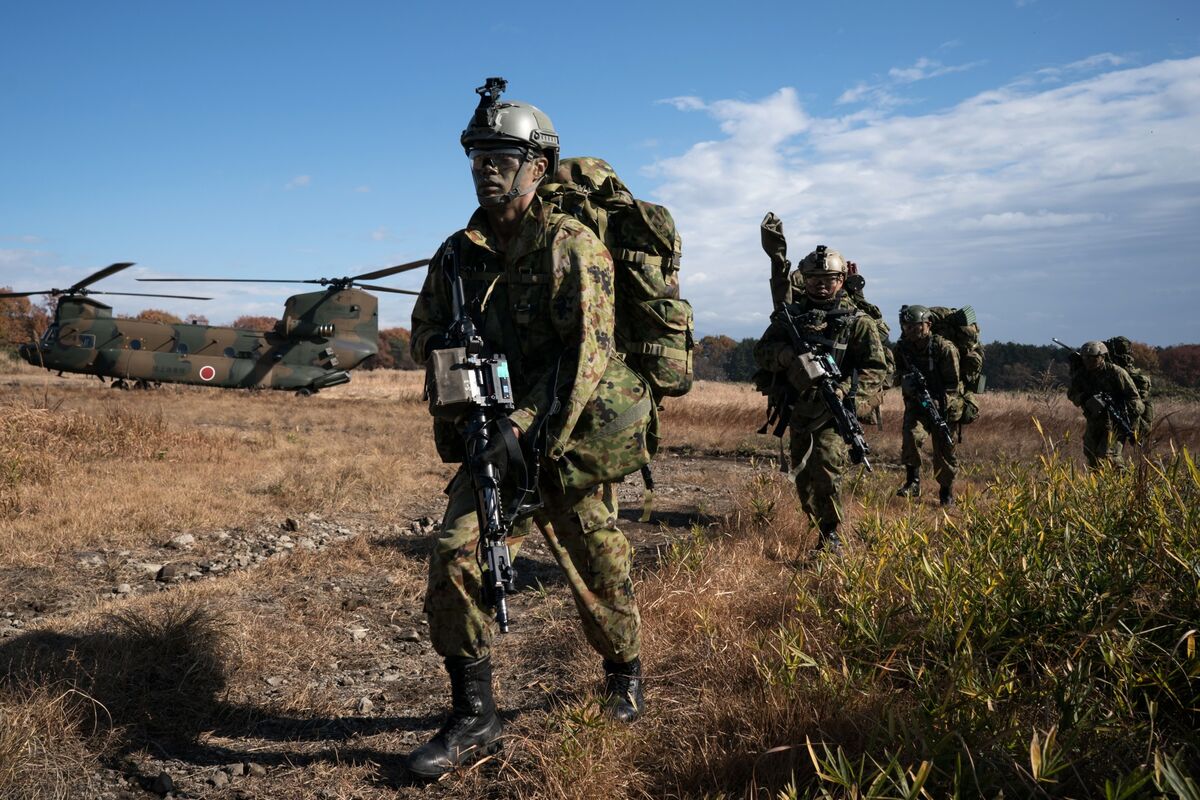
About 300 Japan Ground Self-Defense Force personnel will join the annual Salaknib army drills in the Philippines with US forces in April — the first Japanese ground-force participation on Philippine soil since WWII. The move signals a tangible deepening of Manila-Tokyo security ties amid strained relations with China and could modestly boost regional defense cooperation and related contractors.
This event is a small but high-leverage signal: symbolic deployments like this compress political friction thresholds and shorten the timeline from diplomatic alignment to procurement and basing decisions. Expect a measurable uptick in bilateral planning activity over the next 3–6 months that translates into formal Requests for Information/Proposals (RFI/RFP) within 6–18 months and contract awards in the 12–36 month window, primarily for mobility, coastal surveillance, and base engineering work.
Second-order beneficiaries are not just prime defense contractors but regional integrators and construction/port contractors that will capture work on force posture improvements and logistics hubs — think pier upgrades, fuel storage, and hardened comms. Supply-chain winners include medium-voltage power, tactical communications (secure satcom terminals), and littoral surveillance sensors; these niches have single-digit supplier counts and lead times measured in quarters, so order flow could compress margins upstream within 6–12 months.
Tail risks are asymmetric: a low-probability escalation (naval incident, cyberattack) could spike insurance, reroute shipping, and produce abrupt capex acceleration or cutoffs depending on Manila’s domestic politics; that would show up in asset prices within days and contracts within weeks. Reversal catalysts include Philippine budget constraints, a diplomatic de-escalation with Beijing, or U.S. domestic funding delays — any of which can push expected procurement out by 12–24 months or reduce program sizes materially.
Consensus likely understates the procurement follow-through and overweights the symbolism; markets often price defense primes as binary winners but underprice the multi-year backlog creation for mid-tier integrators and regional builders. Tactical allocations that target 6–36 month delivery of RFIs and base construction capture both the direct defense spend and the higher-margin integration/engineering work that tends to re-rate faster than commodity hardware sales.
AI-powered research, real-time alerts, and portfolio analytics for institutional investors.
Request DemoOverall Sentiment
neutral
Sentiment Score
0.00
