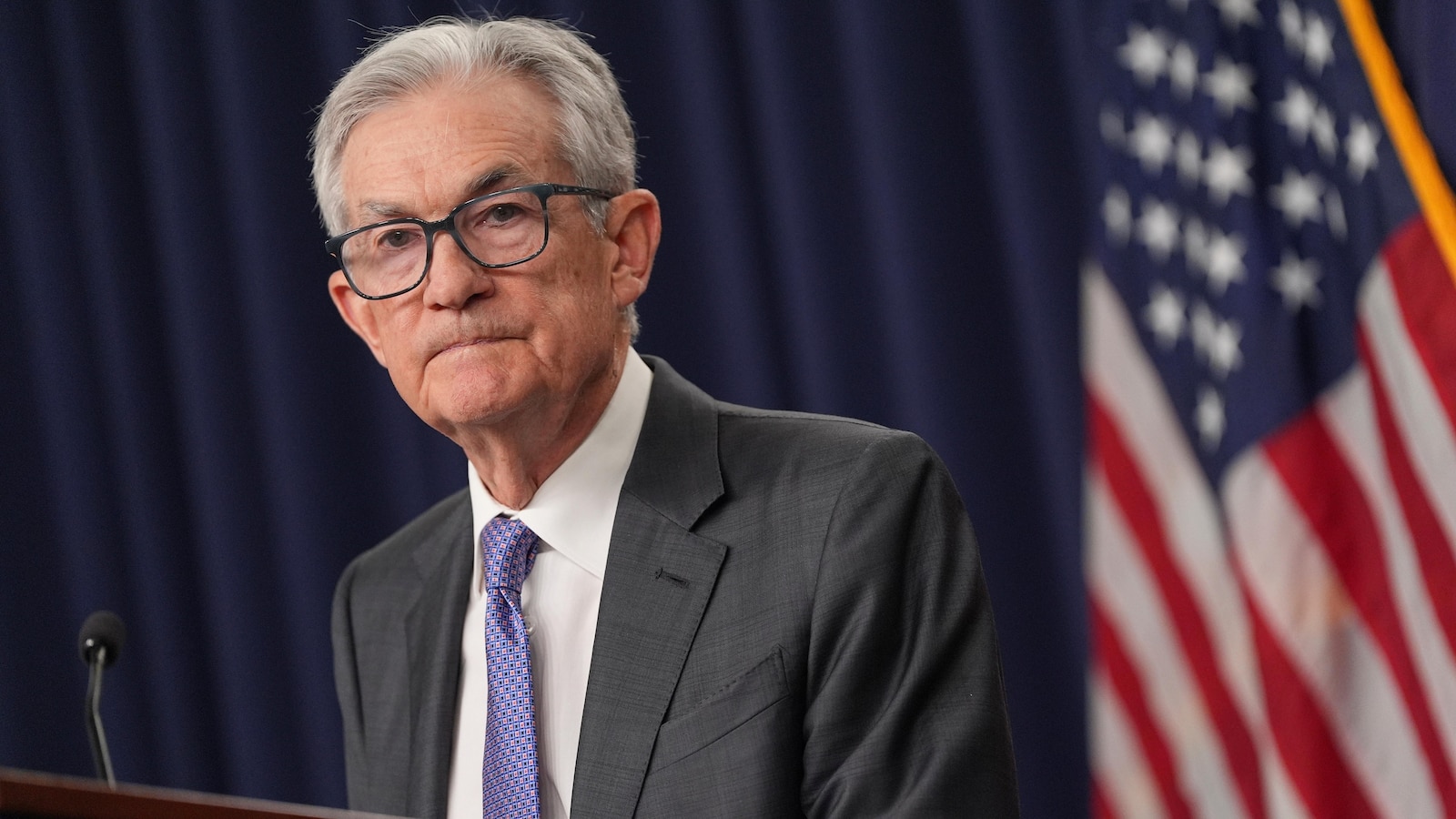
The Federal Reserve is expected to hold its policy rate unchanged after three cuts last year as inflation remains above the 2% target while unemployment appears to have stabilized. The FOMC is split—12 of 19 participants in December supported at least one more cut—and most economists still expect two cuts later in the year (likely June or later), but political pressure on Chair Powell (DOJ subpoenas and a Supreme Court case involving Gov. Lisa Cook) has complicated communication and may reinforce a cautious stance. Key cross-currents include an 11-year low in consumer confidence and larger-than-usual tax refunds that could boost spending and hiring if growth picks up.
Market structure: A Fed that stays on hold for “months” keeps real short rates elevated relative to the pre-cut consensus, benefiting cash/money-market instruments, banks (wider NIM) and dollar strength while hurting long-duration assets (growth, REITs, utilities). Expect a modest steepening pressure if growth picks up: 2s likely anchored near policy while 10s can rise 20–70bp over quarters if inflation stays >2.5%. Competitive dynamics shift pricing power toward lenders and floating-rate credit; fixed-rate borrowers face higher refinancing costs and tighter housing demand.
Risk assessment: Tail risks include political interference that erodes Fed credibility (spike in term premium, USD volatility) or an unexpected downturn that forces rapid cuts (long-rate rally >100bp). Time horizons matter: immediate (days) — kneejerk equity/FX moves on Fed language; short-term (weeks/months) — re-pricing of 2s–10s and sector rotation; long-term (quarters) — credit-cycle and capex outcomes. Hidden dependencies: consumer spending bump from larger tax refunds is temporary (2–3 months) and can mask underlying weak hiring.
Trade implications: Preferred tactical posture is overweight cash/T-bills and financials, underweight long-duration growth and REITs, with 3–6 month horizons tied to CPI/NFP prints and the June Fed meeting. Use pair trades and options to express view while limiting directional beta: long XLF vs short QQQ or targeted put spreads on XLK/QQQ to protect growth exposure. Catalysts to watch: monthly CPI, nonfarm payrolls, Fed minutes, and any legal/administrative action against Fed governors — react within 24–72 hours.
Contrarian angles: The market consensus of two cuts starting June may be underpricing a prolonged pause and thus underestimates term-premium upside; positions long duration are vulnerable if 10y breaks above 4.25–4.50%. Conversely, political escalation could produce an outsized dovish shock if administration succeeds in replacing the Chair with a dovish nominee, producing a rapid rally in long bonds—keep nimble optionality. Historical parallels: 2018–19 Fed pause then sharp re-acceleration of policy-driven volatility; maintain size discipline and volatility hedges.
AI-powered research, real-time alerts, and portfolio analytics for institutional investors.
Request DemoOverall Sentiment
neutral
Sentiment Score
-0.10
