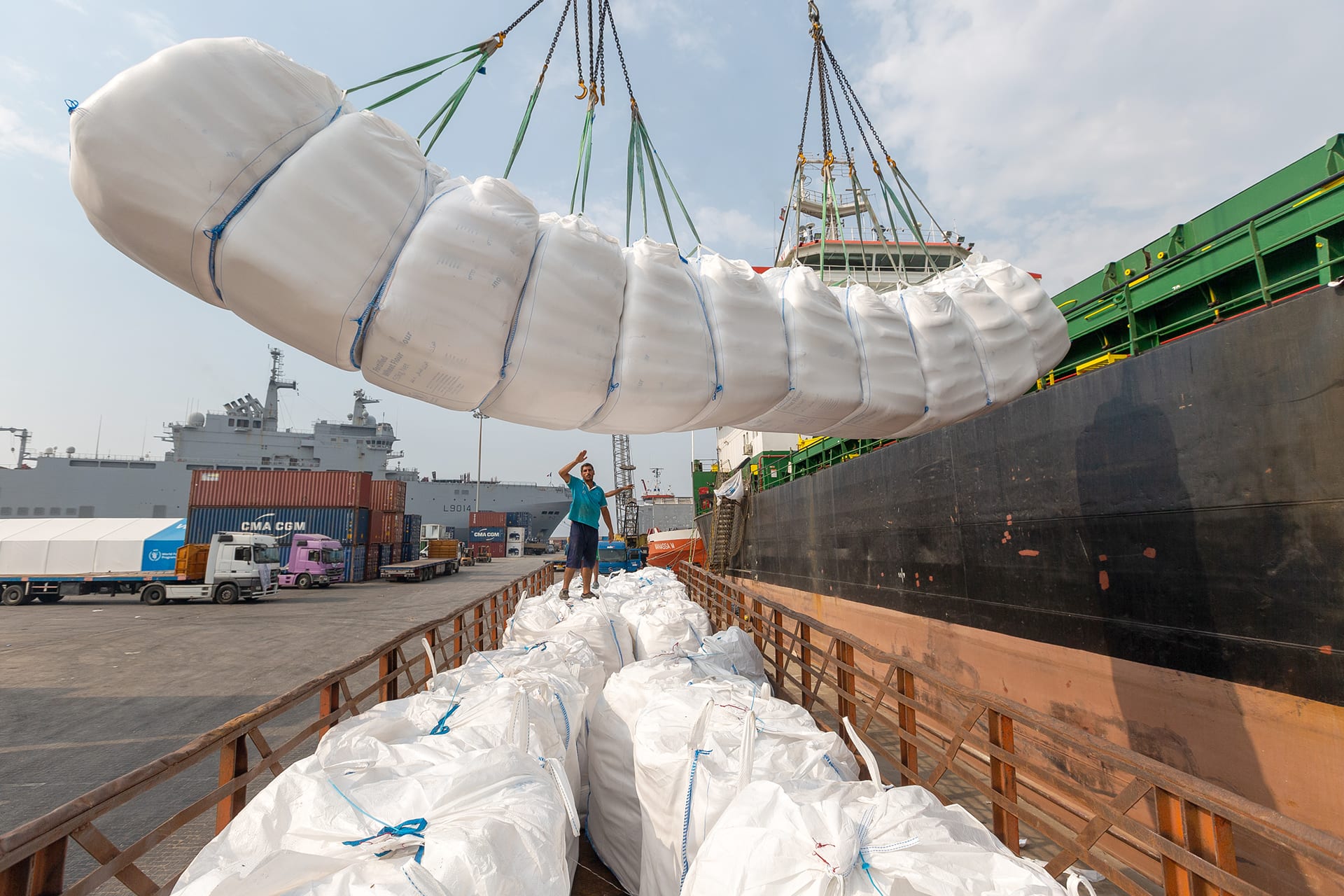
The article warns that the U.S. has spent an estimated $11 billion on military operations in the first week of the Iran conflict and is debating a $200 billion war supplemental while failing to deploy a coherent humanitarian response despite $5.4 billion Congress appropriating for global aid. Humanitarian fallout is already severe: over 1 million displaced in Lebanon and up to 3.2 million displaced in Iran in the first two weeks, with the World Food Program forecasting 45 million additional people becoming acutely food-insecure and WHO reporting delivery disruptions to 25 countries; maritime rerouting around the Cape of Good Hope is adding roughly a month delay to aid shipments. The author urges immediate programming of existing funds, use of a $1.2 billion USDA food-purchase authority, Treasury sanctions carve-outs for aid, a UN-led regional logistics framework, and a donor pledging conference to avert broader regional instability and economic shocks.
The administration’s humanitarian inaction is not just a political failure—it mechanically amplifies commodity and logistics stressors that markets can price. Immediate rerouting around the Cape of Good Hope adds roughly four weeks to voyage times for ships previously transiting the Strait of Hormuz; that manifests as spot freight spikes, inventory stress for time-sensitive goods (fertilizer, grain, pharma), and a near-term upward shock to refined product demand and crude freight fuel consumption.
Over a 1–6 month horizon, expect a two-channel transmission to EM asset prices: (1) food and fertilizer price inflation worsening domestic terms-of-trade for importers, and (2) refugee/migration flows and fiscal strain spiking sovereign risk premia. Countries with thin FX reserves and high food import bills are the most vulnerable; their sovereign CDS and local-currency bonds will reprice before equities, creating asymmetric downside in EM debt.
Defense, specialized logistics, and upstream fertilizers are the convex winners. Backlogable defense contracts and emergency logistics (airlift/charter shipping, warehousing) convert shortages into multi-quarter revenue visibility; fertilizer producers can pass through price spikes quickly given concentrated producer bases. Conversely, container/shipping equities, EM consumer franchises, and airlines face margin compression from rerouting and inflation-driven demand destruction.
Catalysts to watch: a rapid US-humanitarian surge (or Treasury carve-outs) would compress food/freight premia within weeks; Congressional conditionality on supplemental funding is a 1–3 week event risk that could widen spreads if unmet. Tail risks include protracted regional escalation leading to multi-quarter oil shocks and a >5% hit to MSCI EM in a 3–12 month stress scenario; diplomatically driven de-escalation is the primary path to reversal.
AI-powered research, real-time alerts, and portfolio analytics for institutional investors.
Request DemoOverall Sentiment
strongly negative
Sentiment Score
-0.60
Ticker Sentiment
