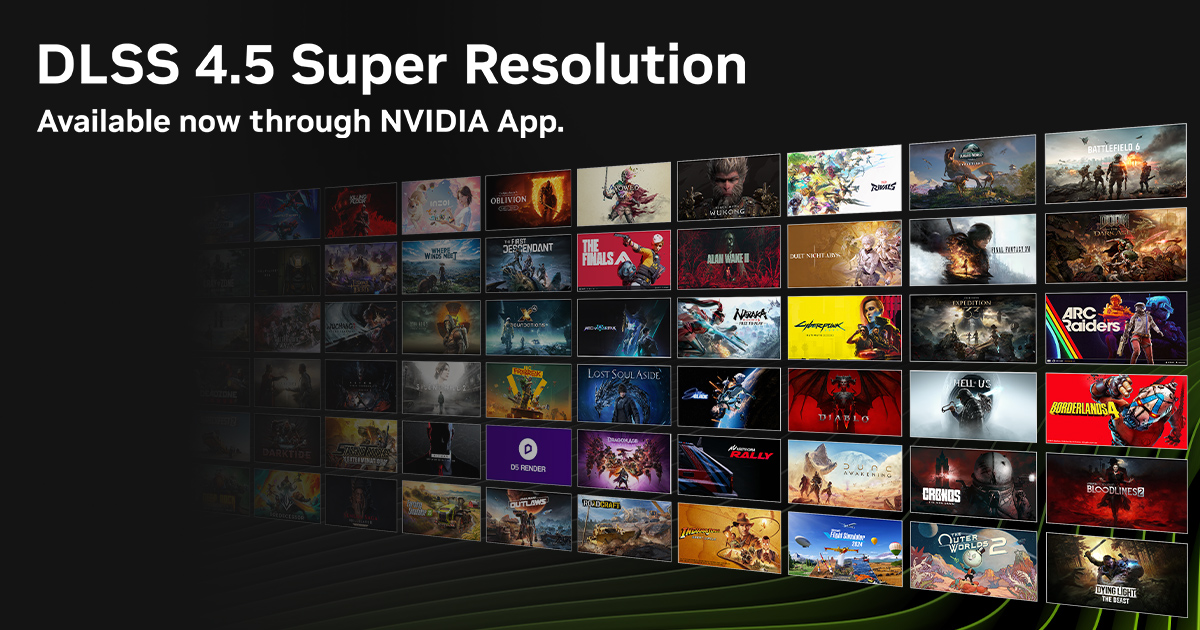
NVIDIA has rolled out DLSS 4.5 Super Resolution via the NVIDIA app, deploying a second-generation transformer AI model across all GeForce RTX GPUs and supporting over 400 games and apps; DLSS 4 with Multi Frame Generation is now in over 250 titles and new RTX integrations were highlighted for upcoming CES games. The upgraded model uses roughly five times the compute of the original transformer, improving lighting, edge detail and motion clarity, while users can select among models (M, L, K) via DLSS Overrides — with Models M/L imposing higher performance costs on RTX 20/30 Series GPUs due to lack of FP8. The release strengthens NVIDIA’s competitive positioning in gaming AI and real-time graphics, potentially boosting engagement and hardware/software adoption, though it is primarily a product/technology update rather than a direct near-term earnings catalyst.
Market structure: NVIDIA (NVDA) is the clear near-term winner — DLSS 4.5 expands a sticky software moat across 400+ titles and reinforces RTX-driven GPU differentiation vs AMD/INTC, supporting modest ASP leverage (estimate: +3–8% ASP potential for RTX 40/50 over 12 months if adoption lifts upgrade intent). Game devs, middleware partners (engine vendors) and memory suppliers (Micron, Hynix) also benefit; legacy RTX 20/30 owners and GPU-focused console parity competitors are the losers due to performance/FP8 limitations. Cross-asset: expect positive delta for NVDA equity and tightening of NVDA credit spreads (10–20bps possible), mild uplift to semicap names (TSM, ASML) and limited FX impact (USD strengthens if tech rallies).
Risk assessment: Tail risks include antitrust scrutiny (EU/US investigations) and fast competitor catch-up (AMD FSR/XeSS improvements) that could erode advantage within 6–18 months, plus macro-driven consumer postponement of upgrades. Immediate (days) = event-driven sentiment bump; short-term (weeks–months) = adoption signals from new game launches; long-term (quarters–years) = structural AI/gaming share gains contingent on developer uptake and silicon availability. Hidden dependency: real monetization depends on measured DLSS activation rates and RTX-enabled game sales, not just press coverage. Key catalysts: quarterly guide, major game integrations (next 90 days), holiday sales metrics.
trade implications: Core trade: establish long NVDA exposure for structural AI/gaming tailwinds (use mix of stock + LEAPs) but size to risk budget because upside is priced in; use short-dated calls ahead of catalyst windows (earnings/game drops) sized conservatively to exploit IV. Pair/hedge: dollar-neutral long NVDA / short AMD to capture relative execution; overweight TSM/ MU to play wafer and memory content growth. Entry: initiate on <5–10% pullback or immediately with defined hedges; target exits at +35–50% gains or if activation metrics miss by >50%.
contrarian angles: Consensus assumes seamless conversion from tech demo to hardware sales; that's likely overstated — DLSS 4.5 may raise expectations but could slow upgrade cycles for users on 20/30 series who face heavier performance hits, creating a two-tier install base and mixed upgrade cadence. Historical parallel: DLSS 2 created quality lead but competition (FSR) narrowed margins over 12–24 months; if developers delay integrations or AMD/Intel release parity features, NVDA multiple could re-rate down. Watch for unintended consequences: higher visual demands accelerating obsolescence and amplifying consumer frustration, which could depress near-term replacement rates.
AI-powered research, real-time alerts, and portfolio analytics for institutional investors.
Request DemoOverall Sentiment
moderately positive
Sentiment Score
0.45
Ticker Sentiment
