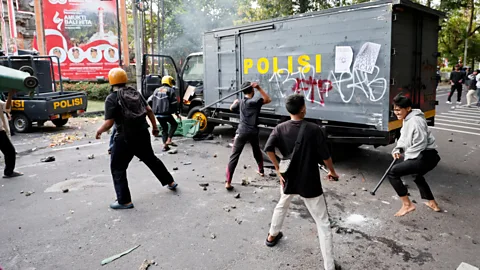
Ongoing violent anti-government unrest in Indonesia, characterized by looting and labeled 'treason and terrorism' by President Prabowo Subianto, has prompted the President to warn of the 'strongest possible action' by police and military. This escalation signifies heightened political instability and potential operational risks for investors in the region.
The political situation in Indonesia is rapidly deteriorating, presenting significant risk for investors. President Prabowo Subianto's characterization of anti-government unrest as "treason and terrorism" and his threat to deploy the police and army with "the strongest possible action" signals a material escalation in domestic conflict. This development, marked by looting and violent clashes, points to a breakdown of civil order and heightens sovereign risk. The strongly negative sentiment score of -0.7 and a market impact score of 0.6 underscore the perceived severity of this instability. While the article notes a secondary, more positive geopolitical development with warming China-India relations, the acute crisis in Indonesia is the dominant factor, creating immediate operational and financial risks for any assets or corporate interests tied to the country.
AI-powered research, real-time alerts, and portfolio analytics for institutional investors.
Request DemoOverall Sentiment
strongly negative
Sentiment Score
-0.70
Ticker Sentiment
