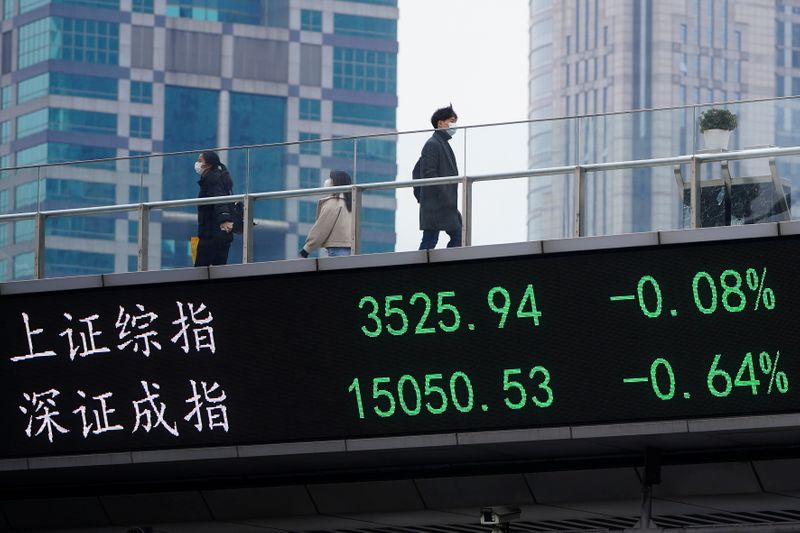
Asian equities traded mostly rangebound on Tuesday, with caution prevailing due to mixed signals on U.S. interest rates ahead of key Fed commentary and economic data. Chinese and Hong Kong markets led losses, falling around 1%, as the tech sector underwent profit-taking following recent rallies, notably impacting Baidu. Indian tech firms also saw significant declines after news of a proposed steep H-1B work visa fee by President Trump sparked concerns for the outsourcing industry. Conversely, Taiwanese suppliers TSMC and Hon Hai, alongside China's Luxshare Precision, posted gains driven by positive developments for Nvidia and Apple.
Asian equity markets exhibited a cautious and rangebound posture, as positive momentum from Wall Street's record highs, driven by Nvidia and Apple, failed to sustain amidst growing investor concerns. The primary headwinds are twofold: uncertainty surrounding U.S. monetary policy, with investors awaiting Federal Reserve Chair Powell's address and key PCE inflation data after mixed signals from Fed officials, and escalating political risks. Specifically, a proposed steep fee on H-1B work visas by President Trump has directly impacted Indian technology stocks such as Infosys and Wipro, raising concerns for the nearly $300 billion outsourcing industry. In China, a recent tech-fueled rally has reversed course, leading to profit-taking that pushed the Shanghai Shenzhen CSI 300 and Hong Kong's Hang Seng indices down by approximately 1%. Baidu was a notable underperformer, tumbling 7%, while Alibaba saw a slight gain. In contrast, specific segments of the technology supply chain showed significant strength; Taiwanese suppliers TSMC and Hon Hai Precision rose around 2% on positive client news, while China's Luxshare Precision surged 10% on reports of a new AI-related supply contract.
AI-powered research, real-time alerts, and portfolio analytics for institutional investors.
Overall Sentiment
moderately negative
Sentiment Score
-0.35
Ticker Sentiment
