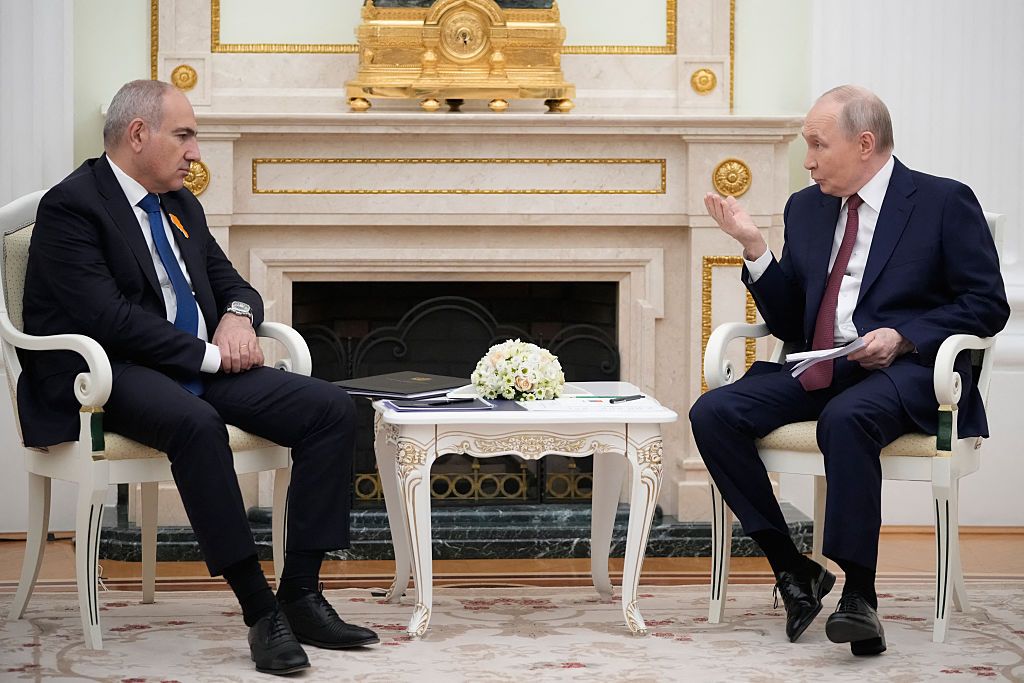
Putin publicly warned Armenia on April 1 that simultaneous alignment with the EU and the Russia-led Eurasian Economic Union is impossible, framing a binary choice and noting Russia supplies gas to Armenia at a substantially lower price. Armenia has suspended CSTO participation in 2024 after the alliance did not intervene in 2022 Nagorno-Karabakh fighting, increasing political and security strain. Implication: heightened geopolitical risk for Armenian and regional assets, potential repricing in energy and defense-related exposures and caution among investors allocating to Armenian sovereign or EM risk.
Russia’s economic leverage in the South Caucasus creates a policy binary for a small open economy: concessions to an alternative bloc invite calibrated economic coercion (energy price adjustments, non-tariff barriers) that can be implemented inside a single winter season and raise import costs meaningfully. Expect import-cost pass-through into the trade deficit and fiscal balance within 3–9 months; a sustained 10–20% rise in energy and transit costs would plausibly widen the current account gap by several percentage points of GDP and force sharp domestic austerity or external funding needs.
A political squeeze on high-profile oligarchs and donors carries outsized financial spillovers — capital flight, deposit reallocation, and a sovereign credit re-rating are first-order effects that markets could price quickly (days–weeks) once punitive measures feel credible. Separately, the security vacuum created by a weakening of legacy defense guarantees accelerates a multi-year procurement cycle away from legacy suppliers toward NATO/Western systems, creating a durable demand signal for Western defense primes and regional integrators over 12–36 months.
The consensus risk is binary thinking (immediate full-scale economic blockade). That’s overdone: punitive measures are costly for the coercer too and will likely be calibrated (targeted energy price normalization, selective trade frictions) so the near-term shock should be manageable but persistent. Construct positions that hedge for a short sharp repricing (3–12 months) while keeping optional exposure to the longer-term structural winners from rearmament and regional transit re-routing (1–3 years).
AI-powered research, real-time alerts, and portfolio analytics for institutional investors.
Request DemoOverall Sentiment
moderately negative
Sentiment Score
-0.35
