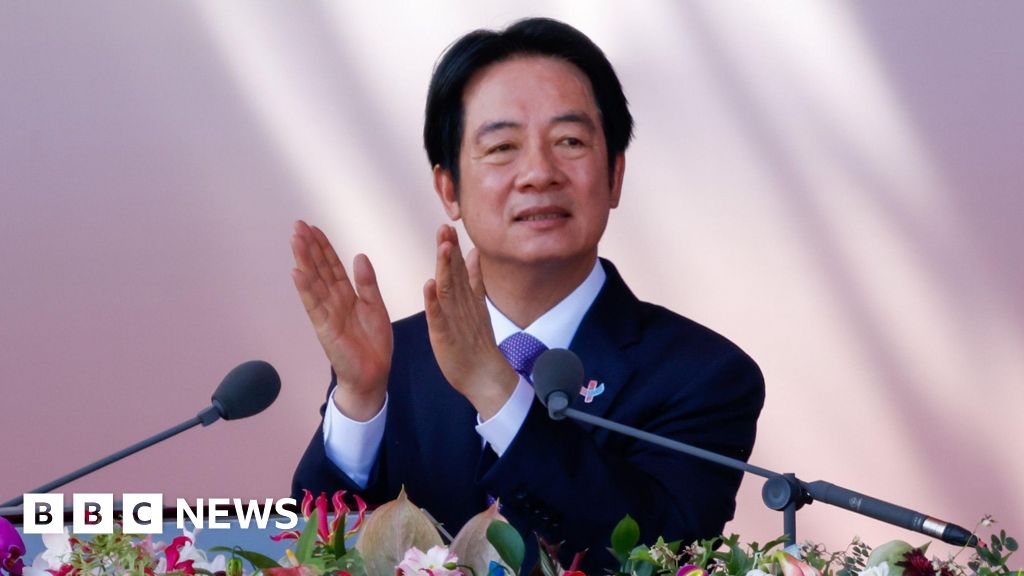
Taiwan President William Lai announced plans to develop a 'T-Dome' air defense system, similar to Israel's Iron Dome, to counter escalating threats from China, committing to increase defense spending to over 3% of GDP next year and up to 5% by 2030. This significant defense initiative, aimed at bolstering the island's self-defense capabilities, faces domestic legislative hurdles from an opposition-controlled parliament and is projected by analysts to require a massive budget and a long implementation timeline. The announcement underscores heightened geopolitical tensions in the Taiwan Strait, drawing sharp condemnation from Beijing, and signals potential long-term investment implications for the defense sector while highlighting Taiwan's increased fiscal commitment amid regional instability.
Taiwan President William Lai announced plans to develop a "T-Dome" air defense system, similar to Israel's Iron Dome, to counter escalating threats, implicitly from China. This initiative includes a commitment to increase defense spending to over 3% of GDP next year and up to 5% by 2030, signaling a significant fiscal reorientation towards national security. The move follows increased Chinese incursions and military drills, highlighting heightened geopolitical tensions in the Taiwan Strait.
Implementing the T-Dome faces substantial domestic and financial hurdles. An opposition-controlled legislature has previously blocked spending bills, suggesting potential resistance to the "massive budget" analysts predict will be required. Political scientist Hung-Jen Wang notes the system "won't be easy" to build, while Dennis Weng suggests the announcement has "promotional intent" and is aimed at the US, given the long implementation timeline extending beyond Lai's term.
China's foreign ministry spokesperson, Guo Jiakun, condemned Lai's remarks as distorting facts and misleading public opinion, calling him a "troublemaker." This sharp rhetoric underscores the deepening diplomatic rift and the high-stakes nature of Taiwan's defense posture. The overall sentiment is mixed and cautious, with a moderate market impact score of 0.6, reflecting the long-term nature of the defense spending and the political complexities involved.
AI-powered research, real-time alerts, and portfolio analytics for institutional investors.
Request DemoOverall Sentiment
mixed
Sentiment Score
-0.10
Ticker Sentiment
