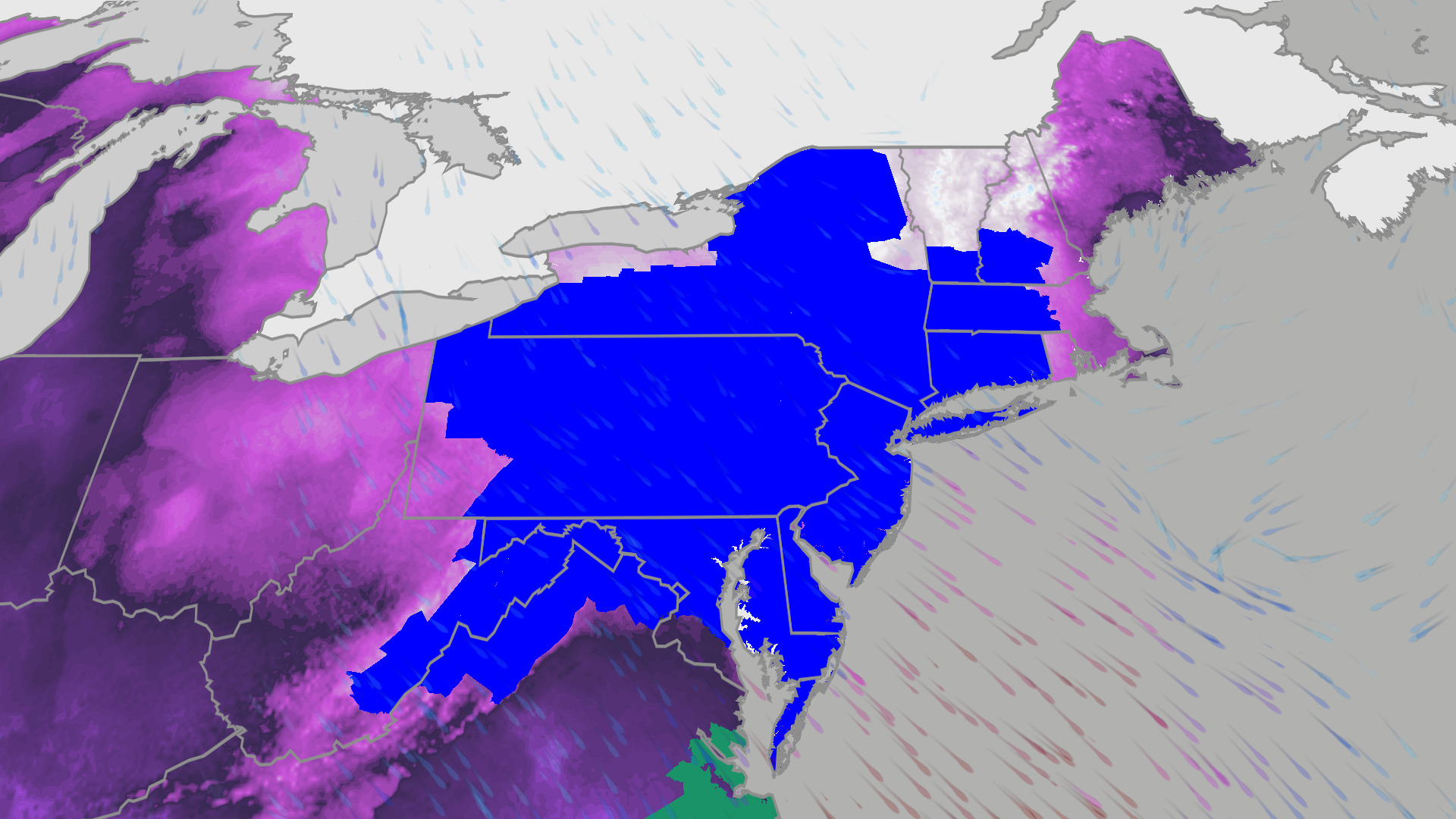
A strong arctic cold front will sweep the U.S. Northeast this weekend, producing high northwest winds with gusts up to ~60 mph in parts of the mid‑Atlantic and Appalachians, extreme cold warnings from New England to eastern North Carolina (including NYC, Philadelphia and Hartford), subzero wind chills into the minus‑teens or minus‑20s, and generally under 6 inches of snow except for higher totals in portions of the Appalachians, Adirondacks and New England. The event raises the risk of localized power outages, significant transportation disruptions and elevated heating/energy demand into early next week, with a modest warm‑up along the I‑95 corridor expected by Tuesday.
Market structure: Immediate winners are short-dated natural gas and regional heating-fuel suppliers (propane/heating oil), merchant power generators with ISO-NE/PJM exposure, and pipeline/terminal operators that collect basis (e.g., PAA). Losers are airlines/ground logistics, small municipal utilities with tree damage risk, and retailers exposed to unhedged winter fuel; expect localized Algonquin/NYC basis spikes of $2–5/MMBtu even if Henry Hub moves less.
Risk assessment: Tail risks include major grid outages triggering forced capex/regulatory reviews, pipeline freeze-offs or price caps in ISOs, and an outsized draw on storage (>100 Bcf weekly) that could propagate to prompt-month futures. Time horizons: days — volatility and LMP spikes; weeks — storage-driven moves and regional basis normalization; quarters — potential utility capex and insurance-cost resets. Hidden dependencies include LNG export flows and pipeline maintenance schedules that could amplify or mute price action.
Trade implications: Favor short-dated, concentrated exposure to regional winter-tightness rather than multi-month directional bets: short-dated NG call spreads, long merchant generators (NRG) and NGL midstream (PAA), plus tactical airline downside hedges. Cross-asset: expect higher NG/power vols, widening muni-utility credit spreads on outages, and transient spread trades between Henry Hub and Algonquin.
Contrarian view: The market may overestimate duration — models show temperatures rebound above freezing along I‑95 by Tuesday, so prompt-month moves could fade; prefer 2–6 week option structures. Also beware mismatch risk: Henry Hub longs without regional basis protection can lose money even if Algonquin spikes. Historical parallel: 2014 polar-vortex basis dislocation — localized winners, centralized futures lagged.
AI-powered research, real-time alerts, and portfolio analytics for institutional investors.
Request DemoOverall Sentiment
mildly negative
Sentiment Score
-0.25
