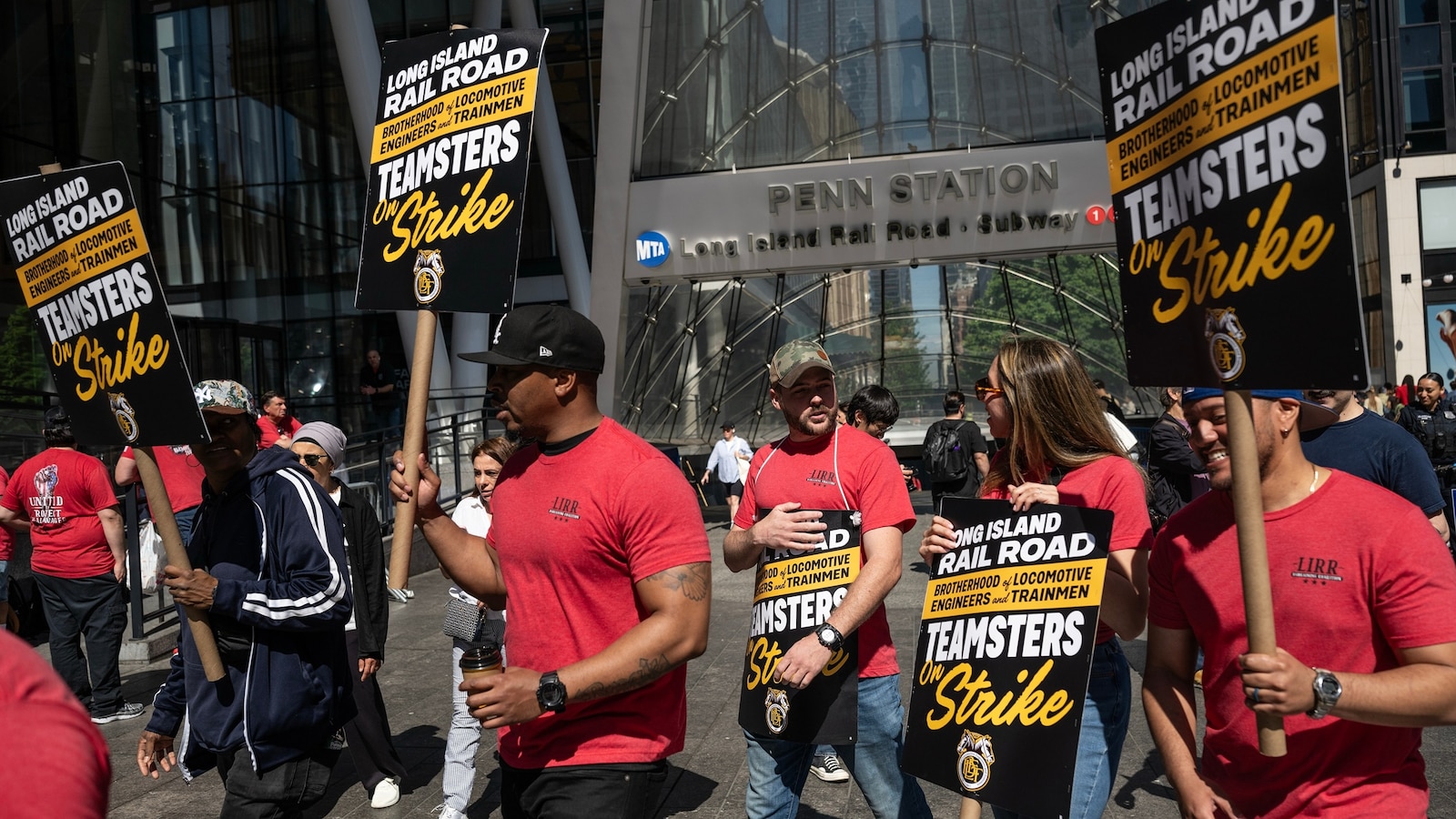
The Long Island Rail Road strike has ended, with phased service set to resume at noon Tuesday and full service expected by the afternoon commute. The MTA said it reached a deal with the five LIRR unions, and commuters will not face a fare increase to fund the agreement. The strike lasted from Saturday midnight and disrupted service for more than 300,000 daily commuters.
The immediate market read is not on the railroad itself but on the political economy of transit labor. A rapid settlement removes a near-term tail risk for regional economic activity, but it also reinforces a pattern: labor has leverage when service disruption becomes visible, which raises the odds of richer outcomes in future public-sector negotiations and indirectly tightens the baseline cost structure of transit agencies over the next 12-24 months.
The bigger second-order effect is on New York City operational friction. Even a short strike tends to shift some discretionary behavior permanently for a few weeks — missed commutes, delayed office attendance, and event attendance risk all normalize more slowly than service restoration. That matters for local retail, restaurants, and last-mile logistics around commuter corridors, especially if riders remain skeptical of reliability and keep some substitution behavior in place through the next 1-2 weeks.
The deal also caps the chance of immediate fare pressure, which is supportive for ridership retention but negative for agency flexibility. The risk now migrates from service interruption to budget arbitration: if wage and healthcare costs are locked in without offsetting revenue, the MTA is pushed toward deferred capex, maintenance stretch-outs, or future political asks for subsidies. That creates a medium-term governance overhang rather than a clean resolution, and the market should treat it as a postponement of funding stress, not an elimination of it.
Consensus is likely to overstate the importance of the ‘strike over’ headline and understate the signaling value. In public transit, the first disruption after decades of labor peace can lower the threshold for future work actions because workers and unions learn the system’s pain points. The risk/reward now favors fade-the-relief trades in any names tied to a quick normalization assumption, while keeping optionality on renewed commuter volatility if ratification or implementation frays.
AI-powered research, real-time alerts, and portfolio analytics for institutional investors.
Request DemoOverall Sentiment
neutral
Sentiment Score
0.10
Ticker Sentiment
