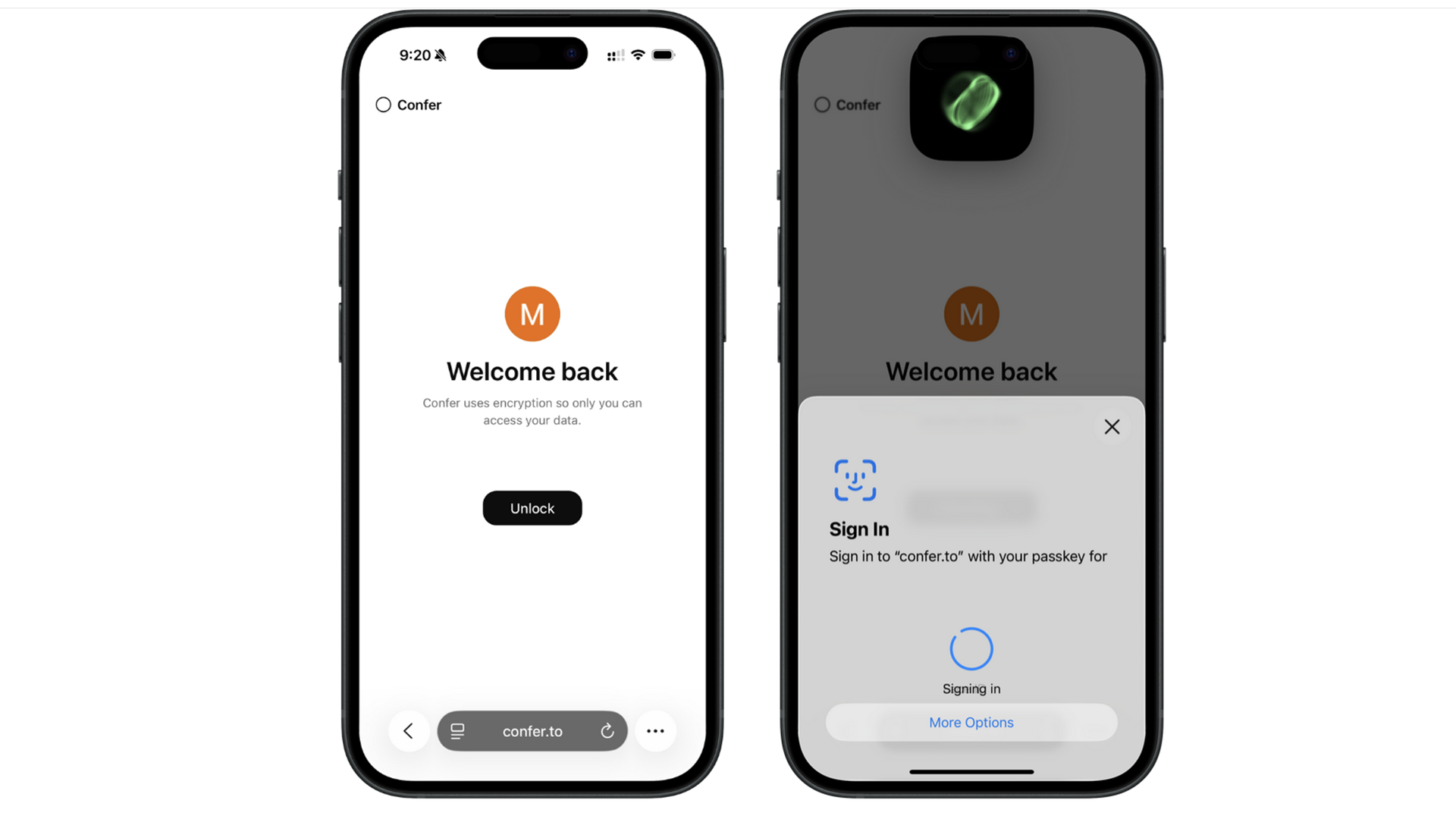
Moxie Marlinspike, founder of Signal, has launched Confer, an AI assistant built around hardware-based encryption and trusted execution environments that prevent server operators (including creators) from reading user conversations. Confer uses device-only passkeys, end-to-end encrypted sync, and remote attestation with a fully published software stack to guarantee that chats are not logged, used for training, or legally accessible; the offering targets privacy-conscious consumers and institutions (eg, schools, hospitals) and could raise competitive pressure on incumbent chatbot providers over data-handling practices. While the product may influence enterprise procurement and consumer expectations around AI privacy, it contains no financial metrics and is unlikely to move broad markets in the near term.
Market structure: Confer’s privacy-by-default model primarily benefits device- and enterprise-security vendors (AAPL for Secure Enclave, DELL for enterprise hardware) and niche cloud/Tee providers; ad-dependent platforms (META) face incremental demand risk for data-hungry personalization. Expect a gradual share shift—privacy-first incumbents could capture ~3–10% of privacy-sensitive enterprise/chatbot spend in 12–24 months, not an immediate mass-market collapse. Cross-asset: pressure on ad revenue growth could lift equity volatility for META and raise demand for high-grade tech capex financing (benefit to IG tech bonds); FX/commodities impact is negligible.
Risk assessment: Tail risks include a major security breach in Confer (operational) or accelerated regulation (e.g., EU/US privacy mandates) forcing incumbents to change data models; both can re-rate multiples by 10–30% for exposed names. Immediate (days) — small headline volatility; short-term (1–6 months) — pilot announcements and proofs; long-term (6–24 months) — adoption curve and regulatory shifts. Hidden dependency: Confer’s security still relies on device passkeys and TEE supply—bottlenecks or vendor concentration could constrain scaling.
Trade implications: Tactical trades favor 2–3% long AAPL and 1–2% long DELL on 6–12 month horizons to capture device/enterprise demand; establish a 1–2% short or buy 6-month 20% OTM puts on META as a hedge against ad monetization degradation. Use pair trade: long AAPL + DELL vs short META to express structural privacy rotation; consider buying 3–6 month straddles on META around any major regulatory/news events to capture volatility.
Contrarian angles: Consensus treats Confer as niche; underestimate enterprise uptake if remote attestation proves audit-friendly—this could accelerate corporate procurement, producing outsized wins for hardware vendors. Overreaction risk: META’s core ad machine is resilient; a sustained price dislocation >15% would be a buying opportunity. Historical parallel: privacy shifts (GDPR) created multi-year re-pricing; expect similar phased adjustment rather than instant disruption.
AI-powered research, real-time alerts, and portfolio analytics for institutional investors.
Request DemoOverall Sentiment
mildly positive
Sentiment Score
0.35
Ticker Sentiment
