
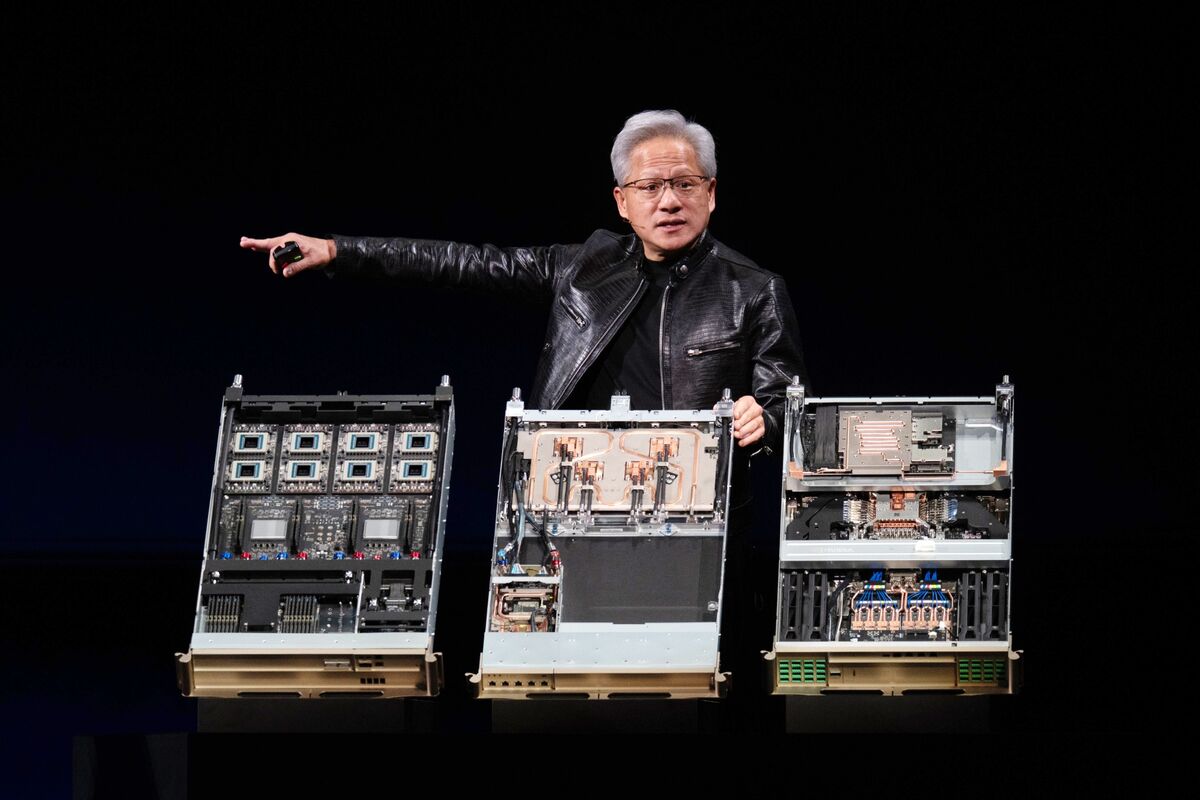
Nvidia said Anthropic, OpenAI and SpaceX will be among the first major customers for its upcoming Vera CPU, with full production slated for the third quarter. The announcement highlights early demand for Nvidia's next AI data-center product and supports its broader expansion in AI infrastructure. The news is positive for Nvidia, though the market impact is likely limited to the stock and adjacent AI hardware names.
This is less about one CPU launch and more about Nvidia trying to widen the moat from GPU demand into the full-stack data center bill of materials. If Vera gets adopted by frontier labs, the economic win is not just incremental silicon revenue; it strengthens Nvidia’s control over system architecture, networking, and software attach, which raises switching costs for hyperscalers and model developers over the next 12-24 months. The first-order read-through is positive for NVDA, but the bigger implication is that alternative CPU vendors now have to compete against an increasingly integrated platform, not a commodity processor.
The second-order beneficiary is likely Nvidia’s own ecosystem partners that are aligned with its platform standard, while losers are the CPU incumbents and any AI infrastructure vendor selling a “best-of-breed” disaggregated stack. The fact that high-profile customers are being named early suggests Nvidia is using design-win signaling to de-risk the launch before volume ramps, which matters because early software optimization and qualification cycles can determine whether this becomes a meaningful attach-rate driver by year-end or just a niche incremental product. The cadence to watch is not the announcement day move, but the next two quarters of procurement and system-level deployment evidence.
The key risk is that this is still a promise until production and real workloads validate performance-per-watt and integration economics. If Vera fails to show a clear TCO advantage versus existing x86 or ARM options, the adoption story can fade quickly, and investors may overestimate the revenue contribution from a product that initially matters more strategically than financially. Conversely, if supply constraints at the broader data center level ease, the launch could be absorbed without incremental upside to consensus, making the current optimism vulnerable to a “good but not needle-moving” reaction.
The contrarian takeaway is that the market may be focusing too much on customer logos and not enough on the fact that the biggest prize is platform lock-in, not near-term CPU shipments. For the next several months, the trade is about whether Nvidia can convert headline design wins into measurable wallet share expansion across servers, networking, and software. If it can, the launch supports a higher long-duration multiple; if not, it becomes another proof point that Nvidia’s growth is already so embedded in expectations that new products need to surprise on scale, not just stature.
AI-powered research, real-time alerts, and portfolio analytics for institutional investors.
Request TrialOverall Sentiment
moderately positive
Sentiment Score
0.55
Ticker Sentiment
