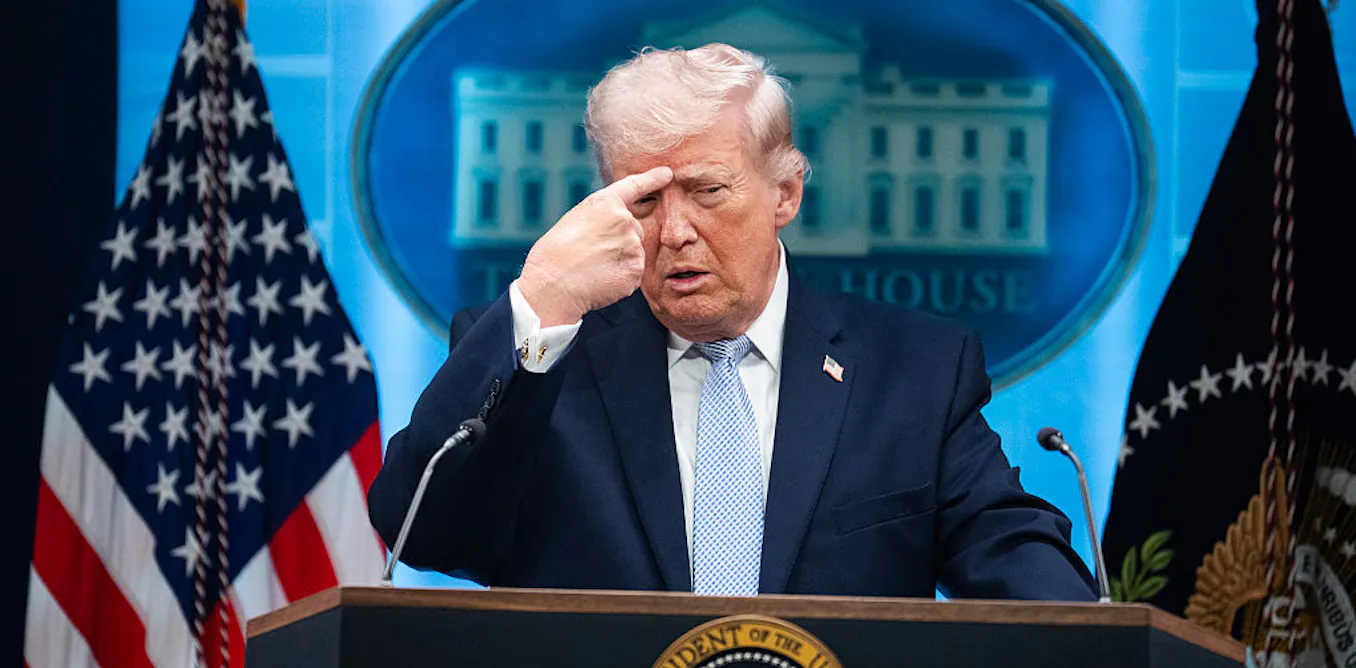
President Trump's threat to 'destroy a whole civilization' over the Strait of Hormuz prompted bipartisan calls for his removal and raised the possibility of constitutional remedies. The piece details two removal routes: the 25th Amendment (Section 4 transfer to the vice president pending congressional review) and impeachment (House articles, Senate trial, two-thirds vote to convict and remove). For portfolios, this significantly raises geopolitical and political-risk uncertainty that can drive volatility in oil, defense-related names and safe‑haven assets; monitor developments for sudden risk-off flows and legislative actions that could escalate market impact.
Market reaction will likely be two-stage: an immediate risk-off leg (hours–days) driven by headline volatility and positioning, and a medium-term policy/credit repricing (weeks–months) if escalation materially threatens Strait of Hormuz throughput. In the first stage expect typical safe-haven flows into USD/Treasuries and gold, widened equity put skew and underperformance of small caps and high-beta cyclicals; these moves are usually compressed into a 3–10 trading day window unless new facts arrive. Over a 1–3 month horizon the meaningful second-order effect is insurance and logistics repricing — higher war risk premiums for tanker routes, elevated marine/commodity insurance costs and rerouting that raises freight and refined product delivery costs, which feed through discretionary margins and inflation measures.
Winners will not only be traditional defense primes and energy producers but also niche suppliers: specialty semiconductor/communications vendors for ISR platforms, marine insurers, and shore-based critical infrastructure hardening contractors. Losers include airlines and cruise lines (fuel + route disruption), ports/terminals exposed to Middle East tanker re-routing, and politically-sensitive fintechs/banks if campaign finance or regulatory actions accelerate post-crisis. Political remediation (25th Amendment talk, impeachment theater) creates a persistent governance risk premium that depresses U.S. risk assets intermittently while increasing demand for duration and FX hedges until congressional signals clarify intent.
Catalysts to watch: (1) tangible military escalation or strikes that close shipping lanes (days–weeks), (2) formal congressional moves (committee referrals, articles) which push the governance premium higher (weeks–months), and (3) rapid de-escalation or diplomatic breakthroughs that collapse the risk premium (days). The dominant contrarian angle is that removal/impeachment outcomes remain low-probability given supermajority Senate thresholds, so the market may be overpricing structural regime-change risk — offering tactical buying opportunities in beaten-down cyclicals once short-term hedges are in place.
AI-powered research, real-time alerts, and portfolio analytics for institutional investors.
Request DemoOverall Sentiment
strongly negative
Sentiment Score
-0.70
