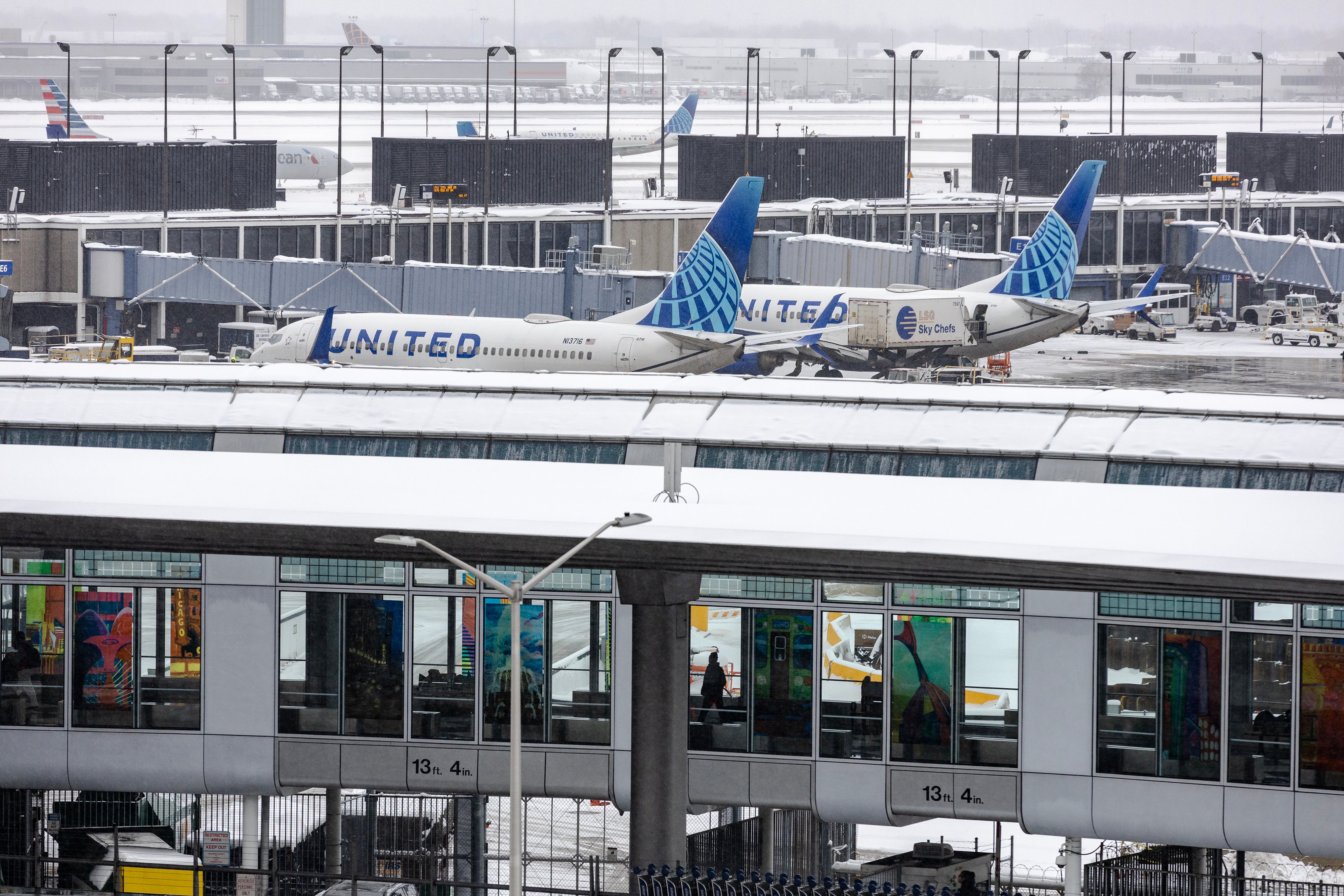
United Airlines announced it will operate its largest-ever schedule from Chicago O'Hare in 2026 with 750 daily departures at peak summer, adding five regional United Express routes (Champaign‑Urbana, Kalamazoo/Battle Creek, Lansing, La Crosse, Bloomington‑Normal) launching April 30 and May 7 with four daily roundtrips each, and boosting daily frequencies on about 80 existing O'Hare routes. The move follows a competitive capacity build by American (which is set to grow seats out of ORD by ~23% in H1 vs. a year ago) and comes as United's O'Hare seats were already slated to rise ~12% in H1 year‑over‑year; management frames the expansion as defensive to protect gate share and market preference in Chicago.
Market structure: United (UAL) is the clear direct beneficiary — adding toward a 750-departure peak at ORD in 2026 and reclaiming local share — while American (AAL) is the near-term loser (gate losses, incremental capacity competition). Expect short-term local RASM (revenue per ASM) pressure of ~1–3% on Chicago-origin routes as seats rise; consumers win via lower fares, regional Express partners capture utilization upside but face margin pressure from contract rates.
Risk assessment: Key tail risks are regulatory intervention on gate allocations or a sustained price war that knocks consolidated industry unit margins down 3–7% and forces capacity pullbacks. Immediate market moves (days) will be headline-driven; weeks–months should show measurable RASM divergence in OAG data and Cirium; long-term (6–24 months) network effects could entrench the hub leader or accelerate consolidation. Hidden dependencies: regional fleet availability, pilot staffing, and jet fuel moves (Brent >$90/bbl increases downside sensitivity).
Trade implications: Tactical trade is long UAL/short AAL to capture relative network value — UAL should enjoy higher premium-cabin take rates cited by management. Options: use LEAP call spreads on UAL (Jan 2027 25–35-delta call spread) sized to 1–3% notional and buy AAL long-dated puts or put spreads into American earnings windows. Rotate modest capital from non-Midwest leisure travel equities into UAL and airport beneficiaries in the Chicago catchment over 6–12 months.
Contrarian angles: The market may underprice the chance this escalates into a yield-destroying price war that hurts both carriers; historical hub skirmishes show initial market-share gains can invert after 12–18 months if demand softens. Monitor weekly ORD load factors, gate reallocation rulings, and AAL’s next 30–60 day capacity announcements as potential reversal points.
AI-powered research, real-time alerts, and portfolio analytics for institutional investors.
Request DemoOverall Sentiment
mildly positive
Sentiment Score
0.35
Ticker Sentiment
