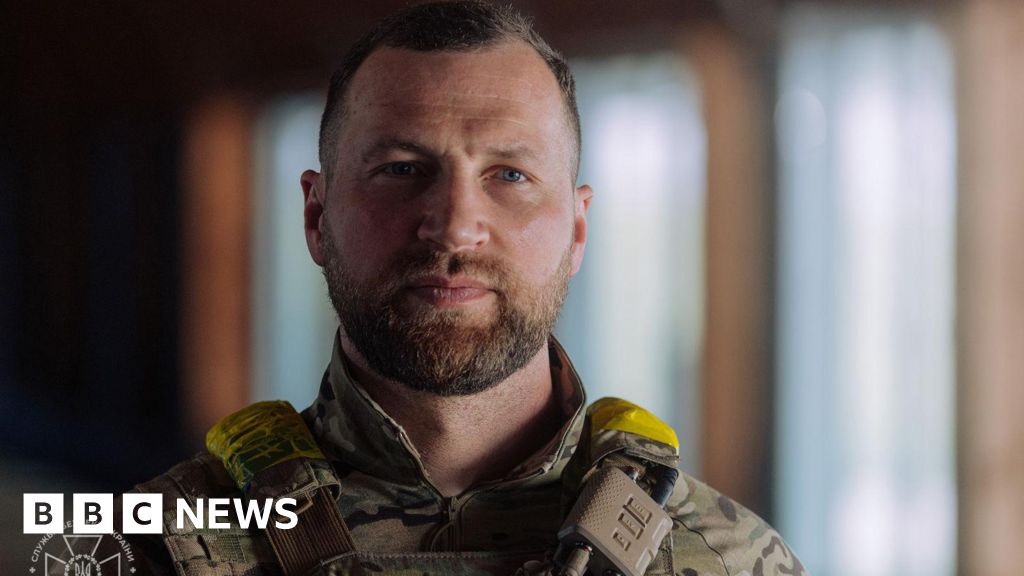
President Volodymyr Zelensky has dismissed long-time Security Service (SBU) chief Vasyl Malyuk and nominated Maj-Gen Yevhenii Khmara as acting head, a move that has drawn domestic criticism and raised questions about the service's future effectiveness. Malyuk, noted for coordinating high-profile cross-border operations such as the 'Spider Web' drone strikes, has been asked to continue leading special operations even after his removal; analysts link the reshuffle to the appointment of Kyrylo Budanov as Zelensky’s chief of staff. Khmara’s appointment must be confirmed by parliament, leaving the SBU’s leadership and its asymmetric strike focus on Russia in a state of political uncertainty that could influence wartime operational continuity.
Market structure: The SBU leadership change raises probability of continued asymmetric strikes inside Russia, favoring suppliers of long‑range strike, precision munitions and ISR platforms. Expect a 3‑12 month incremental demand boost for companies supplying drones, loitering munitions, satellite imagery and stand‑off weapons—implying potential 5–15% upside for large primes and specialized suppliers if operations accelerate.
Risk assessment: Tail risks include rapid escalation (NATO political spillover or major energy‑infrastructure strikes) that could push Brent +10%–20% within days and spike risk premia in EM and Ukrainian credit by 300–800bp. Short horizon (days) volatility likely around headlines; medium (weeks/months) driven by parliamentary confirmation (30–60 days) and donor aid flows; long horizon (quarters) depends on whether special ops crowd out conventional rearmament budgets.
Trade implications: Favor large, liquid defense names and cybersecurity as hedges; use options to cap downside (defined‑risk call spreads). Avoid idiosyncratic exposure to Ukrainian sovereign debt and small Ukrainian suppliers until political confirmation — require sovereign yield compensation of ≥1,000bp over US 10‑yr to justify entry. Monitor Brent, UAH, and CDS spreads for 50–100bp moves as trade triggers.
Contrarian angles: Consensus views underprice that centralization under Budanov/Khmara could concentrate procurement on cheap, asymmetric systems (drones, small rockets) rather than heavy platforms—benefiting small-cap drone/munition vendors versus heavy primes. If Khmara is rejected by parliament within 30–60 days, expect short‑term market nervousness; that pullback could be an entry for defense cyclicals if aid commitments remain intact.
AI-powered research, real-time alerts, and portfolio analytics for institutional investors.
Request DemoOverall Sentiment
moderately negative
Sentiment Score
-0.30
