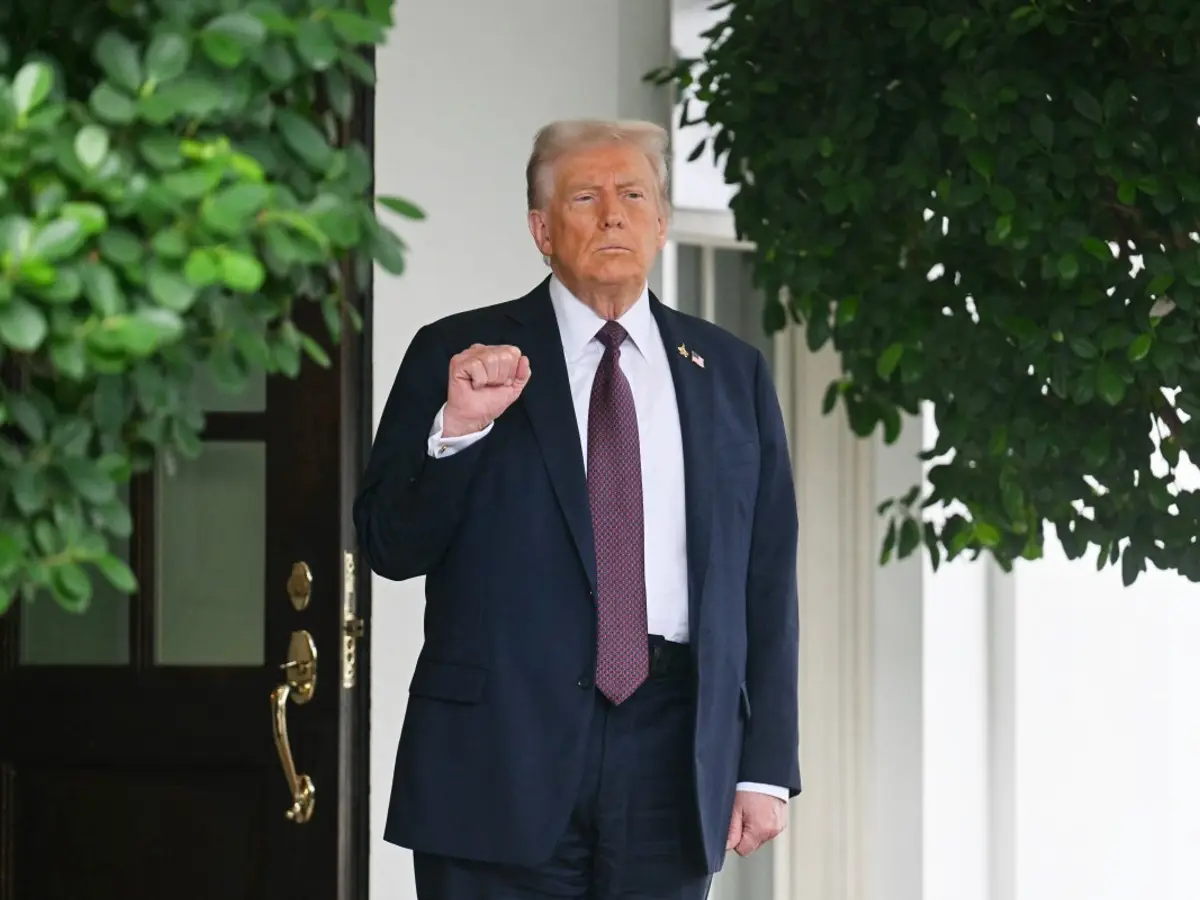
A viral claim that President Trump was hospitalized after a White House press 'lid' was proven false; a Marine photographed at the West Wing and confirmation of a travel/photo lid indicated he remained in the White House. Trump posted on Truth Social about a reported strike in Tehran while First Lady Melania Trump posted about rescuing Ukrainian teens, signaling ongoing presidential communications and continuity. The episode appears driven by misinterpreted press protocol and recycled video and should have minimal market impact beyond possible short-lived volatility given the broader US‑Iran conflict.
Unexpected leadership-health rumours function as high-frequency information shocks: algos widen markets and options-hedging flows can raise realized equity volatility by ~10–25% intraday and push VIX 3–6 points in the first 24–72 hours absent clear official confirmation. Liquidity provision contracts first in the most news-sensitive instruments (small-cap, regional banks, airlines), increasing bid-ask spreads and slippage; measure this via platform-level volume/quote-stability over the next 48 hours to calibrate execution cost assumptions.
Second-order winners are those that price geopolitical tail risk explicitly (defense primes, USD safe-havens, selected cyber/information-security stocks), while losers are short-duration, high-operating-leverage sectors (airlines, leisure, regional transportation) that face route uncertainty and discretionary-demand pullbacks. Expect credit spreads on lower-rated corporates to gap wider by 10–30bps in the immediate window if headlines persist, with the effect dissipating over 2–8 weeks unless kinetic escalation or policy shocks occur.
Consensus positioning tends to overweight outright defense exposure; the asymmetric risk is that headline-driven repricing is transient. If the episode resolves quickly, names bid on fear can mean-revert 5–15% within a week — monitor 72-hour confirmation windows, options skew shifts, and congressional or executive policy responses as the catalytic next moves.
AI-powered research, real-time alerts, and portfolio analytics for institutional investors.
Overall Sentiment
neutral
Sentiment Score
0.00
