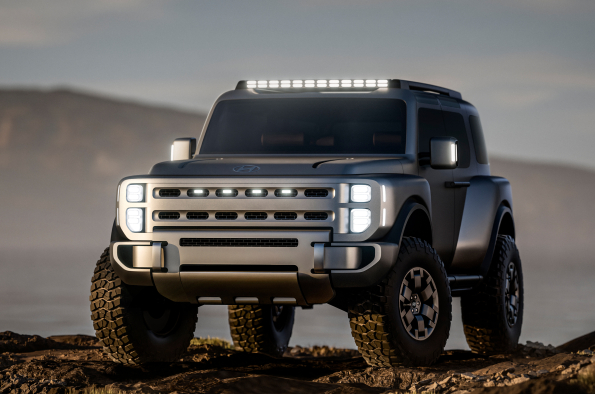
Hyundai unveiled the Boulder Concept SUV on Apr 1, 2026, previewing a new fully-boxed body-on-frame architecture that will underpin a production midsize pickup targeted for delivery by 2030. The company said the body-on-frame truck is one of 36 new Hyundai vehicles coming to North America by 2030 and reiterated Hyundai Motor Group's $26 billion U.S. investment (2025–2028) and intent to design, develop, and build these vehicles in the U.S. This signals a credible long-term strategic push into the competitive U.S. midsize pickup/off-road segment, but is unlikely to have material near-term earnings impact.
Hyundai's pivot into U.S. body-on-frame midsize vehicles is a multi-year market entry, not a one-off product stunt, with production intent stretching to 2030. That timeline turns technical procurement and stamping/forging contracts into 18–48 month procurement events: suppliers that win early engineering work (2026–2028) will capture outsized lifetime revenue as plants are retooled.
Second-order beneficiaries will be domestic steel and structural suppliers: every midsize truck adds ~1.0–1.4 metric tonnes of stampings and structural steel, so a modest Hyundai target (100k–300k units/year by early 2030s) implies 100k–420k tonnes/year of incremental steel demand for the program alone — material for a mid-cycle cyclical bump to U.S. steel volumes and associated logistics. Tire, drivetrain, and off-road component vendors selling LT tires, heavy-duty axles, and robust suspension systems also stand to gain earlier, because off-the-shelf modular subsystems shorten development lead time versus bespoke electrified architectures.
Key risks: (1) credibility — American truck buyers are sticky and adoption curves are slow; meaningful share shifts typically take multiple product cycles, so revenue ramps are backloaded (2028+). (2) regulation and powertrain risk — tightening CAFE/EV mandates could force Hyundai to invest more in hybridization or heavy batteries for body-on-frame vehicles, inflating program economics and supplier margins. (3) execution/supply — domestic steel price swings, unionized supplier labor actions, or constrained axle/transmission capacity could delay launch cadence and move margins.
Watch early sourcing milestones (EPC contracts, supplier awards, prototype build volumes) over the next 12–24 months; those will be the real catalysts that move supplier stocks ahead of the eventual OEM volume ramp toward 2030.
AI-powered research, real-time alerts, and portfolio analytics for institutional investors.
Request DemoOverall Sentiment
moderately positive
Sentiment Score
0.40
