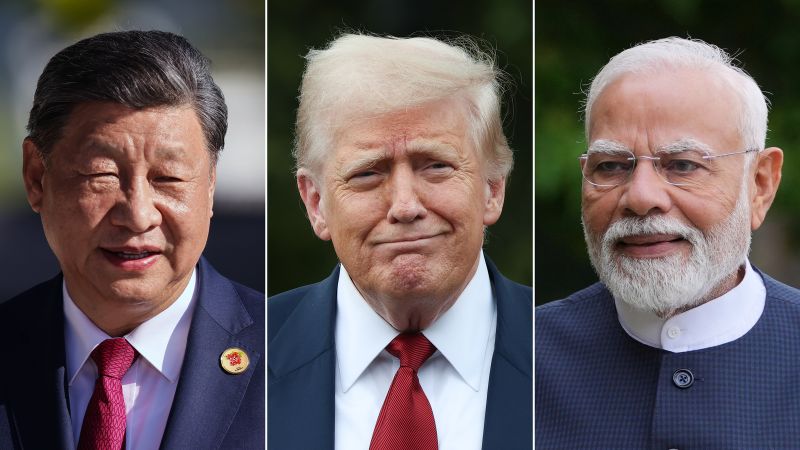
President Trump's imposition of new tariffs on India, partly due to its Russian oil imports, is inadvertently fostering a tactical rapprochement between New Delhi and Beijing, despite their historical animosity. This aggressive stance risks undermining the long-standing U.S. strategy of cultivating India as a democratic counterweight to China, creating a significant trust deficit with Washington. Analysts view this as an 'alliance of convenience' for India and China, driven by a shared antagonism towards the U.S., potentially leading to a notable geopolitical realignment in the Indo-Pacific region.
The imposition of a new 25% base tariff on India by the Trump administration, with a planned escalation to 50% over Russian oil purchases, marks a significant and disruptive shift in U.S. foreign policy. This action fundamentally undermines the two-decade-long American strategy of cultivating India as a democratic counterweight to China, creating what analysts term a "massive trust deficit" with New Delhi. The policy inadvertently forges a common cause between India and China, pushing the historical rivals into a tactical, if wary, alignment against a shared antagonist in Washington. Evidence of this thaw includes Indian Prime Minister Narendra Modi's potential attendance at the Shanghai Cooperation Organization summit and the resumption of direct flights and visas. However, this rapprochement is viewed as an "alliance of convenience" limited by deep-seated strategic distrust and ongoing border disputes. The U.S. move, punishing India for importing 36% of its crude from Russia, is seen by observers as lacking a coherent strategy and potentially driven by personal motivations, risking the very outcome it should seek to avoid: pushing India closer to both Russia and China and thereby destabilizing the U.S. Indo-Pacific strategy.
AI-powered research, real-time alerts, and portfolio analytics for institutional investors.
Overall Sentiment
strongly negative
Sentiment Score
-0.70
