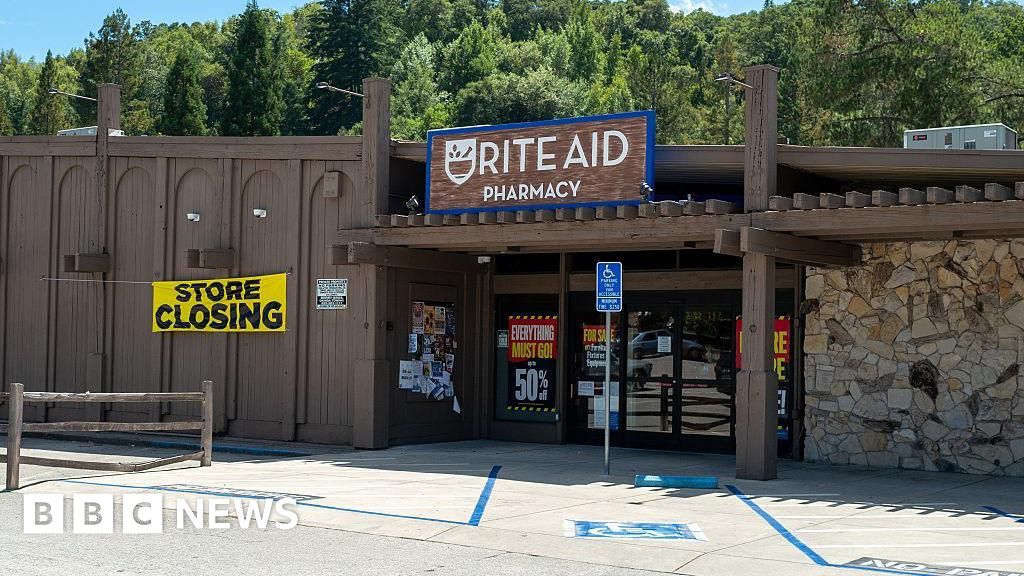
US pharmacy chain Rite Aid has completed the closure of all its remaining stores, a culmination of severe financial struggles, including bankruptcy filings in October 2023 and May 2025, and significant legal liabilities stemming from its role in the opioid crisis. This final shutdown, reducing its footprint from a peak of 5,000 locations to zero, underscores the immense pressures on the company and aligns with a broader industry trend of pharmacy closures by competitors like CVS and Walgreens, exacerbating concerns about "pharmacy deserts" nationwide.
US pharmacy chain Rite Aid closes final stores US pharmacy chain Rite Aid announced that it would close all remaining stores. The company's website was replaced on Saturday with a message announcing the closure: "All Rite Aid stores have now closed. We thank our loyal customers for their many years of support." The site included a link to allow customers to request their pharmacy records. Founded in 1962, the company was once one of the largest pharmacy chains in the country. At its peak, Rite Aid counted 5,000 stores. But in recent years, the chain faced financial struggles and a Justice Department investigation. By Friday, data showed fewer than 100 stores remained. Rite Aid had filed for bankruptcy in October 2023 and May 2025. The company also faced legal troubles over its role in the opioid epidemic. In 2022, Rite Aid paid up to $30 million to settle lawsuits alleging it contributed to the flow of opioids in the US, according to CBS, the BBC's American news partner. The following year, in the 2023 bankruptcy filing, the company said restructuring would help it "resolve litigation claims". Rite Aid also faced a Justice Department complaint in which officials alleged the company's stores filled unlawful prescriptions for oxycodone and fentanyl. The company agreed to settle in July 2024. Other US pharmacy chains have also been closing retail locations across the country, though different reasons have been cited. Since 2021, CVS has closed more than 1,000 stores as part of a longer term strategic move. Separately, Walgreens, which was recently purchased by private equity firm Sycamore Partners, closed 500 stores over the past year. Experts have raised concerns about growing "pharmacy deserts" in the US, where millions of people live without a pharmacy nearby and must travel to get prescriptions filled. Rite Aid has ceased all operations, marking the final stage of a corporate collapse driven by a combination of severe financial distress and significant legal liabilities. The company's complete shutdown, from a peak of 5,000 stores to zero, follows bankruptcy filings in October 2023 and May 2025. A critical factor in its demise was its role in the opioid crisis, leading to a settlement of up to $30 million in 2022 and a separate settlement with the Justice Department in July 2024 over allegations of filling unlawful prescriptions. The extremely negative sentiment surrounding this event is amplified by its context within a broader industry trend of physical footprint reduction. Competitors are also contracting, with CVS closing over 1,000 stores since 2021 as part of a strategic shift, and Walgreens, now under private equity ownership by Sycamore Partners, shuttering 500 locations in the past year. While Rite Aid's exit removes a competitor, the slightly negative sentiment for CVS and Walgreens (-0.2) reflects investor concern over the industry's systemic challenges and the growing social issue of 'pharmacy deserts'.
AI-powered research, real-time alerts, and portfolio analytics for institutional investors.
Request DemoOverall Sentiment
extremely negative
Sentiment Score
-0.90
Ticker Sentiment
