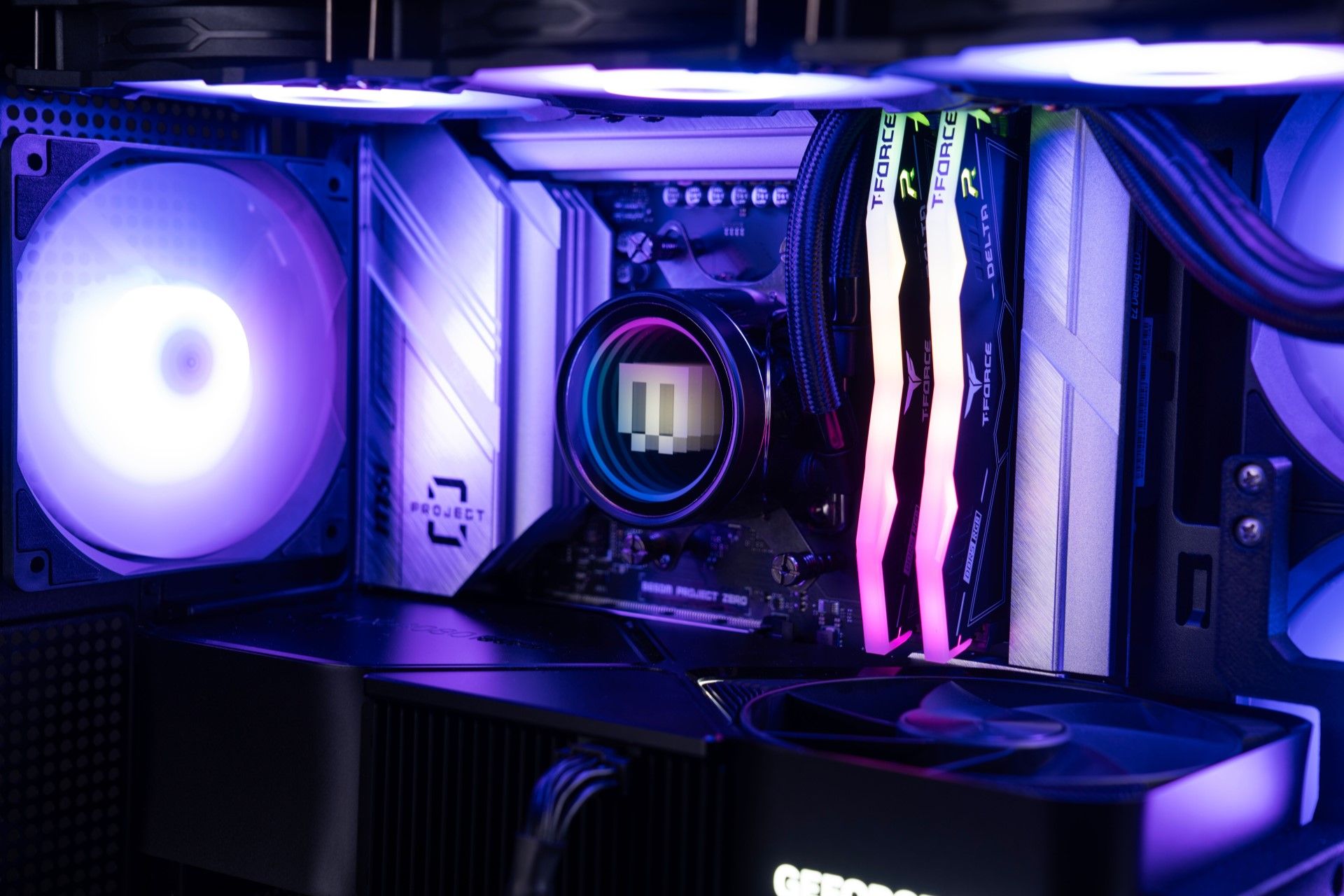
Maingear CEO Wallace Santos said industry memory costs have surged — citing a 394% increase for a 32GB kit and 344% for 64GB — and announced a BYO RAM program that lets customers supply or ship RAM for Maingear to validate and install to avoid passing spot-price inflation onto system prices. Santos said supply is constrained despite high prices, requiring blanket high-price purchase orders and intermittent deliveries, and he expects the shortage to potentially run through 2026 with new production lines taking ~18 months to ramp. The move reduces immediate margin pressure on Maingear but highlights sustained pricing power for memory suppliers and continued supply-chain risk for OEMs and system integrators.
Market structure: DRAM and module suppliers (Samsung, SK Hynix, Micron/MU) are the immediate beneficiaries as constrained capacity and multi-year ramp forecasts grant them pricing power; OEMs/system integrators (Dell, HPQ, small integrators) are losers facing margin compression and order delays. The 394%/344% kit-price jumps imply a severe supply tightness vs demand concentrated in data centers/AI and a choke-point because new fabs take 12–18+ months to materially add supply. Cross-asset: expect upward pressure on Korean/Taiwanese FX vs USD, higher equity volatility in hardware OEMs, and modest widening of credit spreads for small integrators; memory suppliers should show stronger cashflow and tighter credit spreads.
Risk assessment: Tail risks include a large cloud/AI buyer locking up supply (accelerating shortages) or rapid oversupply if manufacturers unexpectedly ramp capacity or cut prices — either moves could swing prices ±30–60% within 6–18 months. Immediate: spot-price volatility and SKU rationing (days–weeks); short-term: earnings-guide revisions and holiday-season order pull-ins (weeks–months); long-term: normalization by 12–24 months if fabs complete. Hidden dependencies: secondary used-RAM market growth, SSD pricing contagion, and potential antitrust/regulatory scrutiny of long-term supply deals. Catalysts: quarterly DRAM ASP reports, OEM margin commentary, and announcements of supply contracts by hyperscalers.
Trade implications: Direct play: bias long memory names (MU, consider SMH) and underweight PC OEMs (DELL, HPQ) with 6–18 month horizon. Pair trade: long MU vs short DELL/HPQ to isolate DRAM windfall vs OEM margin pain. Options: use 9–15 month MU call spreads (buy LEAP + sell 6–9 month calls) to capture multi-quarter upside while financing premium; size ~1–3% portfolio. Rotate portfolio into semiconductors and Korean/Taiwan exporters, reduce consumer-PC retail exposure before Q4 earnings.
Contrarian angles: Consensus may underprice memory sellers' ability to hold higher price floors — manufacturers historically throttle capacity to defend margins, meaning profits could be sustained longer than simple supply/demand models predict. Conversely, demand-sensitivity is underappreciated: a single large hyperscaler pullback could deflate prices rapidly, so do not lever long memory names without hedges. Historical DRAM cycles (2000s NAND/DRAM booms) show sharp, asymmetric upswings then 12–24 month corrections — prepare for both. Unintended consequence: BYO-RAM normalization could permanently shift OEM after‑sales service models and enlarge the secondary market, capping OEM revenue recovery.
AI-powered research, real-time alerts, and portfolio analytics for institutional investors.
Request DemoOverall Sentiment
moderately negative
Sentiment Score
-0.50
Ticker Sentiment
