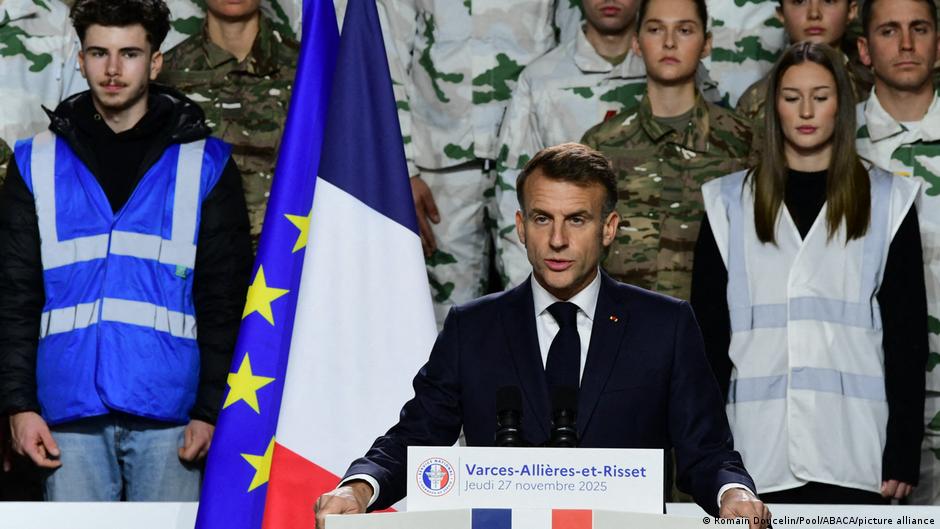
France will launch a paid voluntary military service for 18- and 19-year-olds lasting 10 months beginning mid-2026, with an estimated cost of around €2 billion and targets of 3,000 participants in 2026 rising to 10,000 by 2030. Recruits will serve only on French soil and may return to civilian life, join the reserves or remain in the military as Paris aims to grow reservists to 80,000 by 2030; the move is framed as part of a broader European response to shifting U.S. priorities and Russian aggression and follows domestic controversy over comments from the armed forces chief.
Market structure: The direct winners are European defense primes and systems integrators with French exposure — Thales (HO.PA), Airbus (AIR.PA, defense division), Safran (SAF.PA) — plus training/logistics suppliers and cybersecurity vendors. The program’s €2bn upfront cost and 3k→10k recruit scale by 2030 is small for heavy equipment suppliers but meaningful for services, uniforms, simulation, and IT platforms; sustained reserve growth to 80k by 2030 implies multi-year services demand rather than one-off hardware orders. Cross-asset: expect modest positive skew for defense equities, negligible sovereign bond stress (€2bn ≈ 0.07% of French GDP), slight euro tail-risk sensitivity if geopolitical escalation occurs, and marginal commodity demand for steel/aluminum in defense supply chains.
Risk assessment: Tail risks include rapid geopolitical escalation that forces accelerated procurement (positive for suppliers) or domestic political backlash that cancels programs (negative), and recruitment shortfalls that waste budget. Immediate (days) — sentiment moves in European defense names; short-term (3–12 months) — tender announcements and budget votes; long-term (2026–2030) — reserve build drives recurring service contracts. Hidden dependencies: parliamentary budget approvals in 2025, EU procurement rules, and NATO policy coordination; catalysts include French budget releases, NATO summit statements, or Russian actions.
Trade implications: Tactical: establish 1.5–2% long positions in HO.PA (Thales) and 1% in AIR.PA (Airbus defense exposure) with stop-losses at ~12% and 12–18 month upside targets of 25–35% tied to contract flow. Buy 12-month call spreads on HO.PA (delta ~0.25) to cap cost; add 1% long in US defense (LMT) for geopolitical-hedge exposure. Pair trade: long HO.PA vs short CAC40 futures (0.5–1% net) to capture defense-specific rerating. Reallocate 2–4% from French consumer discretionary into defense/services now and add on budget confirmation in H1 2025; take profits 12–36 months after material contract awards.
Contrarian angles: Markets may under-appreciate the winners in training, simulation, uniforms, and IT (SME suppliers and cybersecurity outfits) where margins are higher and procurement cycles shorter; these names are likely unloved and inefficiently priced. Conversely, the macro impact is small — €2bn is fiscally modest — so large-cap defense equities may be already priced for this pickup; look for mispricings in small-cap French defense-services suppliers and private contractors. Historical parallel: post-2014 Ukraine saw defense equities outperform by 20–40% over 3 years; monitor recruitment metrics and French budget votes as binary triggers.
AI-powered research, real-time alerts, and portfolio analytics for institutional investors.
Request DemoOverall Sentiment
neutral
Sentiment Score
0.05
