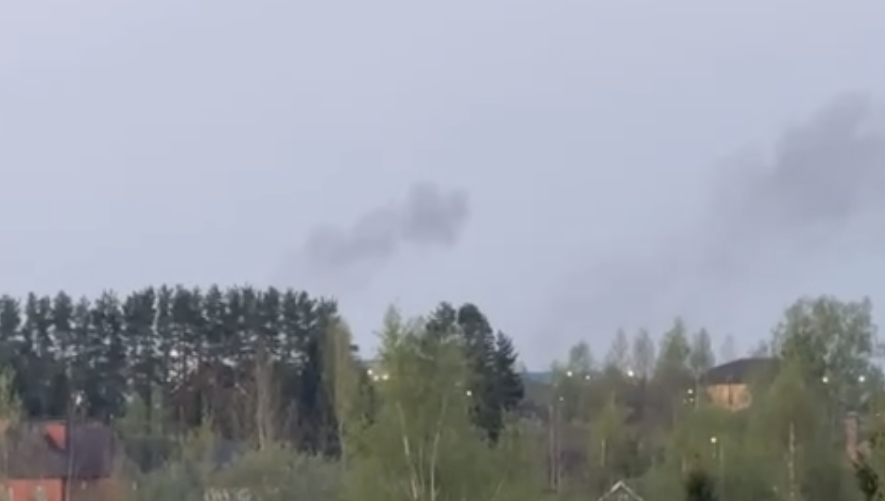
Ukrainian drones reportedly struck a Russian Defense Ministry logistics facility in Naro-Fominsk, Moscow Oblast, overnight on May 7, though the claim could not be immediately verified. The article also details continued Ukrainian strikes on Russian military and energy infrastructure, including the Tuapse oil refinery and a military production facility in Cheboksary. The broader message is ongoing wartime disruption, but the immediate market impact appears limited.
This is less about immediate battlefield damage and more about the fragility premium creeping into Russia’s inland logistics network. Even a single credible strike near Moscow forces rerouting, hardening, and inventory dispersion, which raises the “hidden tax” on throughput: more convoy miles, more idle stock, and worse asset utilization for defense supply chains over the next several weeks. The second-order effect is that Russia must spend scarce air-defense and EW resources closer to the capital, thinning coverage elsewhere and increasing the odds that future strikes land on higher-value fuel and maintenance nodes.
The energy angle is asymmetric but subtle. Repeated hits on refining and military-industrial infrastructure do not need to remove large absolute barrels to matter; they mainly raise outage risk, insurance costs, and precautionary export behavior around the Black Sea and inland rail corridors. For Europe, the bigger impact is on diesel and middle distillates, where even small disruptions can tighten spreads faster than headline crude reacts, especially if outages coincide with seasonal summer transport demand.
Consensus may be underestimating how quickly these events accumulate into operational degradation rather than headline escalation. The contrarian view is that the market often fades one-off drone strikes, but the relevant variable is not destruction per strike, it is the compounding cost of defending every node in a vast geography. That argues for a slower-burning bullish bias on defense suppliers and a tactical long in refined products rather than crude, while keeping duration short because any diplomatic de-escalation or successful air-defense adaptation could compress the risk premium abruptly within days.
The biggest tail risk is policy-driven de-escalation or a temporary lull around ceremonial dates that gives Moscow room to reset defenses and repair logistics. But if the campaign continues at this cadence for 1-3 months, the probability of intermittent fuel shortages, rerouted military freight, and higher Russian operational costs rises materially, which can leak into regional shipping and insurance pricing even without a major headline event.
AI-powered research, real-time alerts, and portfolio analytics for institutional investors.
Request DemoOverall Sentiment
mildly negative
Sentiment Score
-0.15
