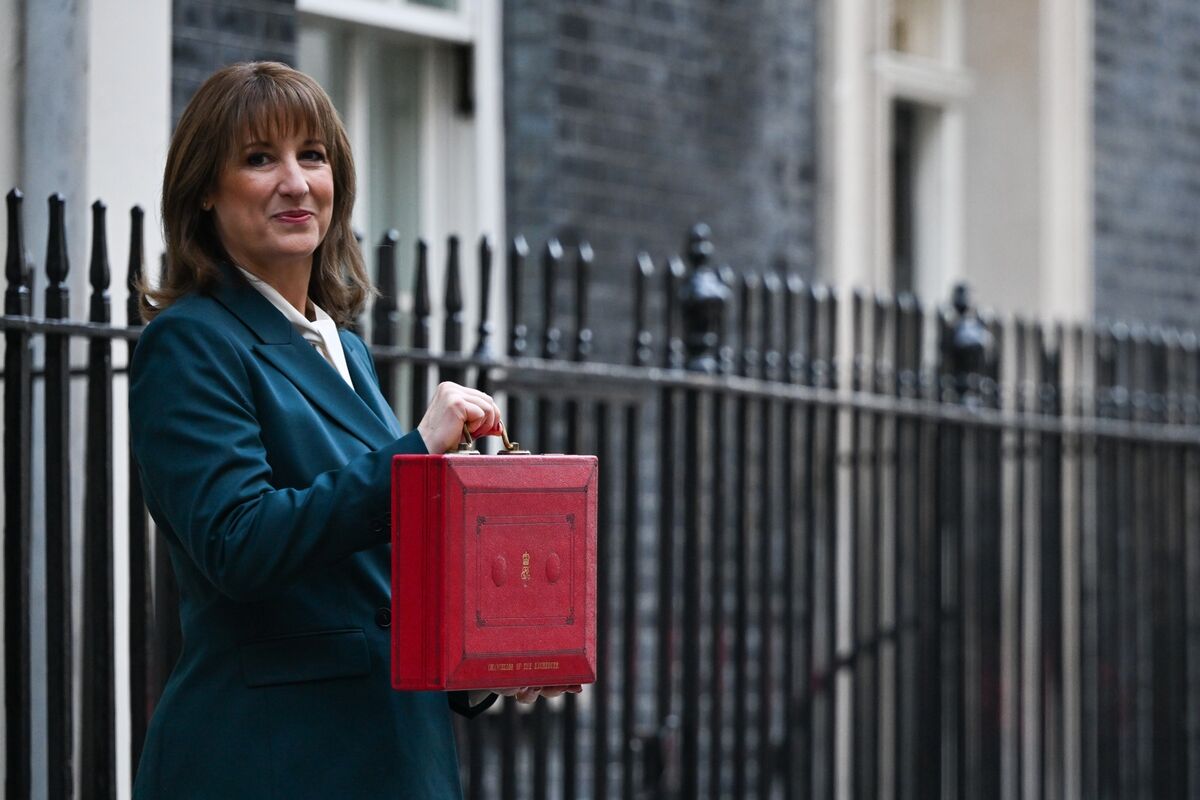
Chancellor Rachel Reeves delivered a budget centered on rebuilding a fiscal buffer and expanding welfare within a £1.6 trillion government-spending framework, actions that helped shore up support among Labour backbenchers and drew a positive market reaction. The package strengthens the government's near-term political and fiscal position and buoyed investor sentiment, but the plan contains limited measures to materially improve the country's longer-term economic trajectory, leaving structural growth concerns unresolved.
Market structure: Short-term winners are UK domestic demand plays (grocers, domestic retailers, consumer staples) and sovereign credit (gilts) as the budget rebuilds a fiscal buffer and reduces tail-risk; losers are commodity exporters and multi-national earners exposed to a stronger sterling. Mechanically, expect a near-term GBP pop of ~+1–3% and UK 10y gilt yields to compress ~10–30bps on relief rallies, which lifts domestic cyclicals but pressurises sterling-sensitive resource names.
Risk assessment: Key tail-risks include a BoE forced tightening if welfare-driven consumption lifts core inflation (scenario: UK CPI surprise >0.4% MoM leading to +25–75bps repricing in 2–3 months), or fiscal slippage that reverses the gilt rally and triggers a credit-watch. Immediate (days) impact is risk-on in UK equities/gilts; short-term (1–6 months) depends on CPI and BoE guidance; long-term (12+ months) structural productivity and capex deficits mean limited GDP upside despite headline fiscal stability.
Trade implications: Favor short-duration rate exposure and pro-consumer UK equities for 3–9 months while hedging currency and commodity exposure: allocate modest long positions to FTSE/UK ETFs and grocers, pair vs miners/commodity stocks, and use GBP call spreads and gilt ETFs to express views with defined risk. Enter within 1–4 weeks; use firm stop-losses tied to UK10y moves (+30bps adverse) or GBPUSD down >2%.
Contrarian angle: Markets underprice the risk that a consumption-fuelled impulse will provoke BoE hikes — meaning current gilt compression could be transient and UK equities may rebase lower if rates rise. Historical parallels (post-2010 UK consolidation) show temporary market relief but continued weak trend growth; therefore prefer tactical, size-constrained bets with convex downside protection rather than large structural overweight in UK assets.
AI-powered research, real-time alerts, and portfolio analytics for institutional investors.
Request DemoOverall Sentiment
mixed
Sentiment Score
0.10
