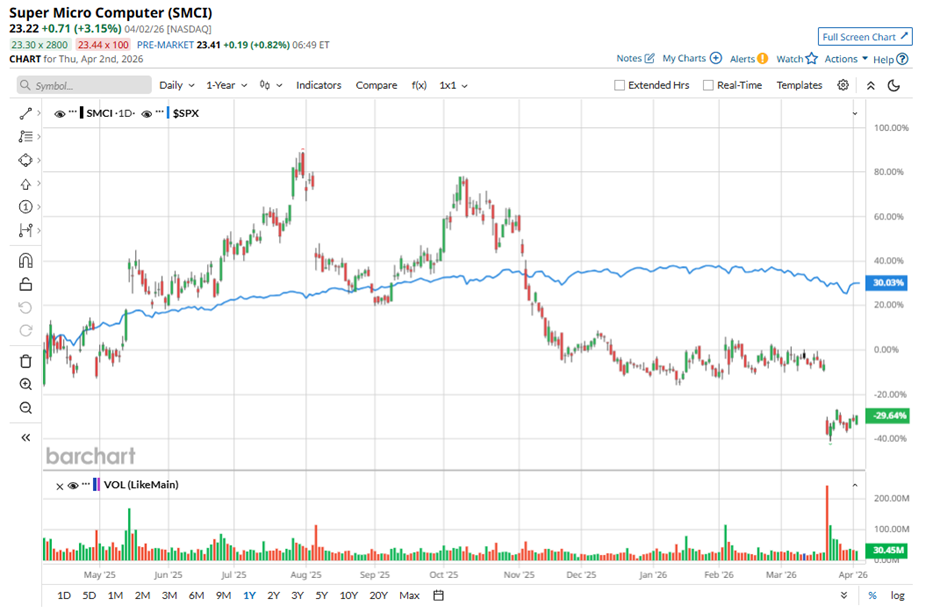
The DOJ charged co‑founder Wally Liaw and two others with illegally smuggling at least $2.5 billion of Nvidia‑equipped servers to China, sparking intense selling and heavy shorting (short interest ~14.2% of float). SMCI reported record Q2 revenue of ~$12.7B (+123% YOY) and non‑GAAP EPS $0.69 (beat $0.49), but gross margin collapsed to 6.4% (from 9.5% last quarter and 11.8% a year ago) and operating cash flow swung to negative $24M; cash was $4.1B vs $4.9B total debt. Street is cautious with a consensus Hold (19 analysts) and an average price target of $34.67 (implied +53.8% upside), but the legal/regulatory crisis creates substantial downside risk and elevated volatility for the stock.
Immediate winners from a protracted SMCI legal fallout are large, compliance-heavy OEMs (Dell, HPE) and tier-1 hyperscalers that can demonstrate audited export controls and direct chip allocations; they can capture share and pricing power as customers shift away from channels under regulatory scrutiny. Chinese onshore vendors (Inspur/Huawei/Lenovo) will likely accelerate procurement of locally qualified hardware and ODM partnerships, tightening demand for non-export-restricted subsystems while lengthening lead times for any sanction-sensitive SKUs.
Two time buckets matter: in the next days–weeks volatility will be driven by newsflow (indictments, asset holds, margin calls) and is prone to explosive moves given concentrated borrow and activist/hedge fund positioning; over 3–18 months structural outcomes—criminal convictions, OEM contract cancellations, or formal export-policy changes—will determine whether SMCI is a temporary collateral casualty or a permanently impaired competitor. The biggest tail risks are legal injunctions that freeze operations or NVDA tightening allocation to reduce third‑party circumvention; conversely, a cooperative settlement with strong remediation measures could rapidly restore access to supply chains and trigger a short-covering squeeze.
For portfolios, priority is asymmetric, option-based protection and event‑paired exposure rather than naked directional sizing. The consensus is correctly cautious on headline risk but underappreciates the durable re‑routing of AI hardware procurement: winners will not only gain share but also command better ASPs for compliant configurations, compressing margins for any vendor that remains a regulatory outlier.
AI-powered research, real-time alerts, and portfolio analytics for institutional investors.
Request DemoOverall Sentiment
strongly negative
Sentiment Score
-0.75
Ticker Sentiment
